Geology News

Mar 5, 2013 by Natali Anderson

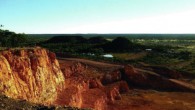
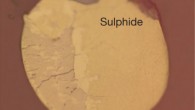
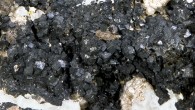
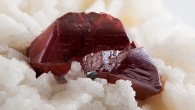
New research on a mineral called molybdenite published in the journal Earth and Planetary Science Letters provides new insights about the changing chemistry of the Earth as a result of geological and biological processes. Mineral molybdenite from New South Wales (Karelj) Mineral evolution is an approach to understanding Earth’s changing near-surface geochemistry. All chemical elements were present from the start of our Solar System, but at first...

Feb 12, 2013 by Natali Anderson

A group of researchers from the National Oceanography Center in Southampton has discovered a strange new deep-sea volcanic vent at Hook Ridge near the...

Jan 24, 2013 by Natali Anderson

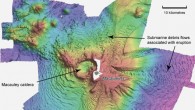
An international team of researchers from the UK and New Zealand has discovered a previously undocumented type of eruption in underwater volcanoes. Macauley...

Jan 3, 2013 by Natali Anderson

Oahu – the third largest of the Hawaiian Islands – will be reduced to nothing more than a flat island, someday, according to a research led...

Nov 30, 2012 by Natali Anderson

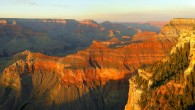
The combined uranium/thorium/helium dating of minerals from the bottom of the Grand Canyon in Arizona, the United States, indicates it was largely carved...

Nov 16, 2012 by Natali Anderson

A well-preserved crab-like fossil that was found by scientists from Curtin University, Australia, has provided evidence of a toxic ocean environment in...

Aug 9, 2012 by Natali Anderson

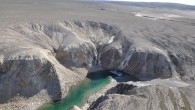
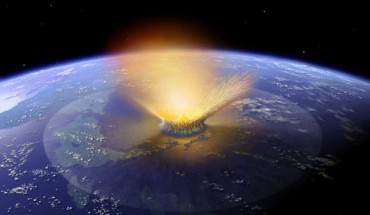
Geologists from the University of Saskatchewan and the Geological Survey of Canada have discovered a massive meteor impact from at least 130 million years...

Jul 30, 2012 by Sergio Prostak

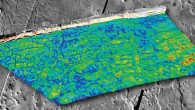
In a new study, geologists at the University of Texas at Austin have examined large-scale polygons on Mars and compared them to similar features on Earth’s...

Jul 5, 2012 by Natali Anderson

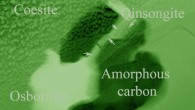
German researchers have succeeded in proving the presence of elemental fluorine in a mineral called antozonite. The most reactive chemical element, fluorine,...

Jul 3, 2012 by News Staff

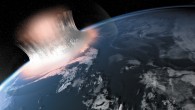
European scientists have discovered a 100 km-wide crater, the result of a massive asteroid or comet impact a billion years before any other known collision...

Jun 26, 2012 by News Staff

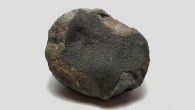
Scientists from the California Institute of Technology have discovered a new mineral embedded in the Allende meteorite that fell in central Mexico more...

Jun 26, 2012 by Sergio Prostak

A new study has demonstrated that the creation of most minerals containing mercury is fundamentally linked to several episodes of supercontinent assembly...

Jun 11, 2012 by News Staff

A new study by a team of biologists and geochemists from GEOMAR-Helmholtz Centre for Ocean Research Kiel, Germany, has demonstrated that Desulfobulbus...

May 28, 2012 by James Freeman

A new study has suggested that climate change was a key ingredient in the collapse of the Harappan civilization. Archaeological ruins of Mohenjo-daro:...

May 16, 2012 by Enrico de Lazaro

Scientists from Britain and Australia have discovered a previously unrecognized volcanic process, similar to one that is used in chocolate manufacturing,...

May 3, 2012 by Natali Anderson

An international team of researchers has found that the current distribution of cypress subfamilies reflects the breakup of the supercontinent Pangea that...

Apr 27, 2012 by News Staff

Arizona State University graduate student Andrew Ryan has discovered a new form of Martian lava flow that resembles snail or nautilus shells. More than...

Mar 26, 2012 by News Staff

An international team of geologists led by Dr. Eric Roberts of Australia’s James Cook University has suggested that the Great Rift Valley of East...

Jan 6, 2012 by Enrico de Lazaro

For the first time, Canadian researchers have suggested that the Earth’s most severe mass extinction was caused by an influx of mercury into the eco-system. In...

Nov 30, 2011 by News Staff

Scientists from Rensselaer Polytechnic Institute have found that the atmosphere of Earth just 500 million years after its creation was not a methane-filled...