Paleontologists from Fundación Dinópolis have identified the first confirmed fossils of the genus Diplodocus found outside North America.
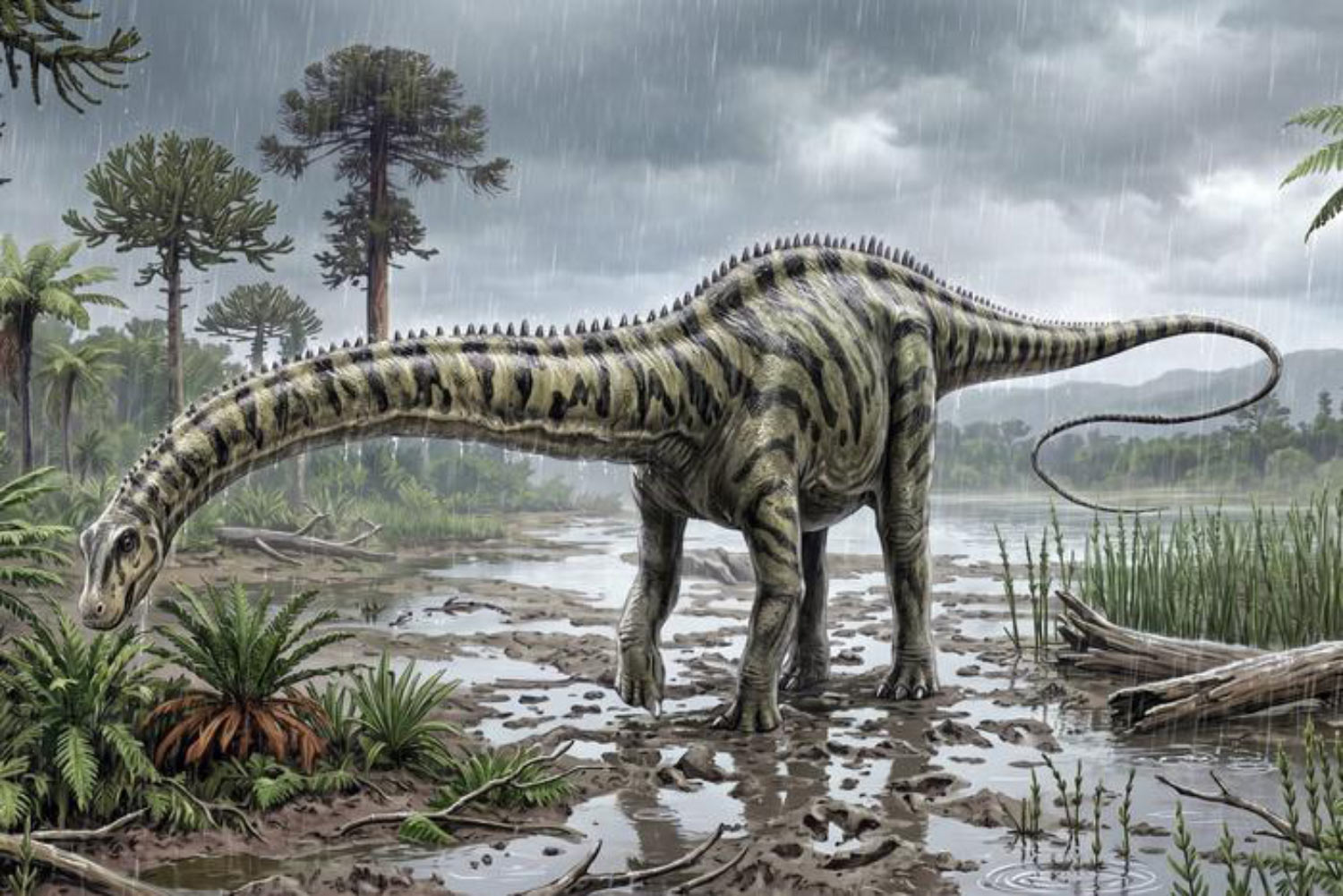
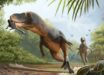
The Spanish Diplodocus was a close relative of Diplodocus hallorum. Image credit: Carmelo López.
“We are delighted with this discovery,” said Fundación Dinópolis Ph.D. student Sergio Sánchez Fenollosa.
“It allows us to better understand Iberian Mesozoic ecosystems and the diversity of sauropod dinosaurs that inhabited the European Jurassic.”
The Spanish Diplodocus lived roughly 150 million years ago near the end of the Jurassic period.
The dinosaur stretched an estimated 25 m (82 feet), on par with its American relatives.
The animal’s fossilized remains — 14 well-preserved tail vertebrae and several chevron bones — were unearthed at the La Tejería site near the city of El Castellar in the Spanish province of Teruel.
“The Diplodocus from El Castellar was approximately 25 m long, making it another of the giant sauropods of the Spanish Jurassic, alongside other sauropod dinosaurs from Teruel with characteristics very different from those of diplodocids, such as Turiasaurus and Losillasaurus, among others,” said Dr. Alberto Cobos, managing director of Fundación Dinópolis.
“It was an exciting and continuous process of seeing the pieces of the puzzle gradually fall into place.”
“From the early stages of the osteological study, we noticed strong similarities with several diplodocine sauropods.”
“As we looked more closely at the anatomy, we began to identify a combination of features characteristic of Diplodocus species.”
“Then, as we carried out different evolutionary analyses, they kept pointing in the same direction.”
“With each new result, the picture became clearer: we were looking at a Diplodocus.”
According to the team, the presence of Diplodocus in Iberia offers strong evidence that dinosaurs moved between North America and Europe during that era, likely crossing temporary land bridges that appeared as the proto-North Atlantic Ocean periodically receded.
“The outcome of the dig is some of the strongest paleontological evidence for episodes of dispersal and faunal exchange between the two continents across the proto-Atlantic Ocean during the Late Jurassic,” Sánchez Fenollosa said.
“The fossils of all these dinosaurs, including those of the new Diplodocus specimen, make Teruel a reference place for understanding this great diversity.”
The team’s paper will be published in the Journal of Vertebrate Paleontology.
_____
Sergio Sánchez Fenollosa et al. 2026. Intercontinental evidence of the iconic genus Diplodocus Marsh, 1878 (Dinosauria, Sauropoda). Journal of Vertebrate Paleontology, in press; doi: 10.1080/02724634.2026.2718423