A huge galaxy cluster called Abell 2813 has so much mass that it acts as a gravitational lens, causing light from more distant galaxies to bend around it.

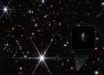
This Hubble image shows the galaxy cluster Abell 2813. The color image was compiled using observations taken with Hubble’s Advanced Camera for Surveys (ACS) and Wide Field Camera 3 (WFC3) instruments. Several filters were used to sample various optical wavelengths. The color results from assigning different hues to each monochromatic image associated with an individual filter. Image credit: NASA / ESA / Hubble / D. Coe et al.
Galaxy clusters contain thousands of galaxies of all ages, shapes and sizes.
Typically, they have a mass of about one million billion times the mass of the Sun.
At one point in time galaxy clusters were believed to be the largest structures in the Universe — until they were usurped in the 1980s by the discovery of superclusters, which typically contain dozens of galaxy clusters and groups and span hundreds of millions of light-years.
However, clusters do have one thing to cling on to; superclusters are not held together by gravity, so galaxy clusters still retain the title of the biggest structures in the Universe bound by gravity.
Albert Einstein predicted in his theory of general relativity that massive objects will deform the fabric of space itself.
When light passes one of these objects, such as a galaxy cluster, its path is changed slightly.
Known as gravitational lensing, this effect is only visible in rare cases and only the best telescopes can observe the related phenomena.
The new image from the NASA/ESA Hubble Space Telescope shows Abell 2813, a galaxy cluster located in the constellation of Cetus.
Also known as ACO 2813 and RXC J0043.4-2037, it is so distant that light from it has traveled for approximately 3.4 billion years to reach us.
The gravity from Abell 2813 is acting as the aforementioned gravitational lens, allowing us to view the more distant galaxies sitting behind them.
“In amongst the tiny dots, spirals and ovals that are the galaxies that belong to the cluster, there are several distinct crescent shapes,” Hubble astronomers said.
“These curved crescents and s-shapes of light are not curved galaxies, but are light from galaxies that actually lie beyond Abell 2813.”