Paleontologists have identified the first unequivocal new species of the fish-eating dinosaur Spinosaurus in more than a century.
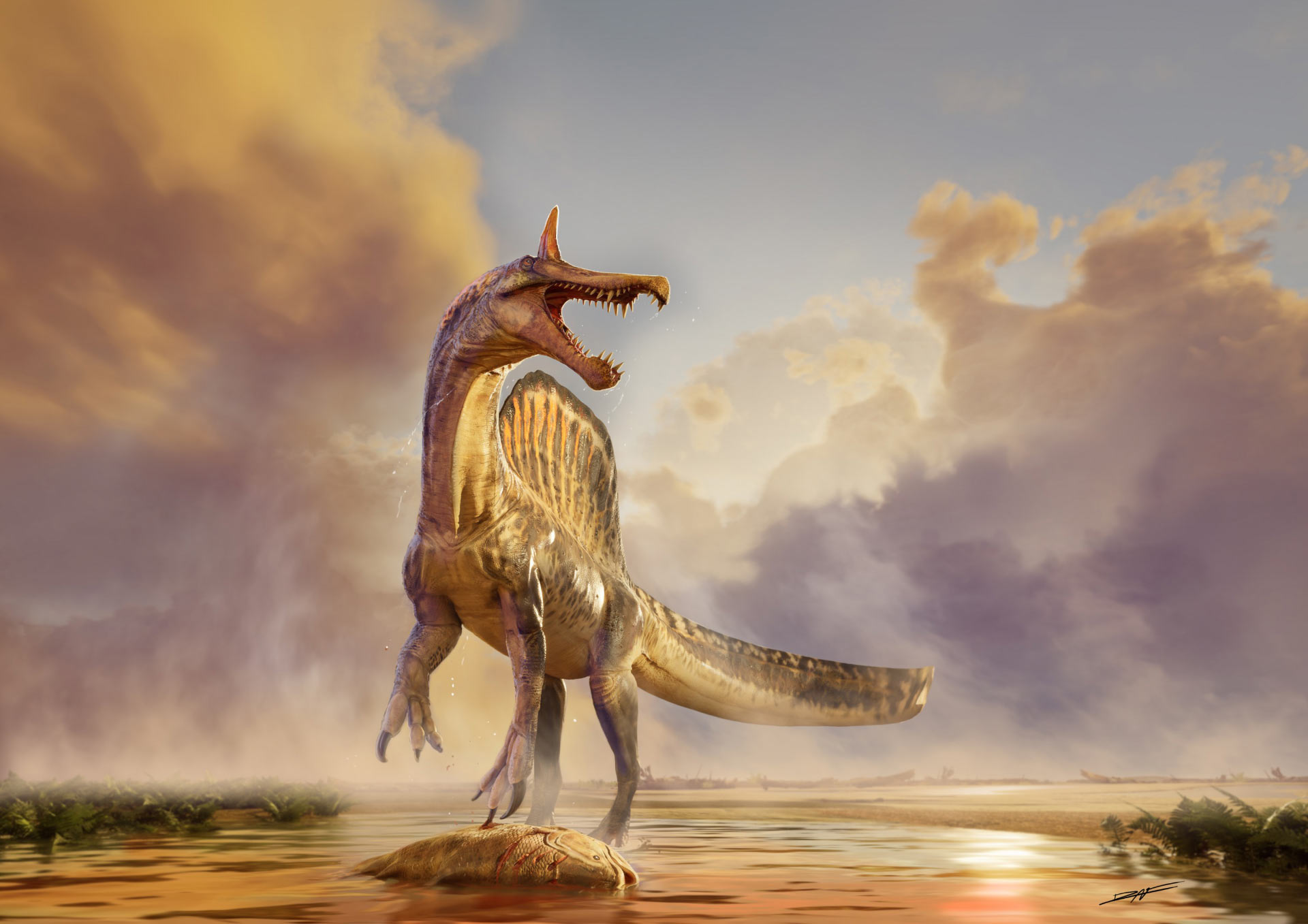
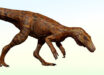
Spinosaurus mirabilis is one of the last-surviving spinosaurid species. Image credit: Dani Navarro.
Named Spinosaurus mirabilis, the new species roamed Earth during the Cretaceous period, around 95 million years ago.
The dinosaur’s fossils were uncovered in the remote fossil area of Jengueb in Niger, deep in the central Sahara, by University of Chicago’s Professor Paul Sereno and his colleagues.
The most striking feature of Spinosaurus mirabilis is a massive, scimitar-shaped cranial crest, unlike anything previously documented in the group.
“The scimitar-shaped crest of Spinosaurus mirabilis was so large and unexpected that we initially didn’t recognize it for what it was when we plucked it and some jaw fragments from the desert surface in November 2019,” they explained.
“Returning with a larger team in 2022 and finding two additional crests, we realized the novelty of the new species we had unearthed.”
“Based on the crest’s surface texture and interior vascular canals, we believe the crest was sheathed in keratin.”
“This display feature was brightly colored in life, curving toward the sky as a blade-shaped beacon.”
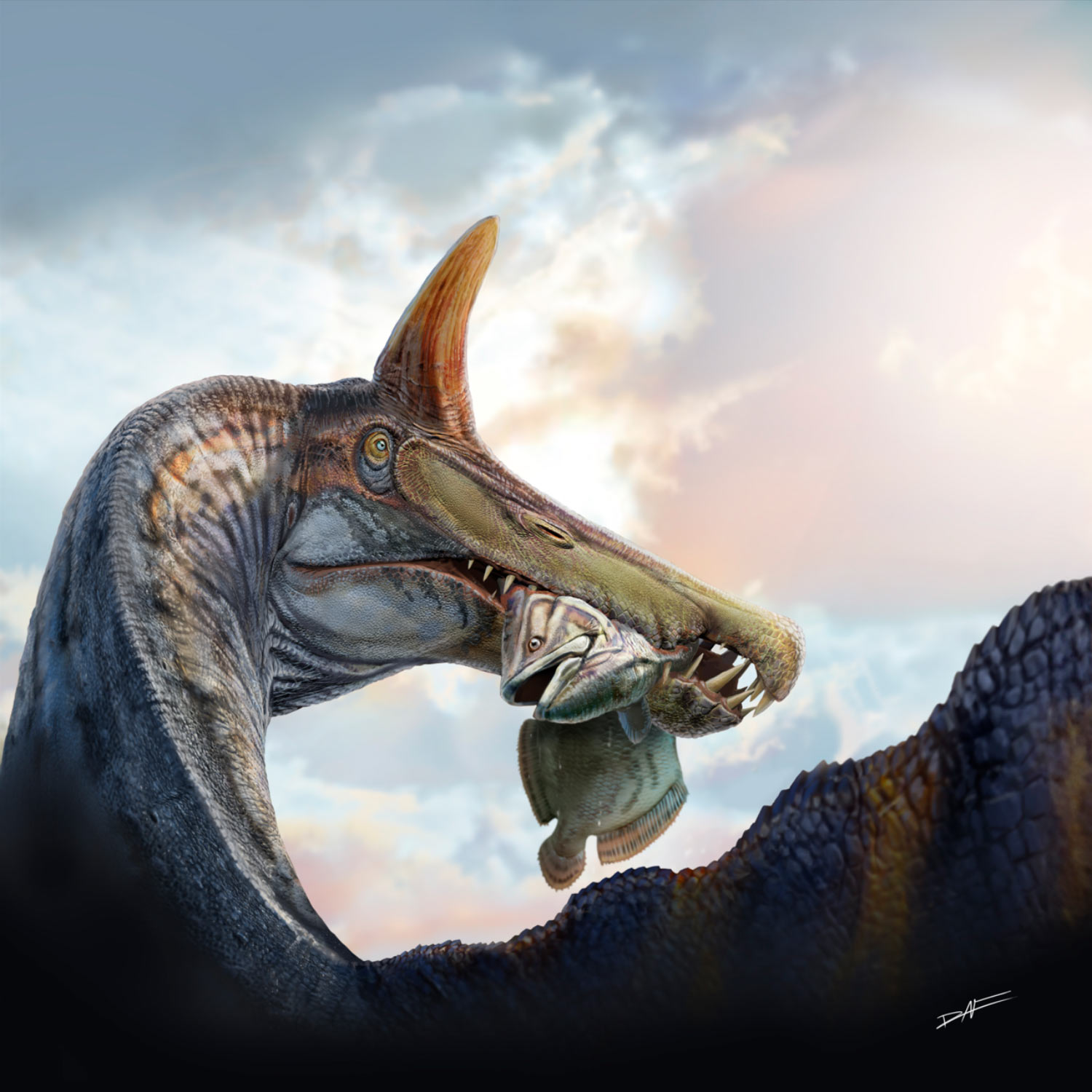
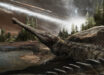
Spinosaurus mirabilis snaring the coelacanth Mawsonia some 95 million years ago from a river in northern Africa in what is now the Sahara Desert in Niger. Image credit: Dani Navarro.
The discovery of Spinosaurus mirabilis challenges long-standing ideas about where and how spinosaurid dinosaurs lived.
Until now, most spinosaurid fossils had been found in coastal deposits, prompting speculation that these predators may have been fully aquatic.
However, the new fossil locality in Niger is between 500 and 1,000 km from the nearest ancient marine shoreline.
According to the authors, Spinosaurus mirabilis likely lived in a forested inland habitat dissected by rivers.
“I envision this dinosaur as a kind of ‘hell heron’ that had no problem wading on its sturdy legs into two meters of water but probably spent most of its time stalking shallower traps for the many large fish of the day,” Professor Sereno said.
The discovery is reported in a paper published today in the journal Science.
_____
Paul C. Sereno et al. New scimitar-crested Spinosaurus species from the Sahara caps stepwise spinosaurid radiation. Science, published online February 19, 2026; doi: 10.1126/science.adx5486