In a small clinical trial, researchers at the Ohio State University found that a tomato juice rich in lycopene and soy isoflavones lowered several proteins linked to chronic inflammation, raising hopes for food-based therapies.
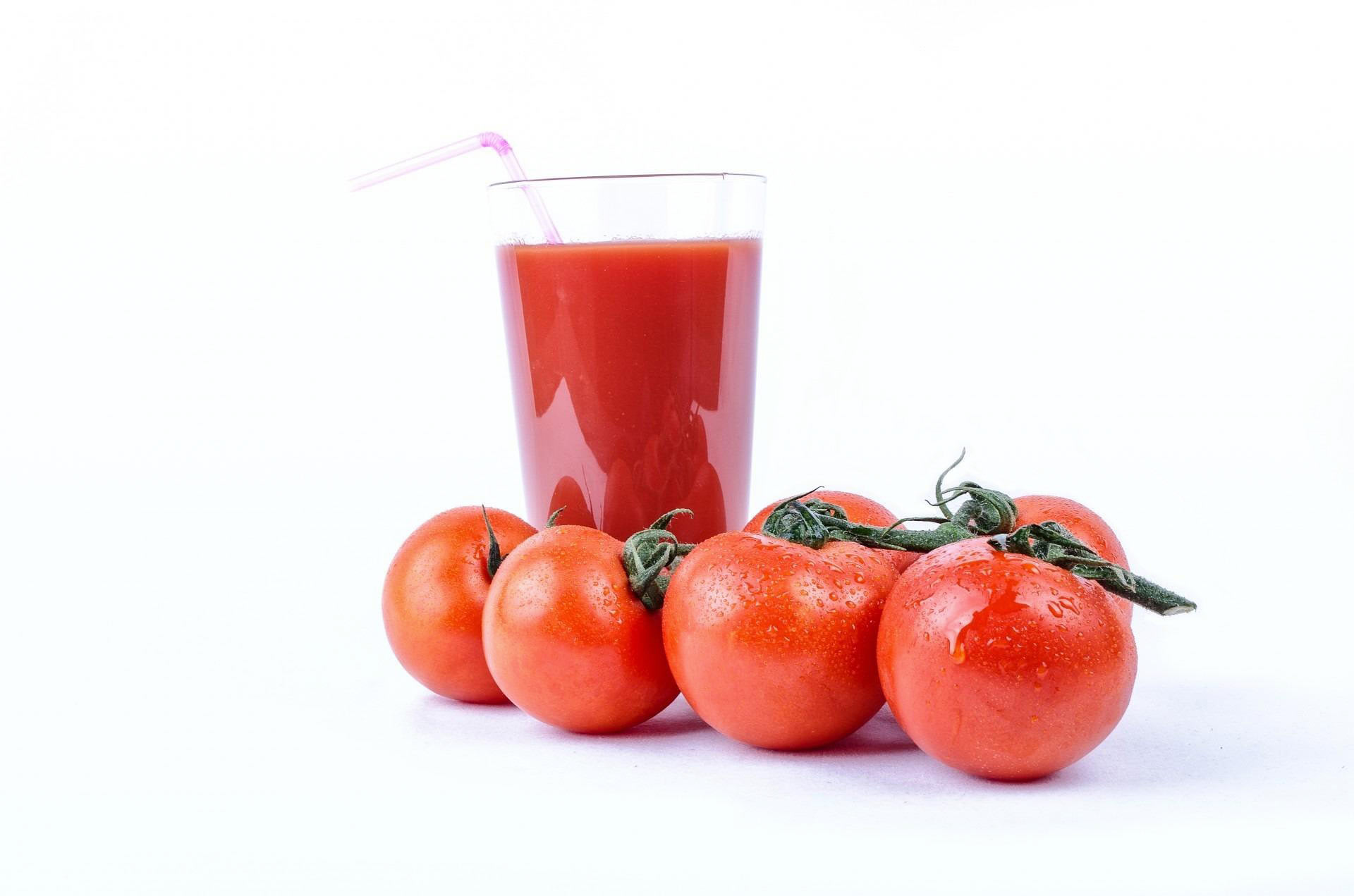
Tomato-soy juice contains high levels of lycopene and soy isoflavones.
“The idea is, can we use food-based interventions to modulate inflammation?” said Dr. Jessica Cooperstone, a researcher at the Ohio State University.
“And can we test this in a rigorous way so that we can really see this is affecting inflammation, versus just saying something is anti-inflammatory?”
Lycopene is a carotenoid that gives tomatoes and other vegetables their colors, and soy isoflavones are flavonoids that mimic the action of the hormone estrogen. Both are phytochemicals that help plants thrive.
Years ago, based on studies showing an association between diets high in either tomato products or soy and a lowered risk for prostate cancer, the researchers developed a drink made with tomatoes containing a high concentration of lycopene and enriched with soy isoflavone extract.
Later research linked higher intake of the drink to reduced prostate-specific antigen levels in some men with prostate cancer, and studies elsewhere have suggested that tomatoes and soy, consumed separately or combined, can affect inflammatory and metabolic pathways related to obesity and other chronic illnesses.
“There’s been enough compelling evidence that compounds from tomatoes and soy might be modulating inflammation that we decided to test this in people,” Dr. Cooperstone said.
In the new study, 12 healthy adults with obesity consumed two 6-ounce (177-ml) cans of tomato-soy juice every day for four weeks.
After a washout period, they consumed the low-carotenoid control tomato juice for four weeks.
“The hypothesis is that it’s the lycopene from the tomatoes and the isoflavones from the soy that’s inducing the effect, so we didn’t want to have a control that’s just water,” Dr. Cooperstone said.
The researchers took blood samples testing for cytokines — pro-inflammatory proteins produced by the immune system — before and after each four-week trial period.
Only the tomato-soy juice resulted in significant reductions in three cytokines: interleukin (IL)-5, IL-12p70 and granulocyte-macrophage colony-stimulating factor (GM-CSF), as well as showing a downward trend in tumor necrosis factor alpha (TNF-a) that was not statistically significant.
They also analyzed participants’ urine before and after each trial period for changes in metabolites, the molecular products of biochemical reactions that break down nutrients to produce energy and perform other essential functions.
The findings showed that both the tomato-soy and control tomato juice led to some shared changes in the metabolite profiles, meaning some tomato-driven effects occurred in the absence of lycopene.
Soy isoflavone metabolite shifts stood out among the changes induced by the tomato-soy juice.
While further investigation is warranted, the changes provide additional evidence that this food-based intervention is affecting human biology.
“This is probably a function of the fact that there’s more to our intervention agents than just these two compounds,” Dr. Cooperstone said.
“Ultimately, we want to have a better understanding of how the foods that we eat are relating to our health.”
“And when we really want to be sure, we need to test them in clinical trials. And that’s what we’re doing here.”
The scientists also found evidence in an animal model that the soy-tomato juice can reduce inflammation and the severity of chronic pancreatitis — data supporting the prediction in the current clinical trial that the intervention could improve outcomes for patients with pancreatitis.
“Care for patients with pancreatitis is palliative, focused on controlling pain and GI symptoms,” Dr. Cooperstone said.
“Our hypothesis is that the tomato-soy juice may serve as an intervention to decrease inflammation and hopefully increase patients’ quality of life.”
The results appear in the journal Molecular Nutrition & Food Research.
_____
Maria J. Sholola et al. 2026. Tomato-Soy Juice Reduces Inflammation and Modulates the Urinary Metabolome in Adults with Obesity. Molecular Nutrition & Food Research 70 (5): e70420; doi: 10.1002/mnfr.70420