Geoscience News

May 25, 2016 by News Staff

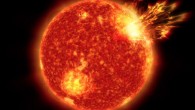
Powerful coronal mass ejection events from the young Sun may have provided the crucial energy needed to warm early Earth, according to a team of researchers led by Dr. Vladimir Airapetian of NASA’s Goddard Space Flight Center. Artist’s concept of the active young Sun 4 billion years ago. Its energy may have aided in creating molecules in the atmosphere of early Earth that allowed it to warm up enough to incubate life. Image credit: NASA / GSFC...

May 12, 2016 by News Staff

An international team of researchers from Australia and the United Kingdom has made a surprising discovery about the chemistry of Earth’s upper atmosphere...

May 10, 2016 by News Staff

Atmospherically transported dust from the Sahara Desert, the largest desert in the world, is bringing iron and other nutrients to underwater plants in...

May 4, 2016 by News Staff

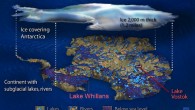
Three teams of scientists have taken a detailed look into the biogeochemistry, geophysics and geology of subglacial Lake Whillans, which lies 2,600 feet...

Apr 25, 2016 by News Staff

A new reef system has been found at the mouth of the Amazon River by an international group of researchers from Brazil and the United States. The Amazon...

Nov 26, 2015 by News Staff

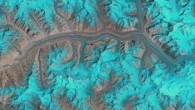
Animations that compress more than two decades of satellite images into one second reveal the complex behavior and flow of glaciers in the Karakoram mountain...

Nov 17, 2015 by Enrico de Lazaro

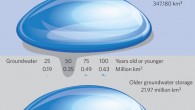
According to a new study in the journal Nature Geoscience, the total groundwater volume in the upper 2 km of the Earth’s landmass is approximately...

Oct 8, 2015 by News Staff

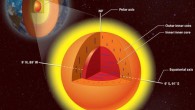
The Earth’s deepest layer – the inner core – was formed between a billion and 1.5 billion years ago as it ‘froze’ from the surrounding molten...

Sep 14, 2015 by News Staff

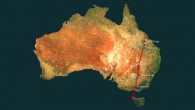
An international team of researchers has discovered the world’s longest known continental volcanic hotspot track — a 1,245 mile (2,000 km) long...

Aug 24, 2015 by News Staff

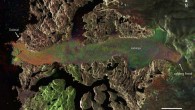
Images from European Space Agency’s Sentinel-1A satellite show that Greenland’s Jakobshavn glacier, the fastest moving glacier in the world, shed a...

Aug 18, 2015 by News Staff

Meteorite impact reactions may have generated building blocks for life in the oceans of the prebiotic Earth, says a team of scientists led by Dr Yoshihiro...

Jul 29, 2015 by News Staff

According to a new study published online in the journal Geophysical Research Letters, massive aquifers underneath deserts contain approximately one trillion...

Jul 14, 2015 by News Staff

A team of researchers aboard an ocean-going research vessel called RV Investigator has discovered a cluster of 50-million-year-old volcanoes off the coast...

Jun 26, 2015 by News Staff

A group of geoscientists led by Dr Tavi Murray of Swansea University, UK, has shown that during the glacier edge breaking process, known as calving, the...

Jun 17, 2015 by News Staff

The surface waters of the Arctic Ocean could reach levels of acidity that threaten the ability of animals to build and maintain their shells by 2030, according...

Jun 17, 2015 by News Staff

Two new studies using data from NASA’s GRACE satellites have found that 21 of planet’s 37 largest aquifers are being rapidly depleted by human consumption,...

May 28, 2015 by News Staff

According to a team of scientists led by Dr Joseph Shea of the International Centre for Integrated Mountain Development in Kathmandu, Nepal, if greenhouse-gas...

May 22, 2015 by News Staff

Using measurements of the elevation of the Antarctic ice sheet made by a suite of satellites, a group of scientists led by Dr Bert Wouters from the University...

May 12, 2015 by News Staff

An analysis of satellite data collected during 1993-2014 has revealed a more accurate picture of global sea level rise, showing that it is happening much...

May 12, 2015 by News Staff

According to a new study published in the journal Nature Communications, the underlying physical process that creates ‘breaking wave’ cloud patterns...