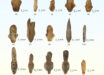
Both the Tasmanian tiger (Thylacinus cynocephalus) and the Tasmanian devil (Sarcophilus harrisii) are believed to have become extinct on the Australian mainland about 3,000 years ago. However, until now there were only 23 known rock art depictions of the Tasmanian devil and about 150 Tasmanian tiger paintings and petroglyphs, mostly at rock art sites in northern Australia. Scientists have now uncovered 14 previously undocumented images of the Tasmanian tiger or thylacine, as it also known, and two of the Tasmanian devils — some of which may be less than 1,000 years old — from two locations in northwest Arnhem Land in Australia’s Northern Territory.
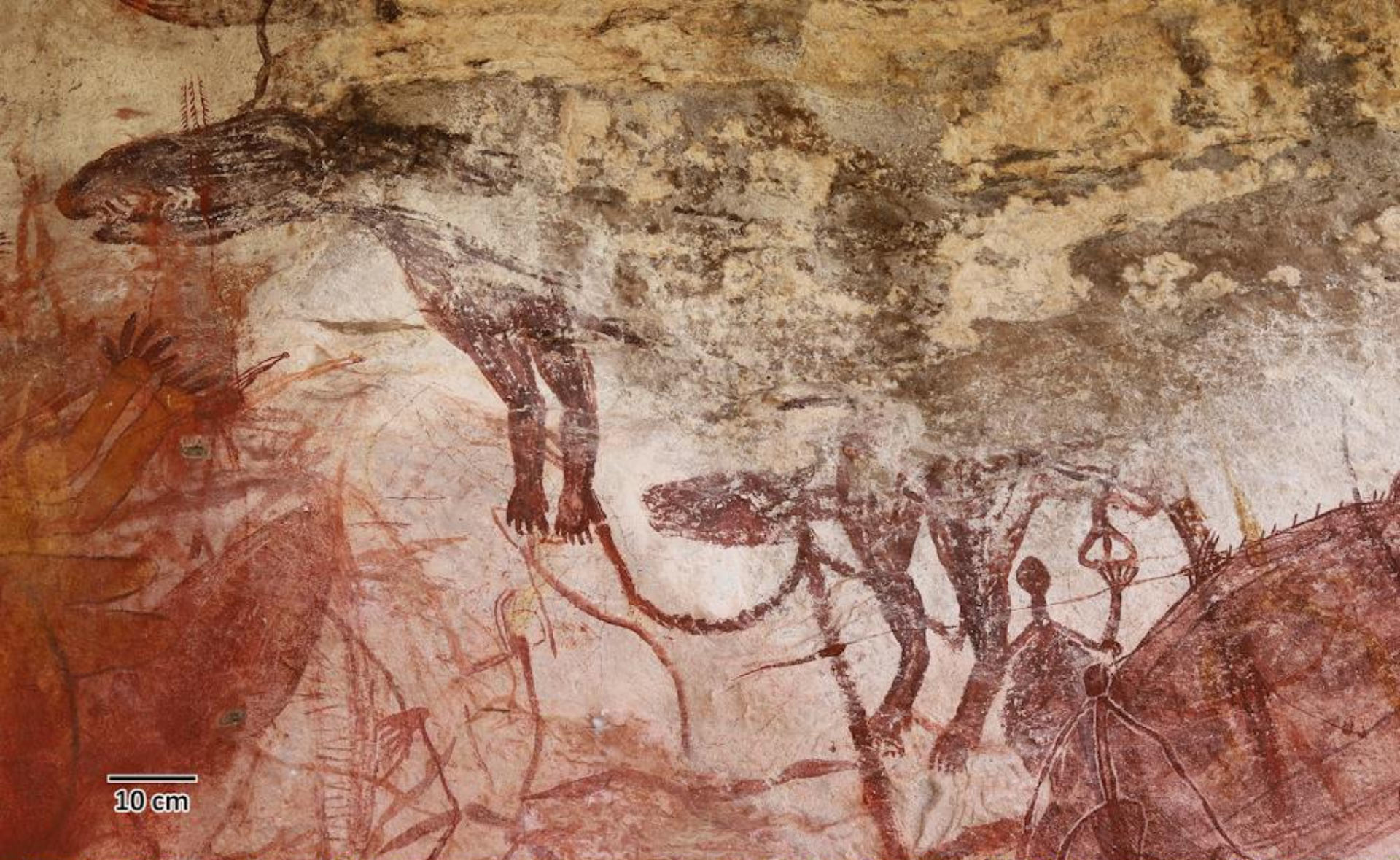
Large naturalistic style thylacine with sharp teeth from Injalak Hill, Northern Territory, Australia. Image credit: Craig Banggar.
The newly-documented Tasmanian tiger and devil paintings are in various Aboriginal art styles, made with red, sometimes yellow ochre since about 15,000 years ago.
The artists also used white pipe clay, which does not last as long or stain the rock as red ochre does, so most paintings with white were thought to be less than 1,000 years old.
“Thylacines were more widespread and more culturally important across mainland Australia than Tasmanian devils, as only 25 Tasmanian devil images had been documented versus more than 160 thylacine depictions,” said lead author Professor Paul Taçon, a researcher at Griffith University.
“The artists who made the more recent paintings may have seen actual living thylacines and some of these creatures may have survived longer in Arnhem Land.”
“Alternatively, artists may have been inspired by earlier paintings.”
“Regardless, the thylacine remains culturally important today and some contemporary artists make paintings of Tasmanian tigers on bark, paper and canvas. It even has a name: Djankerrk.”
“There were paintings in the area that had been retouched, which showed the significance of these animals across generations,” added co-author Dr. Andrea Jalandoni, also from Griffith University.
“Thylacine rock art offers rare insight into how people related to this animal in the past.”
“These depictions show that the thylacine held a meaningful place in everyday life and local knowledge long before it went extinct.”
In oral histories of the region, Tasmanian tigers were pets of the Rainbow Serpent and lived in rock pools.
They were often associated with bodies of water and swimming.
“The creatures were very much a part of his ancestors’ lives,” said co-author Joey Nganjmirra, a Djalama man from Western Arnhem Land.
“They used to tell stories about going hunting with thylacines.”
“Our research showed the thylacine had contemporary relevance in the region, not just for scientists but also for traditional community members,” Professor Taçon said.
“The thylacine lives on in western Arnhem Land not as a ghost from the past but as a meaningful creature that still has present-day significance.”
The discovery is reported in a paper published today in the journal Archaeology in Oceania.
_____
Paul S. C. Taçon et al. The Devil Is in the Detail: Tasmanian Devil and Tasmanian Tiger Paintings from Awunbarna and Injalak Hill, Northern Territory, Australia. Archaeology in Oceania, published online March 30, 2026; doi: 10.1002/arco.70024