Using ESO’s Very Large Telescope (VLT) and VLT Interferometer (VLTI) in Chile, astronomers have directly observed two gas giants emerging from the planet-forming disk around a star known as WISPIT 2, offering one of the clearest views yet of how a planetary system may form. The arrangement, marked by gaps and rings in the surrounding material, suggests that still more alien worlds could be assembling there.
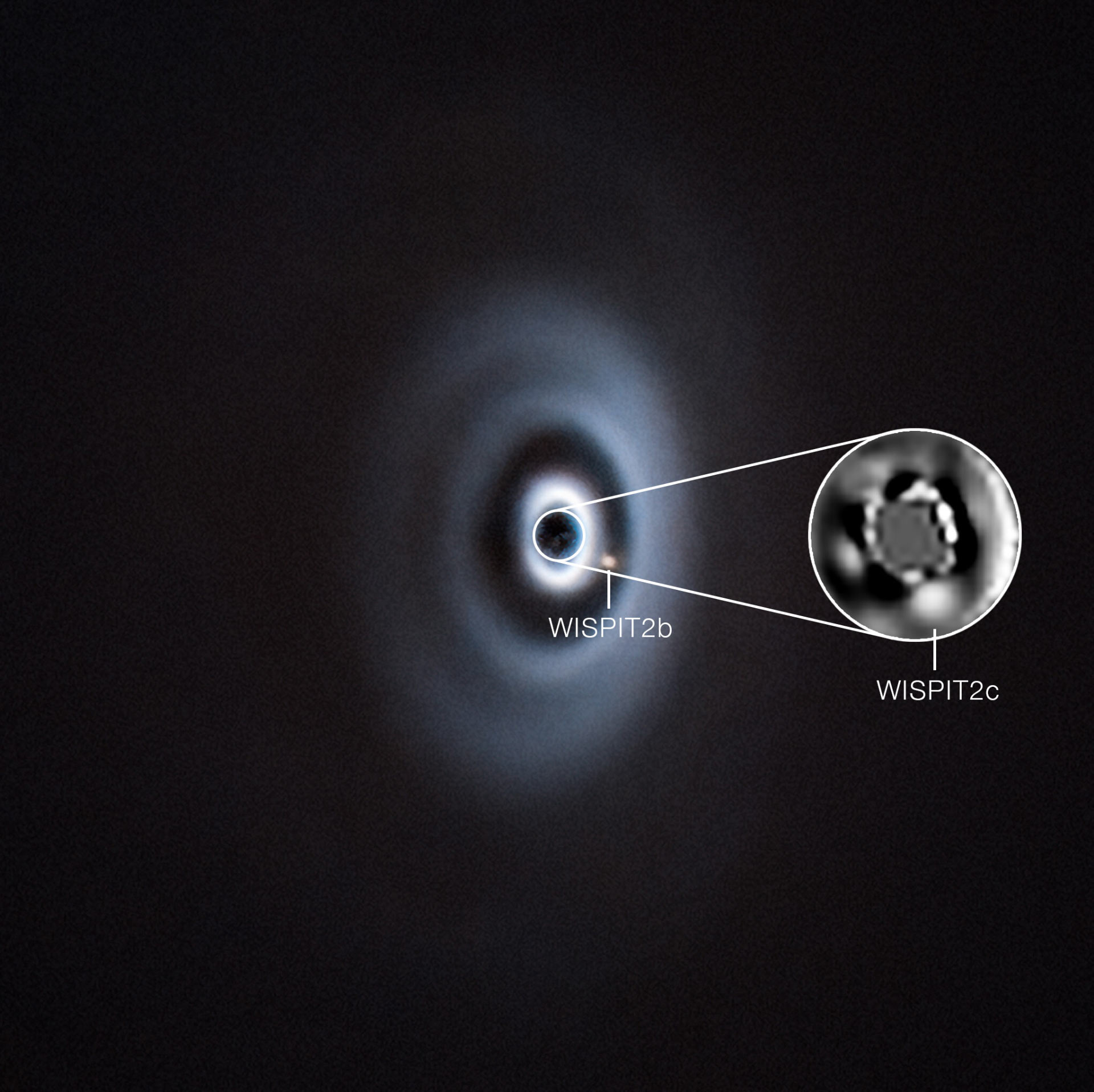
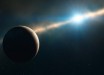
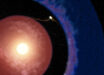
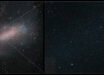
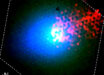
These images, taken with ESO’s Very Large Telescope, show a planetary system being born around the young star WISPIT 2. Image credit: ESO / Lawlor et al.
“WISPIT 2 is the best look into our own past that we have to date,” said Chloe Lawlor, a Ph.D. student at the University of Galway.
“WISPIT 2 gives us a critical laboratory not just to observe the formation of a single planet but an entire planetary system,” added Dr. Christian Ginski, also from the University of Galway.
“With such observations, astronomers aim to better understand how baby planetary systems develop into mature ones, like our own.”
The first protoplanet found in the WISPIT 2 system was detected a year ago, with a mass almost five times that of Jupiter.
Named WISPIT 2b, it orbits the central star at around 60 times the distance between Earth and the Sun.
“This detection of a new world in formation really showed the amazing potential of our current instrumentation,” said Richelle van Capelleveen, a Ph.D. student at Leiden Observatory.
After an additional object was identified near the star, measurements made with VLT and VLTI telescopes confirmed its planetary nature.
The newly-discovered planet, WISPIT 2c, is four times closer to the central star and is twice as massive as WISPIT 2b.
Both planets are gas giants, like the outer planets in our Solar System.
To confirm the existence of WISPIT 2c, the astronomers employed the SPHERE instrument on VLT.
They then used the GRAVITY+ instrument on VLTI to confirm that the object was indeed a planet.
“Critically our study made use of the recent upgrade to GRAVITY+ without which we would not have been able to get such a clear detection of the planet so close to its star,” said Dr. Guillaume Bourdarot, an astronomer at the Max Planck Institute for Extraterrestrial Physics.
Both planets around WISPIT 2 appear in clear gaps within the disk of dust and gas circling the young star.
These gaps result from each planet’s development: particles in the disk accumulate, their gravity pulling in more material until an embryo planet forms.
The remaining material, around each gap, creates distinctive dust rings in the disk.
Besides the gaps that the two planets were found in, there is at least one smaller gap farther out in the WISPIT 2 disk.
“We suspect there may be a third planet carving out this gap, potentially of Saturn mass owing to the gap’s being much narrower and shallower,” Lawlor said.
The results appear in the Astrophysical Journal Letters.
_____
Chloe Lawlor et al. 2026. Direct Spectroscopic Confirmation of the Young Embedded Protoplanet WISPIT 2c. ApJL 1000, L38; doi: 10.3847/2041-8213/ae4b3b