HD 80606b has one of the most extreme orbits of any known exoplanet and the NASA/ESA/CSA James Webb Space Telescope just caught it getting flash-fried as it whipped past its star.
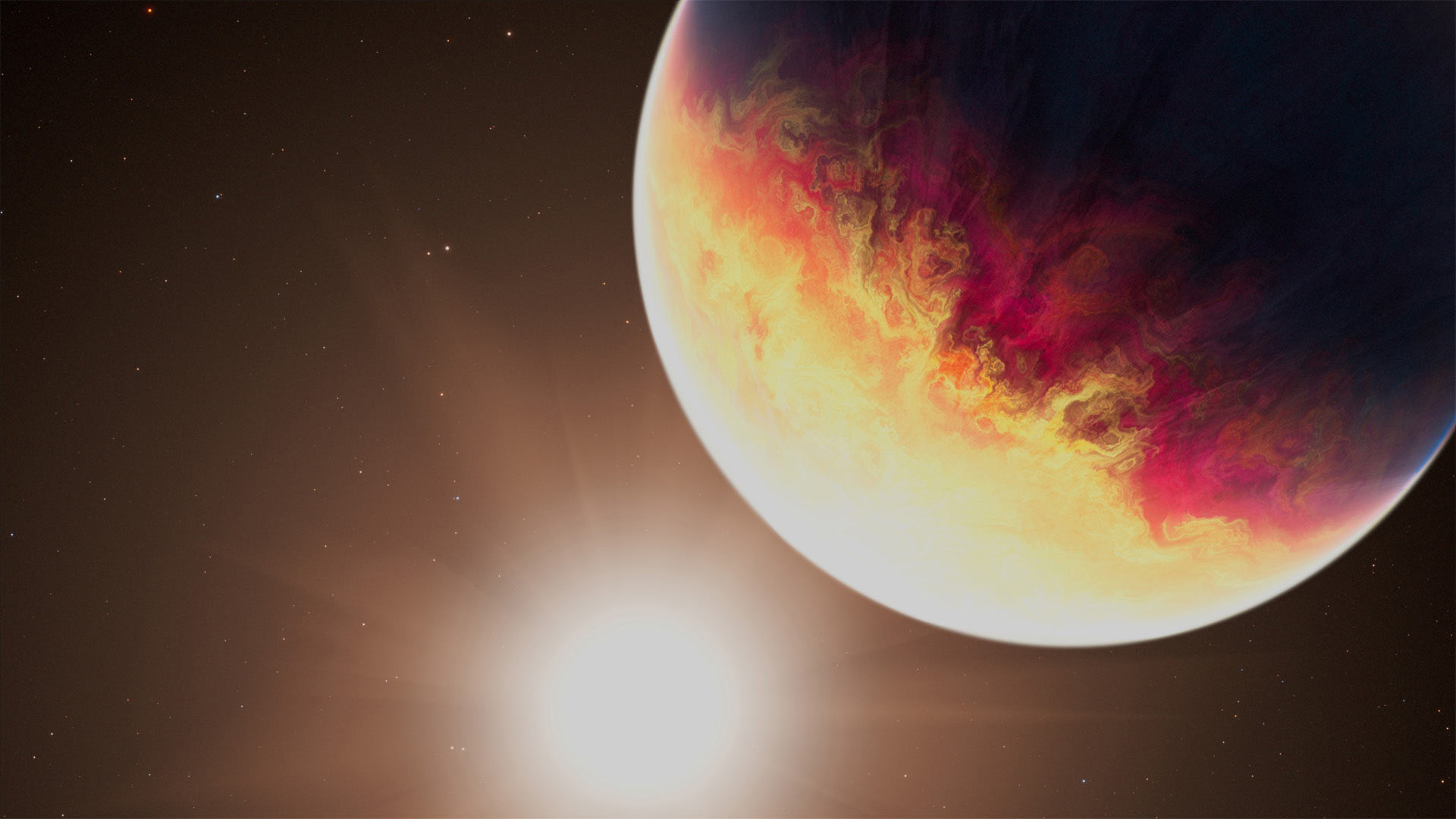
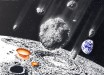
An artist’s impression of the hot-Jupiter exoplanet HD 80606b. Image credit: NASA / ESA / CSA / Joseph Olmsted, STScI.
First discovered in April 2001, HD 80606b is a highly eccentric exoplanet about four times more massive than Jupiter.
The alien world is located around 217 light-years away in the constellation of Ursa Major.
Classified as hot Jupiter, it orbits its parent star, HD 80606, once every 111 days.
“Hot Jupiters are already considered some of the most extreme exoplanets we know of, but even among that population, HD 80606b is one of the most extreme,” said Dr. Tiffany Kataria, an astronomer at NASA’s Jet Propulsion Laboratory.
“We typically think of hot Jupiters as hot gas giants sitting right next to their stars, but this planet’s highly eccentric orbit creates a completely different beast.”
As HD 80606b plunges close to its star, Webb shows its temperature skyrockets by 1,100 degrees Fahrenheit.
Previous studies have shown that radical temperature swings can cause an exoplanet’s chemistry and clouds to change in real time.
According to the astronomers, the dynamic conditions of HD 80606b make the planet an ideal target to observe these changes with Webb’s powerful instruments.
“Observing a planet like HD 80606b is actually very efficient because its unusual orbit, with the corresponding swings in temperature and chemical composition, allow us to gather data under varying conditions in just hours and apply those findings to other hot Jupiters or more conventional exoplanets,” said Dr. Laura Mayorga, an astronomer at the Johns Hopkins Applied Physics Laboratory.
Using Webb’s MIRI (Mid-Infrared Instrument), the researchers observed HD 80606b before, during, and after its periastron, or closest pass by its star.
During periastron, the planet also passed behind the star from Webb’s perspective in what’s known as a secondary eclipse.
“Webb has shown that the planet’s increase in temperature was even more extreme than we anticipated based on Spitzer data,” Dr. Kataria said.
The scientists presented the findings on June 16 at the 248th meeting of the American Astronomical Society (AAS) in Pasadena, California.
_____
Tiffany Kataria et al. 2026. Flash-Heating a Roasted Planet: Time-Resolved Characterization of HD 80606b with JWST/MIRI. AAS 248, abstract # 426