A team of entomologists led by the University of Bristol and the Smithsonian Tropical Research Institute has compiled decades of data from butterfly houses, wild field studies, and lab experiments to build the most comprehensive picture yet of how long Heliconius butterflies — a colorful genus of tropical butterflies found across Central and South America — live and how slowly they age. Their findings reveal a roughly three-fold lifespan extension in Heliconius over their closest relatives in the same butterfly tribe, with one species, Heliconius hewitsoni, recorded living up to 348 days in captivity.
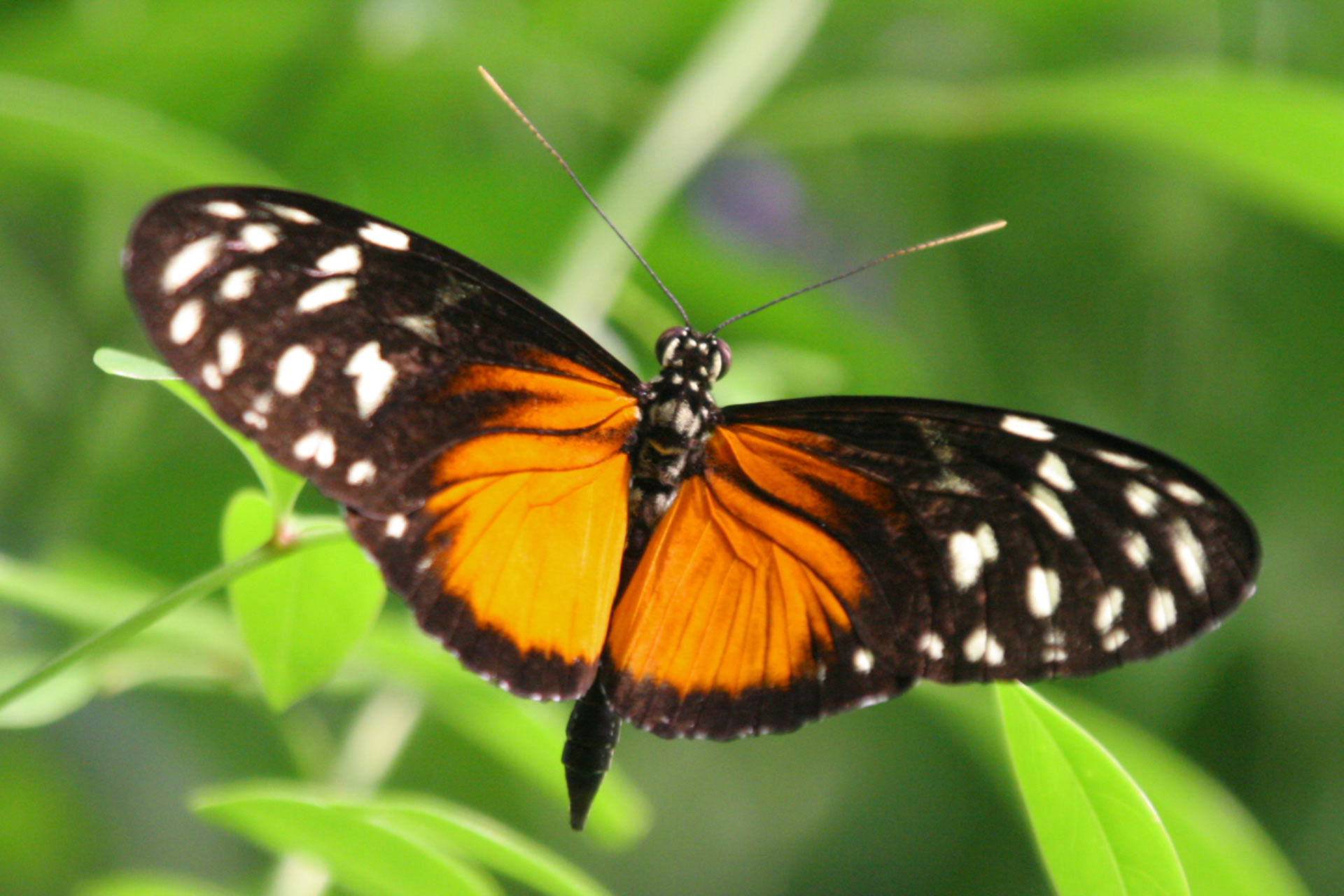
Heliconius hecale. Image credit: Robert Lawton / CC BY-SA 2.5.
Heliconius is a genus of brightly colored butterflies found throughout tropical and subtropical regions of Central and South America, with some species reaching southern parts of the United States.
They are commonly known as ‘longwings’ because of their elongated wings.
Most butterflies drink nectar, which is rich in sugars but poor in protein. Heliconius butterflies supplement nectar with pollen, collecting it on their proboscis and extracting amino acids using saliva.
This unusual feeding strategy was first documented by evolutionary biologist Lawrence Gilbert in 1972.
The extra amino acids appear to fuel several unusual traits, including extended lifespan, sustained egg production, and enhanced chemical defenses.
Many Heliconius species can live for several months in the wild. This is substantially longer than their close relatives in the broader Heliconiini tribe, who have a lifespan of roughly six weeks.
It has not been clear what contributes to their unique longevity, although it is thought that the retention of pollen-feeding behavior in adulthood could play a role.
“As the most species-rich animal class, insects are renowned for their extraordinary morphological and ecological diversity,” said Dr. Jessica Foley, a researcher at the University of Bristol.
“They also exhibit extreme variation in longevity, with maximum lifespans ranging from just a few days in adult mayflies to several decades in the reproductive castes of some ants and termites.”
“This represents a roughly 5,000-fold difference within the class, compared with around a 100-fold difference in lifespan observed in mammals.”
“Heliconius butterflies are among the longest-lived butterflies, but what makes them particularly remarkable is that they appear to have evolved not only longer lifespans, but also slower aging.”
“This allows them to live significantly longer than closely related species from which they diverged relatively recently in evolutionary time.”
In their new study, Dr. Foley and her colleagues confirmed that Heliconius’ unique pollen-based diet extended lifespan, but also found something more striking: even when Heliconius butterflies were experimentally deprived of pollen, they still outlived their shorter-lived relatives by roughly three weeks.
That finding pointed to evolved, heritable changes in biology — not merely a dietary benefit — as the engine of their unusual longevity.
To probe the underlying mechanisms, the researchers measured not just how long the butterflies survived, but how their bodies changed with age.
Using grip strength as a proxy for physical condition, they found that Dryas iulia — a close relative that does not feed on pollen — lost about a quarter of its grip strength within five weeks.
Heliconius hecale, by contrast, showed no measurable decline in grip strength even at the end of its much longer lifespan.
The gap in lifespan between the two groups — 25-fold between the shortest- and longest-lived species in the broader tribe — is among the largest ever documented for such closely related animals, comparable only to certain species of fish.
Insects are an unusually promising place to look for such variation because their shorter lives in absolute terms make them far more practical subjects for the kind of long-term experiments that would take decades in mammals.
The scientists hope Heliconius butterflies will become new model organisms for aging research, with their rich genomic resources making them well-suited for future studies into the molecular machinery behind an ‘extended healthspan.’
“The exciting implication of this lifespan extension is that it provides a powerful opportunity to identify the mechanisms that underpin longevity,” Dr. Foley said.
“By comparing long-lived Heliconius butterflies with their short-lived relatives, we have a natural evolutionary experiment that can help reveal how lifespan is extended, making them a highly promising new model for research into the biology of ageing and longevity.”
The team’s results appear in the journal Nature Communications.
_____
J. Foley et al. 2026. Evolution of increased longevity and slowed ageing in a genus of tropical butterfly. Nat Commun 17, 5077; doi: 10.1038/s41467-026-73635-7