Geology News

Aug 8, 2018 by News Staff

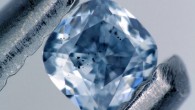
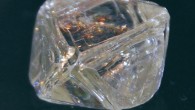
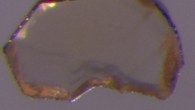
Blue (type IIb) diamonds owe their color to boron, an element abundant in the Earth’s continental and oceanic crust. According to new research led by the Gemological Institute of America, these diamonds formed up to four times deeper in the Earth’s mantle than most other diamonds. A blue, boron-bearing diamond with dark inclusions of a mineral called ferropericlase, which were examined as part of this study. This gem weighs 0.03 carats. Image...

Jul 18, 2018 by News Staff

The Meghalayan, the youngest stage of the current Holocene epoch, began at the time when ancient agricultural societies experienced an abrupt and critical...

Jul 17, 2018 by News Staff

The ancient cores of Earth’s continents are called cratons. Shaped like inverted mountains, they can stretch as deep as 200 miles (320 km) through the...

May 8, 2018 by News Staff

A team of geologists at the University of Texas at Dallas and Austin has put forward an intriguing new hypothesis that links the dawn of plate tectonics...

May 2, 2018 by News Staff

An international team of geologists from Poland and the UK has found evidence that the Late Devonian mass extinction, which occurred approximately 370...

Mar 23, 2018 by News Staff

An international research team led by a Princeton University scientist has found that the rise in oxygen that occurred about 2.3 billion years ago (Paleoproterozoic...

Mar 12, 2018 by News Staff

An international team of scientists from the United States and Canada has discovered the first direct evidence that aqueous pockets may exist as far as...

Jan 24, 2018 by News Staff

An international team of geologists has found highly oxidized iron, similar to the rust we see on the Earth’s surface, in diamond’s garnet inclusions...

Jan 23, 2018 by News Staff

Tiny crystals of clinopyroxenes that form deep in volcanoes may be the key for advance warnings before volcanic eruptions, according to a team of vulcanologists...

Dec 15, 2017 by News Staff

A team of geologists has found 60 million-year-old ejecta from a previously unknown meteorite impact on the Isle of Skye, northwest Scotland. This is the...

Oct 25, 2017 by Enrico de Lazaro

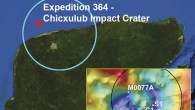
The Chicxulub crater is the only well-preserved peak-ring crater on Earth and linked to the Cretaceous-Tertiary mass extinction, an event 65 million years...

Oct 17, 2017 by News Staff

Ancient humans left Africa to escape a drying climate, about 60,000 years ago — a finding that contradicts previous suggestions that humens were...

Oct 11, 2017 by News Staff

The Pacific Northwest, a geographic region in western North America, was home to one of the planet’s most powerful known volcanic eruptions, according...

Jul 6, 2017 by Natali Anderson

An international team of geologists led by Monash University Professor Joël Brugger has discovered a new thallium mineral — nataliyamalikite. Nataliyamalikite...

Jun 21, 2017 by News Staff

According to new research led by the University of Oxford, episodic volcanic activity is likely to have played a key role in triggering the end-Triassic...

Jun 5, 2017 by News Staff

What is being reported as the earliest indication of humans’ impact on the Earth’s geology and ecosystems has been found in the Dead Sea, Israel —...

May 22, 2017 by News Staff

According to new research, some of Earth’s atmosphere was brought to the planet by comets billions of years ago. This artwork shows a rocky planet being...

May 18, 2017 by Enrico de Lazaro

Geologists from Tohoku University, Japan, Amherst College and Washington University in Saint Louis, the United States, say they may have found the cause...

Mar 17, 2017 by News Staff

An analysis of rock samples collected from the Superior Province, the region in Canada just north of the Great Lakes, suggests the samples contain components...

Feb 8, 2017 by News Staff

A team of geologists has discovered three new minerals — leesite, leószilárdite and redcanyonite — growing on the walls of old uranium mines...