New findings from Neretva Vallis, an ancient river channel that once transported water into Jezero crater on Mars, reveal unusually high nickel levels in 3-billion-year-old sediments, echoing mineral patterns on Earth sometimes linked to microbial processes.
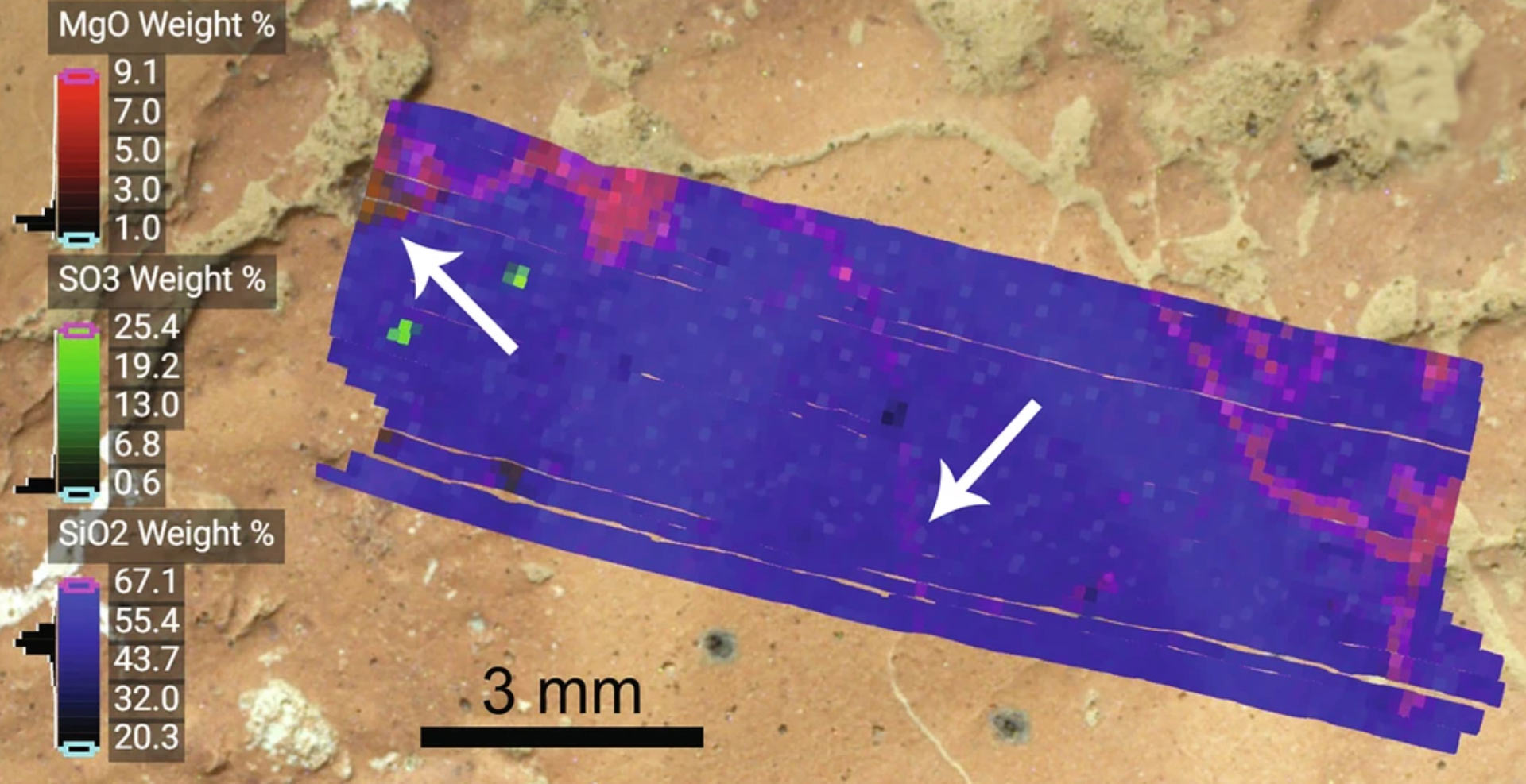
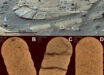
Nickel is present in bright magnesium-sulfate veins in Jezero crater on Mars, supporting an authigenic origin. Image credit: Manelski et al., doi: 10.1038/s41467-026-70081-3.
“Perseverance landed in Jezero crater, Mars, in February 2021 with the goal of searching for ancient habitable environments and collecting cored samples for eventual return to Earth as part of a future Mars Sample Return mission,” said Purdue University’s Dr. Henry Manelski and his colleagues.
“Jezero is a 45-km-diameter Noachian (3.8-4 billion years ago) impact crater that once hosted a lake, as evidenced by two inlet valleys, their associated fluvio-deltaic fans, and an outlet valley on the eastern edge of the crater.”
“Since landing, the rover has traversed the igneous crater floor, ascended onto the western fan deposit, crossed the olivine- and carbonate-rich Margin Unit, and entered into the western inlet valley known as Neretva Vallis.”
In their research, Dr. Manelski and co-authors used a laser, infrared spectrometers, and an X-ray spectrometer on Perseverance to examine 126 sedimentary rocks and 8 rock surfaces in Neretva Vallis.
They detected nickel in 32 rocks in concentrations up to 1.1% of their weight — the highest abundance observed in Martian bedrock to date.
They observed that nickel tended to co-occur with iron sulfide compounds and with sulfate minerals produced from the breakdown of these rocks, such as jarosite and akaganeite.
The researchers identified similarities between the chemical composition and shape of the nickel-rich iron sulfide arrangements in Neretva Vallis and those of pyrite — an iron sulfide mineral — in sedimentary rocks on Earth.
Iron sulfides in sedimentary rocks on Earth are primarily formed from microbial anaerobic respiration using sulfates in the presence of iron-containing minerals.
Previous studies have detected iron sulfides in Neretva Vallis in the presence of organic carbon compounds and it has been proposed that these compounds could have been formed by living organisms.
“However, they could also result from reactions that do not involve living organisms,” the scientists said.
“Our current research does not provide evidence of such organisms.”
“Nickel is an essential component of enzymes in many ancient archaea and bacterial species and is required for some chemical pathways used in energy generation, carbon fixation, and organic matter decomposition.”
“The presence of nickel-rich rocks indicates that, if living organisms had been present on early Mars, nickel may have been available in a form that they could have used.”
“Nickel may have originated from the breakdown of igneous rocks or from a nickel-rich meteorite.”
“Further research is needed to determine the source of nickel in Neretva Vallis and to investigate possible connections between it and organic matter in this location.”
The study was published this week in the journal Nature Communications.
_____
H.T. Manelski et al. 2026. Strong nickel enrichment co-located with redox-organic interactions in Neretva Vallis, Mars. Nat Commun 17, 2705; doi: 10.1038/s41467-026-70081-3