Scientists have extracted and analyzed proteins from the tooth enamel of six Homo erectus individuals who lived in China roughly 400,000 years ago, offering an unprecedented glimpse into the genetic makeup of one of humanity’s most successful and far-ranging ancestors. Their results suggest that Homo erectus may have carried genetic variants that were later passed to Denisovans and eventually to some people living today.

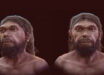
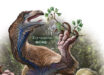
This is an artist’s reconstruction of Homo erectus. Image credit: Yale University.
“Homo erectus was the first species within our genus to leave Africa, occupying a key position in human evolutionary history,” said lead author Dr. Qiaomei Fu from the Institute of Vertebrate Paleontology and Paleoanthropology at the Chinese Academy of Sciences and colleagues.
“However, due to the lack of molecular evidence from Homo erectus, their genetic characteristics, population diversity, and especially their potential connections to modern humans remain unresolved.”
“As a result, the role of Homo erectus represents a major mystery and a focal point of debate in human evolution.”
In the new research, the authors worked with Homo erectus fossils from three sites spanning both northern and southern China: Zhoukoudian outside Beijing, Hexian in Anhui province, and Sunjiadong in Henan province.
Rather than attempting to recover DNA, they turned to proteins locked inside tooth enamel.
In all six Homo erectus individuals, they identified two distinctive amino acid variants in a tooth-development protein called ameloblastin — one of which, AMBN-A253G, has never been seen before in any other human or primate species.
The other variant, AMBN-M273V, had previously turned up only in Denisovans.
The finding suggests that Homo erectus populations in East Asia may have interbred with Denisovans, leaving a molecular fingerprint that persisted.

A portrait of a juvenile female Denisovan based on a skeletal profile reconstructed from ancient DNA methylation maps. Image credit: Maayan Harel.
“The first is the previously unknown AMBN-A253G mutation, which was identified as a potential molecular marker associated with these Homo erectus populations,” the researchers said.
“It provides the first evidence that Homo erectus specimens from these three sites belonged to the same evolutionary population.”
“The second is the AMBN-M273V variant, previously thought to be specific to Denisovans,” they added.
“However, our study reveals that this variant is not unique to Denisovans but is shared by these Homo erectus populations.”
“The second variant may have entered the Denisovan lineage through admixture and was subsequently passed to some modern human populations — in Southeast Asia and Oceania — via Denisovan introgression.”
“This provides the first insights into a possible connection between East Asian Homo erectus — such as those from Zhoukoudian — and Denisovans, as well as the potential deep genetic links to some present-day modern humans.”
The results were published this week in the journal Nature.
_____
Q. Fu et al. Enamel proteins from six Homo erectus specimens across China. Nature, published online May 13, 2026; doi: 10.1038/s41586-026-10478-8