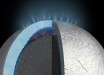
New observations from NASA’s Mars Atmosphere and Volatile EvolutioN (MAVEN) spacecraft reveal that the Zwan-Wolf effect — a phenomenon once thought unique to Earth’s magnetosphere, in which charged particles are squeezed like toothpaste coming out of a tube along magnetic structures called flux tubes — is also reshaping the Red Planet’s upper atmosphere.
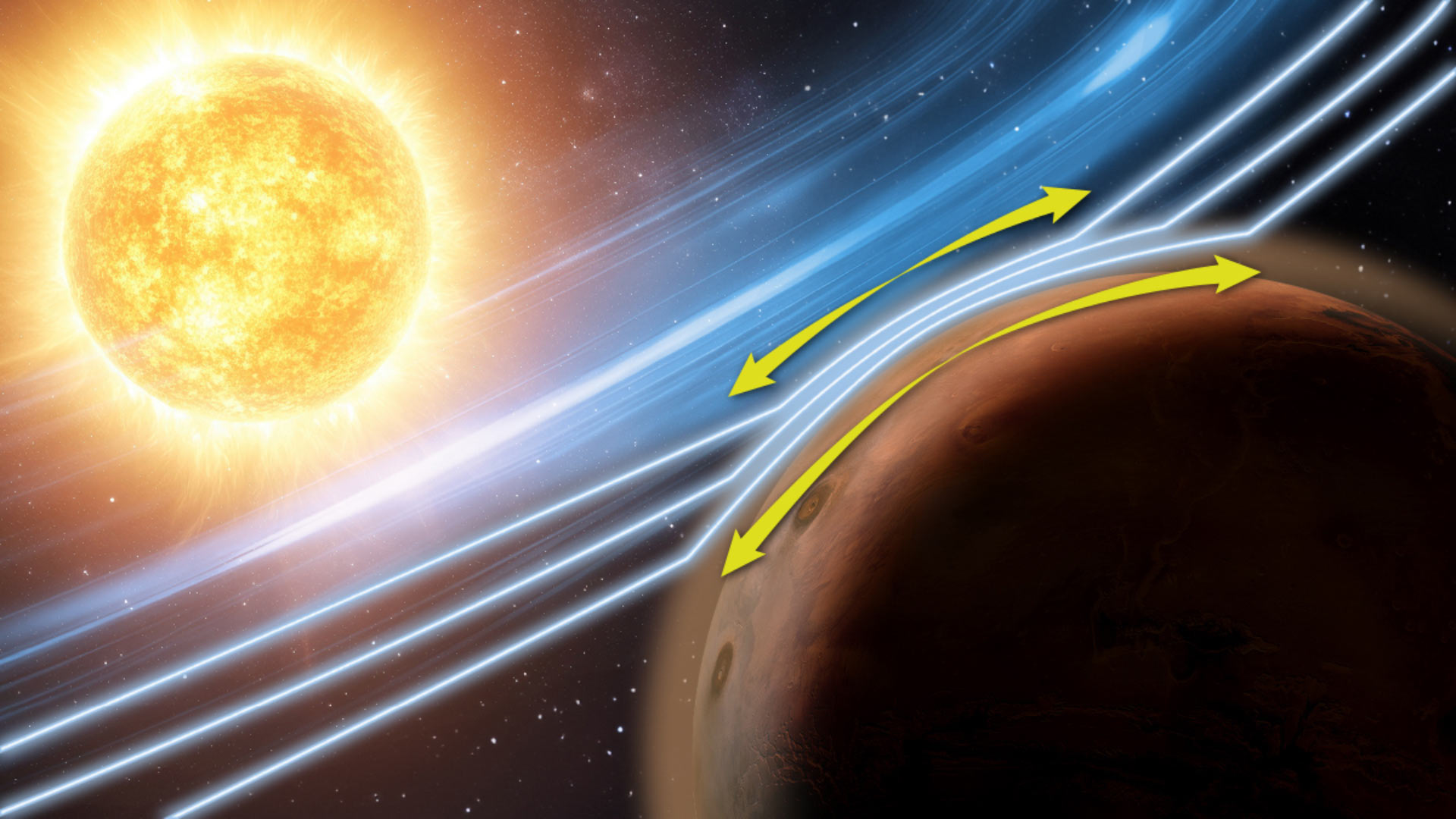
An artistic representation of the Zwan-Wolf effect at Mars, as observed by NASA’s MAVEN mission. Image credit: LASP / CU Boulder.
“When investigating the MAVEN data, I all of a sudden noticed some very interesting wiggles,” said Dr. Christopher Fowler, a researcher at West Virginia University.
“I would never have guessed it would be this effect, since it’s never been seen in a planetary atmosphere before.”
The Zwan-Wolf effect was first discovered in 1976, and until now has only been observed in planetary magnetospheres, not their atmospheres.
Unlike Earth, Mars is not protected by a global magnetic field, affecting how it interacts with the solar wind and space weather.
The MAVEN spacecraft observed the Zwan-Wolf effect in the Martian ionosphere — deep within the planet’s atmosphere below 200 km — which contains significant numbers of electrically charged particles.
Although Mars has an induced magnetosphere, a magnetic field generated by the solar wind interacting with the Martian ionosphere, it can greatly change in size and shape with large solar wind and space weather events.
That is what Dr. Fowler and colleagues saw in the MAVEN data when a large solar storm hit Mars.
Based on their findings, the Zwan-Wolf effect may be occurring constantly in the Martian ionosphere but at levels undetectable by MAVEN’s instrumentation.
The impact of the space weather event appears to have amplified the effect, allowing the researchers to observe it in the data.
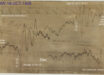
In the beginning, the authors came across some interesting-looking fluctuations in measurements of the magnetic field as the spacecraft flew through the atmosphere.
To explain this, they dug into observations made by several instruments on MAVEN, including measurements of the charged particle environment in the ionosphere.
Their sleuthing uncovered even more weird and interesting features in the data.
After ruling out several other possibilities, they were able to identify the culprit as the Zwan-Wolf effect, which explained all the features they were seeing.
“No one expected that this effect could even occur in the atmosphere,” Dr. Fowler said.
“That’s what makes this even more exciting. It introduces interesting physics that we haven’t yet explored and a new way the Sun and space weather can change the dynamics in the Martian atmosphere.”
“Understanding the Zwan-Wolf effect at Mars will further our understanding of how space weather affects the planet and provides new insight into how this effect might occur at similar unmagnetized bodies, such as Venus and Saturn’s moon Titan.”
“Observations like this also highlight the importance of knowing how large space weather events can lead to changes in the environment at and around the Red Planet and potentially affect assets on or near Mars.”
“Knowing how space weather interacts with Mars is essential,” said MAVEN’s principal investigator Dr. Shannon Curry, a researcher at the Laboratory for Atmospheric Space Physics at the University of Colorado Boulder.
“The MAVEN team continues making new discoveries with our datasets and finding these links between our host star and the Red Planet.”
The study was published this week in the journal Nature Communications.
_____
C.M. Fowler et al. 2026. Detection of Zwan-Wolf effect in the ionosphere of Mars. Nat Commun 17, 4224; doi: 10.1038/s41467-026-72251-9