Oxytocin, a powerful hormone produced by all mammals, including canines, is a key factor in the interaction between dogs and humans, according to a new...
A team of researchers at the University of Portsmouth, UK, has found evidence that domestic dogs move their faces in direct response to human attention.
Kaminski...
According to a new study published in the journal Social Development, pet dogs provide valuable social support for children when they’re stressed.
German...
Genetic material from 161 modern breeds helped a team of researchers at the National Human Genome Research Institute (NHGRI) of the National Institutes...
A team of researchers at Linköping University in Sweden has identified two genomic regions and five candidate genes associated with dog’s human-directed...
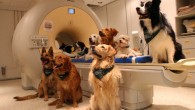
According to a study led by Dr. Attila Andics of the Eötvös Loránd University in Budapest, Hungary, dogs use the left hemisphere to process words and...
Dogs may have been domesticated independently in Asia and Europe from two separate wolf populations, according to a new study led by the University of...
A team of paleontologists has discovered a new species of fossil dog that was about the size of a coyote and lived on the coast of eastern North America...
Motion-sensitive cameras placed at several sites in Panama have captured images of the bush dog (Speothos venaticus), one of the most enigmatic of the...
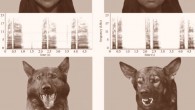
Dogs can recognize emotions in both dogs and humans by combining information from different senses, according to a study published today in the journal...
According to a study published last week in the Proceedings of the National Academy of Sciences, dog domestication may have caused harmful genetic changes.
Canadian...
The first dogs were domesticated about 15,000 years ago in Central Asia, perhaps near present-day Nepal and Mongolia, suggests a genetic study published...
Adult cats (Felis silvestris catus) are typically quite autonomous, even in their social relationships, and not necessarily dependent on others to provide...
A new study of North American canid fossils published in the journal Nature Communications suggests that the evolutionary path of the family Canidae (dogs...
A team of scientists from the Swedish Museum of Natural History and elsewhere sequenced and analyzed the draft genome of a 35,000-year-old wolf from the...
Dogs can discriminate human emotional expressions, according to a new study carried out by scientists at the University of Veterinary Medicine in Vienna,...
Dogs (Canis lupus familiaris) arrived in the Americas only about 10,000 years ago, thousands of years after the first human migrants crossed the Bering...
A team of scientists led by Dr Sunghwan Jung of Virginia Tech has identified and modeled the fluid dynamics at play when dogs (Canis lupus familiaris)...
According to University of California San Diego researchers Dr Christine Harris and Dr Caroline Prouvost, dogs feel jealousy too.
German Shepherd puppy....