Astronomers have discovered a highly-irradiated gas giant exoplanet in close-in, highly misaligned orbit around a bright star called TOI-1518.
An artist’s...
Propionamide (C2H5CONH2), a complex alkyl amide with twelve atoms, is the largest peptide-like molecule detected in space, according to a new study led...
Astronomers using NASA’s Chandra X-ray Observatory and Neil Gehrels Swift Observatory have detected a set of eight X-ray rings around a low-mass black...
Using the Keck Planet Imager and Characterizer (KPIC) on the Keck II telescope at the W.M. Keck Observatory, astronomers have obtained and analyzed the...
Jupiter’s icy satellite Ganymede is the largest moon in the Solar System. Water ice on its surface is frozen solid in frigid temperatures as low as minus...
Using the Near-Infrared Spectrograph (NIRSPEC) instrument at the Keck II telescope, astronomers conducted near-infrared spectroscopic observations of the...
An international team of astronomers from the United States and the United Kingdom has made the discovery of a giant, almost symmetrical arc of galaxies...
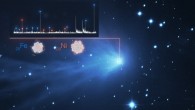
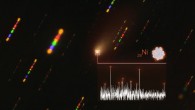
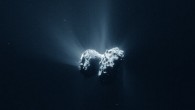
Using spectroscopic observations from ESO’s Very Large Telescope, a duo of astronomers from Poland has detected atomic nickel vapor in the cold coma...
Astronomers have detected lithium in the atmospheres of four cool and old white dwarfs, of which one also displayed atmospheric potassium. The relative...
A team of astronomers from the University of Groningen, the University of Edinburgh, and SRON Netherlands Institute for Space Research has detected chromium...
Using the COmetary Secondary Ion Mass Analyser (COSIMA) instrument on board ESA’s Rosetta spacecraft, researchers have detected phosphorus and fluorine...
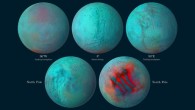
Using the spectral data collected by the Visual and Infrared Mapping Spectrometer (VIMS) onboard NASA’s Cassini spacecraft, a team of researchers has...
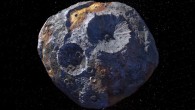
Astronomers using the Space Telescope Imaging Spectrograph on the NASA/ESA Hubble Space Telescope have observed the main-belt asteroid (16) Psyche, the...
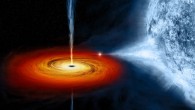
An analysis of archival X-ray data from NASA’s Rossi X-Ray Timing Explorer has revealed a clear separation between the characteristics of stellar-mass...
Spectral data gathered by the Visual and Infrared Mapping Spectrometer (VIMS) onboard NASA’s Cassini spacecraft provide strong evidence that the northern...
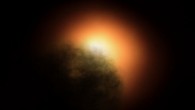
The red supergiant Betelgeuse is one of the brightest stars in the night sky and appears even more luminous because it is so close to Earth, only 650 light-years...
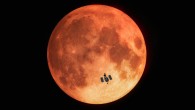
Taking advantage of a total lunar eclipse in January 2019, astronomers using the NASA/ESA Hubble Space Telescope have measured the amount of ozone in the...
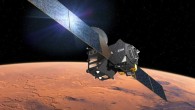
The Atmospheric Chemistry Suite (ACS) aboard ESA’s ExoMars Trace Gas Orbiter (TGO) has spotted never-before-seen spectral signatures of ozone and carbon...
Astronomers from the Radial Velocity Experiment (RAVE) Collaboration have released a database of spectra and associated fundamental stellar parameters...