On November 26, 2025, astronomers used the Gemini Multi-Object Spectrograph (GMOS) on the Gemini North telescope at Maunakea in Hawai’i to obtain images of the interstellar comet 3I/ATLAS. The new observations reveal how the object has changed after making its closest approach to the Sun.
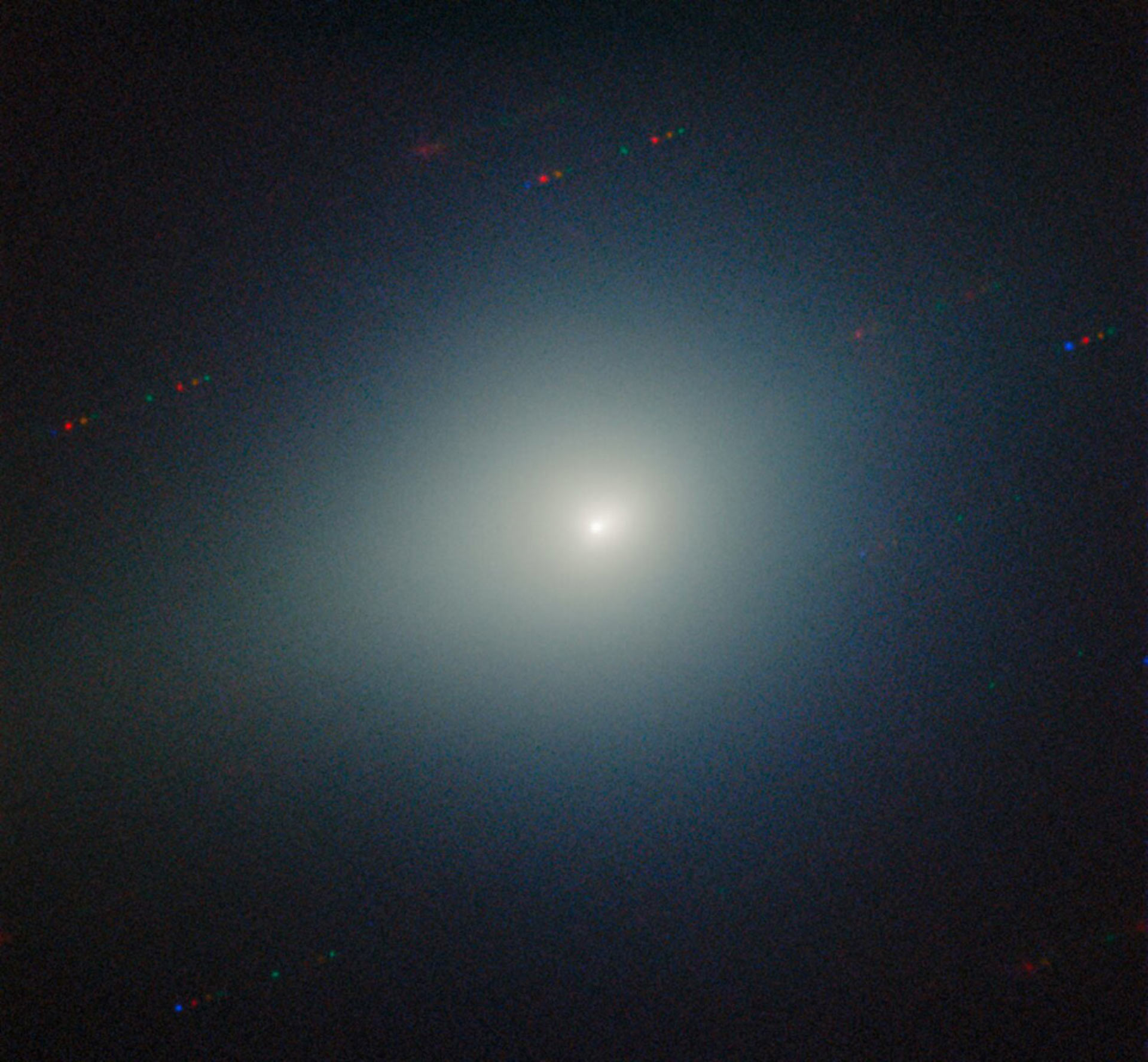
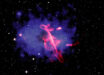
3I/ATLAS streaks across stars and galaxies in this image captured by the Gemini Multi-Object Spectrograph (GMOS) on the Gemini North telescope on Maunakea in Hawai’i, one half of the International Gemini Observatory, partly funded by NSF and operated by NSF’s NOIRLab. Image credit: International Gemini Observatory / NOIRLab / NSF / AURA / B. Bolin / J. Miller & M. Rodriguez, International Gemini Observatory & NSF’s NOIRLab / T.A. Rector, University of Alaska Anchorage & NSF’s NOIRLab / M. Zamani, NSF’s NOIRLab.
3I/ATLAS reached its closest approach to the Sun — known as perihelion — on October 30, 2025.
After emerging from behind the Sun, the interstellar visitor reappeared in the sky close to Zaniah, a triple-star system located in the constellation of Virgo.
On November 26, 2025, Eureka Scientific researcher Bryce Bolin and colleagues captured the new images of the comet as part of a public outreach initiative organized by NSF NOIRLab in collaboration with Shadow the Scientists.
“Sharing an observing experience in some of the best conditions available gives the public a truly front-row view of our interstellar visitor,” Dr. Bolin said.
“Allowing the public to see what we do as astronomers and how we do it also helps demystify the scientific and data collection process, adding transparency to our study of this fascinating object.”
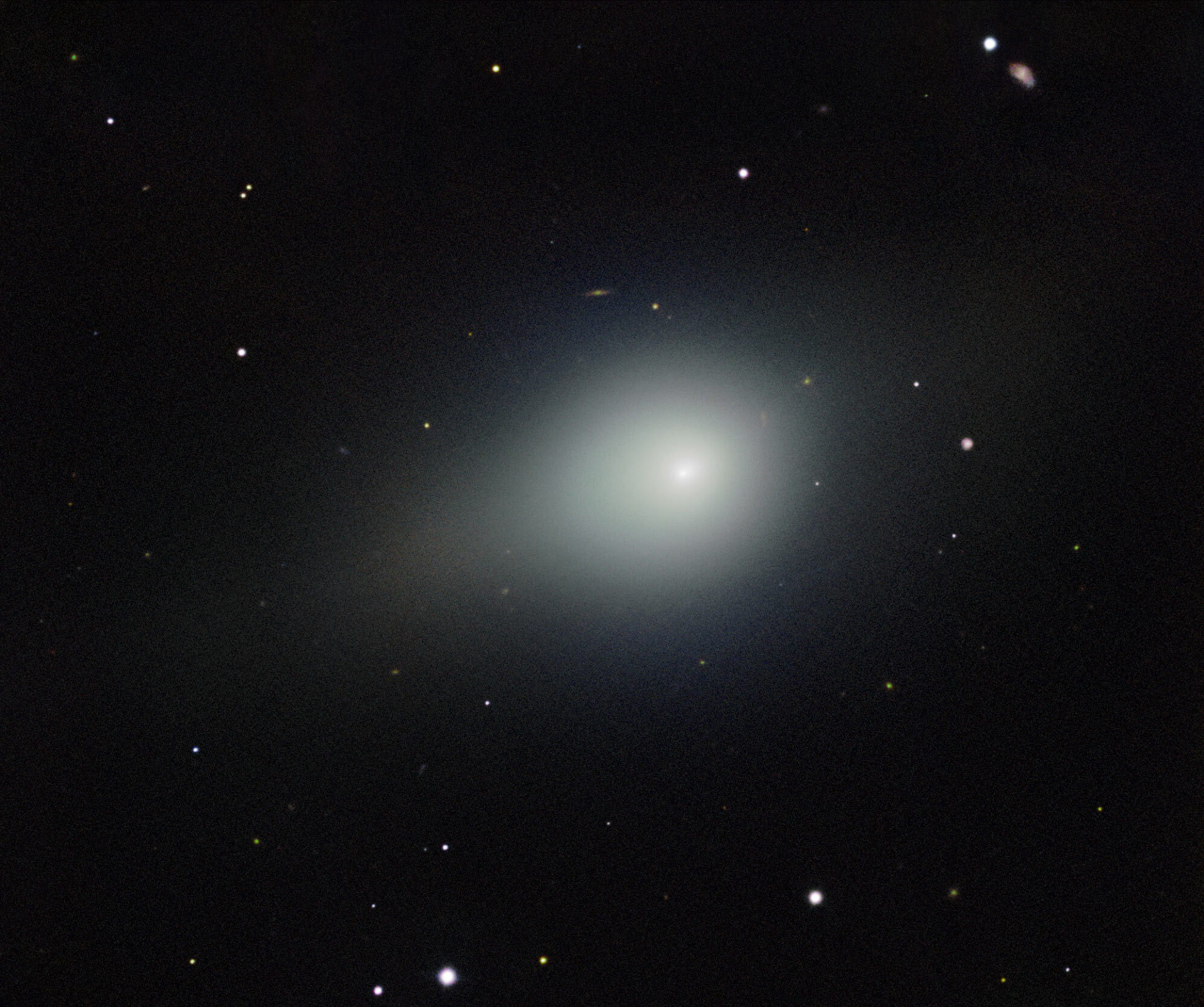
The image of 3I/ATLAS, taken with the Gemini Multi-Object Spectrograph (GMOS) on the Gemini North telescope, shows the comet’s coma — a cloud of gas and dust that forms around the comet’s icy nucleus in the vicinity of the Sun. Image credit: International Gemini Observatory / NOIRLab / NSF / AURA / B. Bolin / J. Miller & M. Rodriguez, International Gemini Observatory & NSF’s NOIRLab / T.A. Rector, University of Alaska Anchorage & NSF’s NOIRLab / M. Zamani, NSF’s NOIRLab.
The new GMOS images are composed of exposures taken through four filters: blue, green, orange, and red.
“As exposures are taken, the comet remains fixed in the center of the telescope’s field of view,” the astronomers said.
“However, the positions of the background stars change relative to the comet, causing them to appear as colorful streaks in the final image.”
“In earlier images of the comet, captured during a Shadow the Scientists session hosted at Gemini South in Chile, it appears to have a red hue.”
“However, in the new images released today, it appears to have a faint greenish glow.”
“This is due to light emitted by gases in the comet’s coma that are evaporating as the comet heats up, including diatomic carbon, a highly reactive molecule of two carbon atoms that emits light at green wavelengths.”
“What remains unknown is how the comet will behave as it leaves the Sun’s vicinity and cools down.”
“Many comets have a delayed reaction in experiencing the Sun’s heat due to the lag in time that it takes for heat to make its way through the interior of the comet.”
“A delay can activate the evaporation of new chemicals or trigger a comet outburst.”