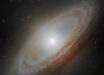
The Hubble team has released a beautiful close-up shot of the barred spiral galaxy IC 486.
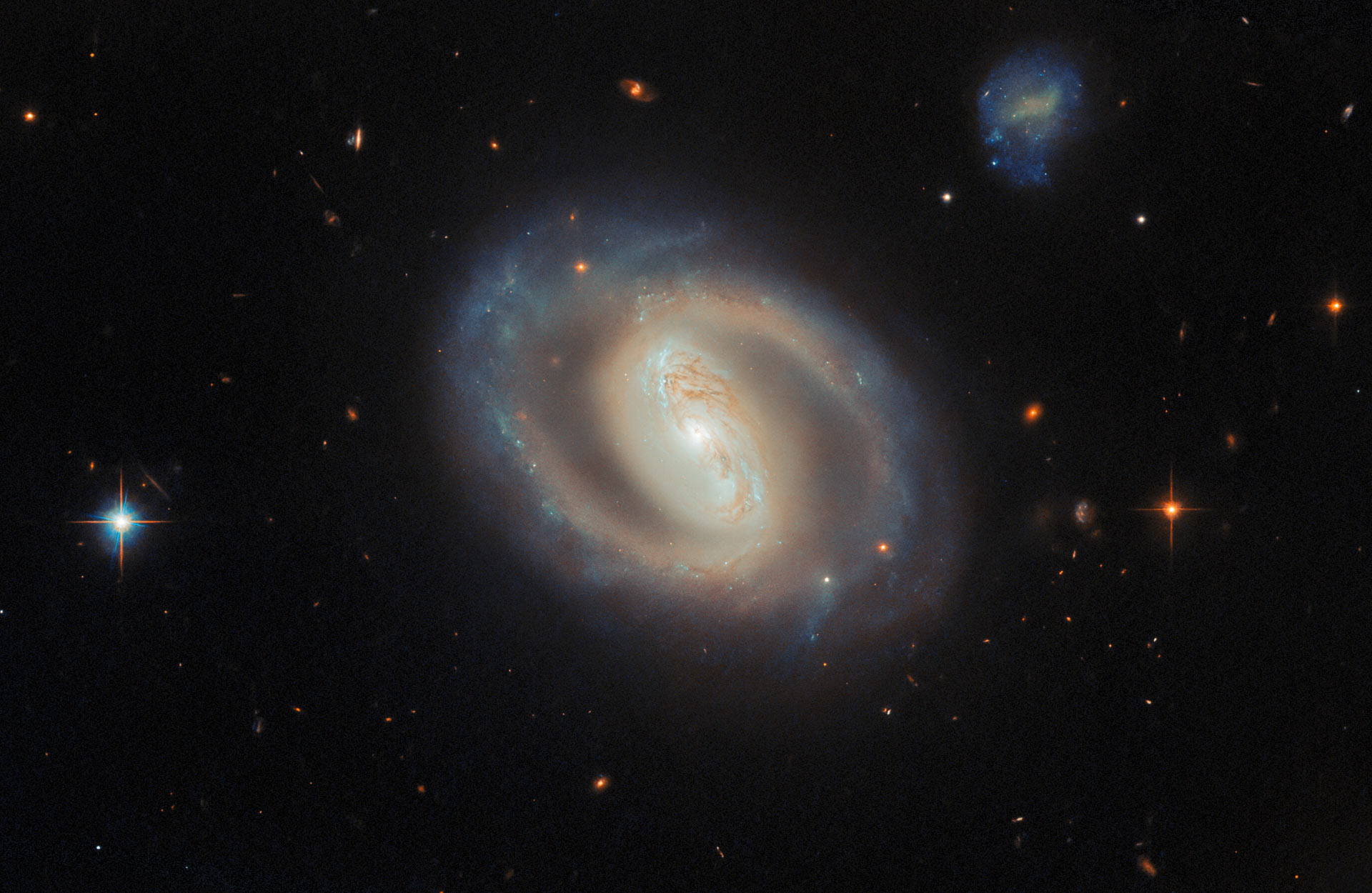
This Hubble image shows IC 486, a barred spiral galaxy some 380 million light-years away in the constellation of Gemini. Image credit: NASA / ESA / Hubble / M.J. Koss / A.J. Barth.
IC 486 is located some 380 million light-years away in the constellation of Gemini.
Otherwise known as LEDA 22445, IRAS 07572+2645 or UGC 4155, this galaxy was discovered on March 6, 1891 by the Austrian astronomer and climatologist Rudolf Ferdinand Spitaler.
IC 486 features a bright central bar-shaped structure from which its spiral arms unfurl, wrapping around the core in a smooth, almost ring-like pattern.
“Hubble’s keen eye reveals subtle variations in color across IC 486,” the Hubble astronomers said in a statement.
“The pale, luminous center is dominated by older stars, while faint bluish regions in the surrounding disk trace pockets of more recent star formation.”
“Wisps of dust thread through the galaxy’s structure, gently obscuring light and tracing regions of increased molecular gas where new stars are likely to form.”
“At the galaxy’s center a noticeable white glow outshines the starlight around it.”
“This is light given off by IC 486’s active galactic nucleus (AGN), powered by a supermassive black hole more than 100 million times the mass of the Sun.”
“Every sufficiently large galaxy hosts a supermassive black hole at its center, but some of these black holes are particularly ravenous, marshalling vast amounts of gas and dust into swirling accretion disks from which they feed.”
“The intense heat generated by the orbiting disk; of material generates intense radiation up to and including X-rays, which can outshine the entire rest of the galaxy.”
“In these cases, the galaxy is known as an active galaxy, with an AGN at its center.”
“Though it may appear calm and orderly, IC 486 is a dynamic system shaped by gravity and stellar evolution,” they said.
“Over millions of years, its structure will continue to evolve as stars are born, age, and fade, contributing to the ongoing story of galactic life in the Universe.”