Grape consumption may improve the skin’s barrier against environmental damage by rewriting gene activity, according to new research led by Western New England University.

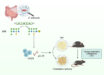
Grape phytochemicals interact with the microbiome, followed by transmission through the gut-organ axes, resulting in modulation of gene expression and subsequent downstream responses. Image credit: Nicky Pe.
Grapes contain hundreds of naturally occurring plant compounds that researchers have long associated with antioxidant and anti-inflammatory effects.
Among them are quercetin, anthocyanins, and the now-famous resveratrol.
Clinical studies have linked regular grape consumption to improvements in cardiovascular health, reduced markers of inflammation, better gut function, and sharper cognitive performance in older adults.
“We are now certain that grapes act as a superfood and mediate a nutrigenomic response in humans,” said Western New England University’s Professor John Pezzuto, corresponding author of the study.
“We observed this with the largest organ of the body, the skin.”
“The changes in gene expression indicated improvements in skin health.”
“But beyond skin, it is nearly certain that grape consumption affects gene expression in other somatic tissues of the body, such as liver, muscle, kidney and even brain.”
“This helps us to understand how consumption of a whole food, in this case grapes, affects our overall health.”
“It’s very exciting to be working in the post-genomics era where we can finally start to employ functional genomics and actually visualize complex matrices indicative of nutrigenomic responses.”
The study involved human volunteers who consumed the equivalent of three servings of whole grapes each day for two weeks.
Gene expression in skin was determined before and after grape consumption, with and without exposure of skin to low doses of ultraviolet (UV) irradiation.
The results demonstrated inter- and intraindividual differences of gene expression in the skin.
In other words, from the outset, gene expression in the skin of each individual was different.
The expression changed when the subjects consumed grapes or when exposed to UV irradiation, but still each individual was different from one another.
Further unique changes were observed when UV irradiation was combined with grape consumption.
Consequently, while gene expression is different when comparing one person to another person, the gene expression of every person changed after consuming grapes.
When searching for a functional commonality resulting from these changes in gene expression after consuming grapes, the researchers were able to construe the myriads of data as being indicative of enhanced skin keratinization and cornification, which are known to create a barrier against environmental damage.
This idea was reinforced by exposing skin to a low dose of UV irradiation and measuring the generation of malondialdehyde, a marker of oxidative stress, which was reduced when the subjects consumed grapes.
“Based primarily on transcriptomic data and theoretical protein-protein interactions, our results support the notion that grape consumption is beneficial for skin health,” the scientists said.
“Naturally, noncoding RNAs, epigenetics, and a myriad of other factors also come into play and remain to be further investigated.”
Their paper was published in the journal ACS Nutrition Science.
_____
Asim Dave et al. Inter- and Intraindividual Variation of Gene Expression in Human Skin Following Grape Consumption and/or Exposure to Ultraviolet Irradiation. ACS Nutr. Sci, published online May 13, 2026; doi: 10.1021/acsnutrsci.6c00003