Entomologists have discovered that carpenter ants — the largest genus within the stingless ant subfamily Formicinae — produce dozens of previously unknown venom peptides with antifungal properties, overturning the long-standing assumption that formicine ants rely only on formic acid for defense.
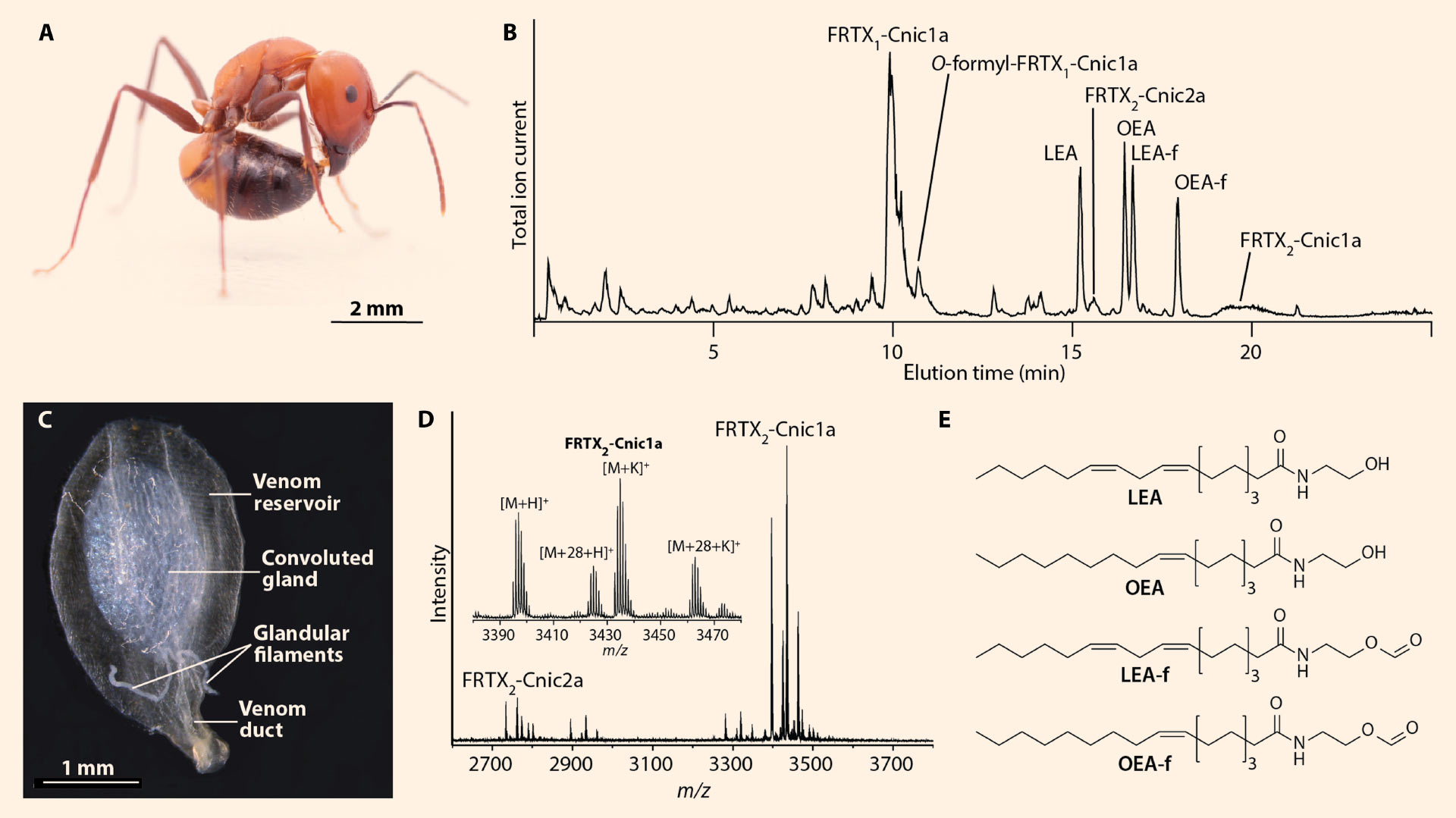
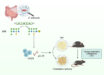
Analysis of Camponotus nicobarensis venom. Image credit: Koch et al., doi: 10.1126/sciadv.aed4078.
The Formicinae — one of the most diverse and ecologically successful ant groups — are best known for their venoms rich in formic acid, which can account for up to 70% of their chemical spray.
Unlike many other ants, formicine species lack a stinger. Instead, they release venom through an opening at the tip of the abdomen known as the acidopore, allowing them to smear it onto enemies, spray it from a distance, or apply it to wounds inflicted by biting.
Scientists have long known that these venoms serve purposes beyond attack and defense. Formicine ants spread venom across their brood and nests as a form of external immune protection, ingest it to acidify their guts and shape microbial communities, and use it in alarm and recruitment signaling.
Because formic acid dominates the venom mixture, researchers have generally assumed it was responsible for most of these functions.
But scattered findings from earlier studies hinted that the venoms might also contain peptidic compounds that had never been thoroughly investigated.
“We investigated a decades-old publication that received little attention in its time,” said Freie Universität Berlin’s Professor Timo Niedermeyer.
“The paper mentioned that these venoms also contain peptidic compounds.”
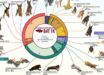
“We investigated the venoms of eight geographically distant species of carpenter ants and uncovered 35 peptides, or formicitoxins, belonging to two gene families.”
“The specific make-up of the formicitoxins varied from species to species, but their presence was widespread.”
“This means that carpenter ant venom is considerably more complex than previously assumed.”
For their study, the researchers combined methods from the fields of biology, chemistry, and pharmacy.
Using a proteotranscriptomic approach, they used protein and RNA data taken from the carpenter ant venom and associated tissues to identify the individual peptides as well as their genetic sequences.
They also conducted chemical analyses, performed bioactivity assays, and synthesized formicitoxins in the lab.
According to the scientists, the peptides they discovered likely help maintain hygiene within the ants’ nest.
The ants spread their venom onto the brood and the area surrounding the nest, leading the team to propose that the formicitoxins strengthen an external immune defense that persists after the immediate antimicrobial effects of formic acid fade.
“Some of the peptides demonstrate remarkable antifungal properties,” said Dr. Simon Tragust, a researcher at Martin Luther University Halle-Wittenberg.
“This is particularly interesting when we consider the threat that environmental microbes and pathogens pose to social communities such as ants, as well as the increased threat of microbial resistance for human well-being.”
“The Formicinae subfamily comprises over 3,700 species, meaning that there is enormous potential for the discovery of more bioactive substances.”
The study was published in the journal Science Advances.
_____
Lukas Koch et al. 2026. Beyond formic acid: Peptides in carpenter ant venoms aid in disease protection. Science Advances 12 (20); doi: 10.1126/sciadv.aed4078