Astronomy News

Apr 11, 2024 by News Staff

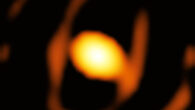
Most stellar magnetic fields — including the Sun’s — are produced by a dynamo that is generated in interior layers undergoing convection. Massive stars (8 or more solar masses) do not have convective interiors, so it has been unclear why about 7% have magnetic fields. Using ESO’s Very Large Telescope Interferometer, astronomers have observed a binary massive star called HD 148937 and found that one member of the system is magnetic...

Apr 10, 2024 by News Staff

Based on the book trilogy Remembrance of Earth’s Past by Chinese computer engineer Cixin Liu, Netflix’s sci-fi television series 3 Body Problem introduces...

Apr 8, 2024 by News Staff

Astronomers using CSIRO’s Parkes radio telescope (Murriyang) have detected unusual radio signals from XTE J1810-197, a radio magnetar (ultra-magnetic...

Apr 8, 2024 by Enrico de Lazaro

Using ESO’s VLT Survey Telescope (VST) at Paranal Observatory in Chile, astronomers have produced this beautiful image of the little-known nebula Gum...

Apr 8, 2024 by News Staff

To study dark energy’s effects over the past 11 billion years, the Dark Energy Spectroscopic Instrument (DESI) has created the largest 3D map of our...

Apr 8, 2024 by Enrico de Lazaro

Astronomers using the NASA/ESA Hubble Space Telescope have captured a striking new photo of the spiral galaxy IC 4633. This Hubble image shows IC 4633,...

Apr 5, 2024 by Natali Anderson

Using data from ESA’s Characterising ExOplanet Satellite (CHEOPS) and several other ESA and NASA missions, astronomers have detected signs of the rainbow-like...

Apr 4, 2024 by News Staff

A team of particle physicists from the University of Melbourne, the Australian National University, King’s College London and Fermi National Accelerator...

Apr 3, 2024 by Enrico de Lazaro

Astronomers using the NASA/ESA/CSA James Webb Space Telescope have captured a new image of the central starburst region of Messier 82 (M82, NGC 3034 or...

Apr 3, 2024 by Enrico de Lazaro

Astronomers using the NASA/ESA/CSA James Webb Space Telescope have captured a spectacular image of I Zwicky 18 (I Zw 18 for short), the archetypal extremely...

Apr 2, 2024 by News Staff

Astronomers using the Atacama Large Millimeter/submillimeter Array (ALMA) have detected over 100 molecular species in the center of the starburst galaxy...

Apr 2, 2024 by News Staff

Astronomers using the NASA/ESA Hubble Space Telescope have collected information on almost 500 stars as part of the Ultraviolet Legacy Library of Young...

Apr 1, 2024 by Enrico de Lazaro

Ursa Major III/UNIONS 1 (UMa3/U1 for short) is the least luminous and lowest-mass Milky Way satellite ever discovered, and possibly one of the most dark...

Apr 1, 2024 by Enrico de Lazaro

This amazing view of a pair of spiral galaxies called Arp 72 is a violent collision happening in slow motion, according to the Hubble team. This image...

Mar 29, 2024 by Enrico de Lazaro

Jets emerge from the cocoon of the multi-star system FS Tau in the new image from the NASA/ESA Hubble Space Telescope. This Hubble image shows FS Tau,...

Mar 29, 2024 by News Staff

On March 25, 2024, Hanjie Tan, an astronomy Ph.D. student in Prague, Czech Republic, spotted a comet in an image from the ESA/NASA Solar and Heliospheric...

Mar 27, 2024 by News Staff

According to astronomers’ best models of black hole evolution, the magnetic fields in the accretion disk need to be strong enough to push the accreting...

Mar 26, 2024 by Enrico de Lazaro

Using the VLT Survey Telescope (VST) at ESO’s Paranal Observatory, astronomers have produced a spectacular image of GN 16.43.7.01, a cometary globule...

Mar 26, 2024 by Enrico de Lazaro

Astronomers using the NASA/ESA Hubble Space Telescope have captured a detailed image of NGC 1651, a globular cluster located in the constellation of Mensa. This...

Mar 22, 2024 by News Staff

Dubbed Shakti and Shiva, the newly-identified structures are between 12 and billion years old — so ancient they likely formed before even the oldest...