Anthropology News

Dec 3, 2013 by News Staff

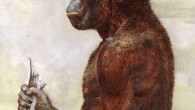
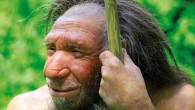
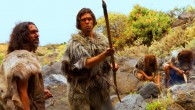
According to an international group of anthropologists and archaeologists led by Dr Brigitte Holt from the University of Massachusetts, Neanderthals (Homo neanderthalensis) organized their living spaces in ways that would be familiar to modern humans. Neanderthal family. Image credit: Field Museum. “There has been this idea that Neanderthals did not have an organized use of space, something that has always been attributed to humans. But we found...

Nov 21, 2013 by News Staff

The genome sequence of a 24,000-year-old young Siberian individual found in Russia shows that 14 to 38 percent of modern Native American’s ancestry came...

Nov 14, 2013 by News Staff

According to Durham University anthropologist Dr Jamshid Tehrani, evolutionary analysis can be used to study similarities among folktales. His findings...

Oct 31, 2013 by News Staff

A team of researchers from Hungary and the United Kingdom says tuberculosis was present in Europe as early as 7,000 years ago. This colorized scanning...

Oct 22, 2013 by News Staff

A dental study of 1,200 molars and premolars from 13 hominin species shows that no known species matches the expected profile of the last common ancestor...

Oct 20, 2013 by News Staff

According to a study published in the journal Science, Denisovans – relatives to both Neanderthals and humans – somehow managed to cross Wallace’s...

Oct 18, 2013 by News Staff

Bitter root plant material found on teeth of Neanderthals suggests their complex diet may have included the stomach contents of hunted animals. Reconstruction...

Oct 18, 2013 by News Staff

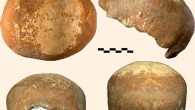
An analysis of a complete 1.8-million-year-old hominid skull found at the archaeological site of Dmanisi in Georgia suggests the earliest Homo species...

Oct 16, 2013 by News Staff

Anthropologist Prof Dean Snow from Pennsylvania State University analyzing ochre-stenciled handprints in Paleolithic caves in France and Spain has determined...

Sep 4, 2013 by News Staff

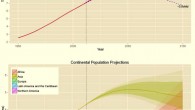
According to a new study by Prof Timothy Hatton from the University of Essex and the Australian National University in Canberra, the average height of...

Jul 30, 2013 by News Staff

According to a new study reported in the Proceedings of the National Academy of Sciences, the threat of infants being killed by rival males is the key...

Jul 26, 2013 by News Staff

A new study published in the journal Current Biology provides the first scientific evidence that the lunar cycle can influence human sleep. New study shows...

Jul 23, 2013 by News Staff

European scientists reporting in the journal Proceedings of the National Academy of Sciences have identified how unique neural pathways in the brain allows...

Jul 15, 2013 by Sergio Prostak

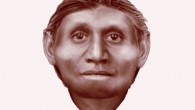
A study led by Dr Katerina Harvati from Tübingen University, Germany, suggests the small-brained Indonesian hominin was a distinct species of human, rather...

Jun 12, 2013 by Sergio Prostak

British ophthalmologists have discovered a new layer in the cornea, the clear, dome-shaped surface that covers the front of the eye. Left: schematic diagram...

Jun 12, 2013 by Enrico de Lazaro

New genetic research reported in the Proceedings of the National Academy of Sciences refutes a recent theory that there is evidence for the presence of...

Jun 7, 2013 by News Staff

The first definitive case of a fibrous dysplastic neoplasm in a 120,000-year-old Neanderthal rib from the site of Krapina in present-day Croatia reveals...

Jun 4, 2013 by Sergio Prostak

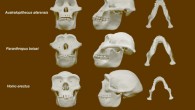
Four new studies of carbon isotopes in fossilized tooth enamel from early hominins, including Australopithecus afarensis, Paranthropus boisei and Kenyanthropus...

May 27, 2013 by News Staff

According to a new study led by Dr Michael Melnick from the University of Rochester, people with high IQ scores aren’t just more intelligent, they...

May 24, 2013 by News Staff

Scientists led by Dr Manish Arora from the Icahn School of Medicine at Mount Sinai have reported that they can now use fossil teeth to calculate when a...