Anthropology News

Aug 10, 2012 by Enrico de Lazaro

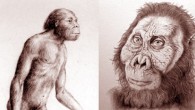
An international team of scientists has reconstructed dietary preferences of three groups of early hominins from the Cradle of Humankind, South Africa. Reconstructions of Homo habilis, Australopithecus africanus and Paranthropus robustus (Edward Foster / John Gurche / Myartprints.com) The study, published online in Nature, sheds more light on the diet and home ranges of early hominins belonging to three different genera – Australopithecus africanus,...

Jul 31, 2012 by Sergio Prostak

An international team of scientists has substantially increased the age at which we can trace the emergence of modern culture, all thanks to the San people...

Jul 19, 2012 by Enrico de Lazaro

Scientists have discovered the first molecular evidence that Neanderthals not only ate a range of cooked plant foods, but also understood its nutritional...

Jul 17, 2012 by Sergio Prostak

A team of Spanish paleoanthropologists has reconstructed the diet of Australopithecus anamensis, a hominid that lived in the east of the African continent...

Jul 13, 2012 by News Staff

Paleoanthropologists at the Wits Institute for Human Evolution in Johannesburg, South Africa, have announced the discovery of a large rock containing significant...

Jul 13, 2012 by News Staff

An international team of researchers has found that Native American populations arose from at least three migrations, with the majority descended entirely...

Jun 6, 2012 by News Staff

The reconstruction of human limb bones found in Atapuerca, Spain, has helped scientists to determine the height of the human species Homo heidelbergensis. The...

May 30, 2012 by News Staff

Forensic anthropologists at the University of Tennessee in Knoxville have found that heads of Americans are getting larger. Uncle Sam, a national personification...

May 14, 2012 by Enrico de Lazaro

An international team of scientists has found ambient background noise to be an important factor affecting creative cognition among consumers. The new...

Apr 24, 2012 by News Staff

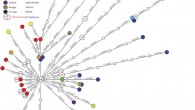
Chinese researchers have revealed how surnames can act as a genetic stamp, allowing to trace lineage and understand the migrations and historical events. “When...

Mar 14, 2012 by James Freeman

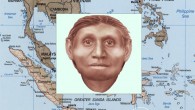
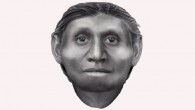
An international team of researchers has discovered fossils of a previously unknown Stone Age people in southwest China. An artist's reconstruction...

Dec 18, 2011 by James Freeman

British scientists have proved a hypothesis that said human fine body hair plays a defensive function against parasites such as bed bugs and fleas. The...

Dec 1, 2011 by James Freeman

Researchers have found that parents of newborns show poorer adjustment to their new role if they believe society expects them to be perfect mothers and...

Nov 29, 2011 by News Staff

Norwegian researchers have found that even small changes in pub and bar closing hours seem to affect the number of violent incidents, stated in a press...

Nov 23, 2011 by James Freeman

The study of the late Middle Pleistocene archaic human cranium found in Maba, China, brings new evidence of interhuman aggression occurred 129,000 years...

Sep 10, 2011 by News Staff

Researchers from California Institute of Technology and UCLA reported that neurons throughout the amygdala, a center in the brain known for processing...

Sep 5, 2011 by News Staff

Princeton researchers have for the first time matched images of brain activity with categories of words related to the concepts a person is thinking about....

Aug 30, 2011 by News Staff

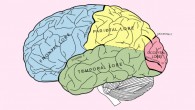
MIT researchers found that there are parts of our brain dedicated to language and only language.  Findings of their research mark a major advance in the...

Aug 24, 2011 by News Staff

MIT researchers have shown that activity in a specific part of the brain, known as the parahippocampal cortex, predicts how well people will remember a...

Aug 23, 2011 by James Freeman

Harvard researchers have found that practice of processing food through cooking was likely invented by human’s early ancestors more than 1.9 million...