Other Sciences News

Feb 13, 2018 by News Staff

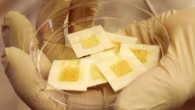
An international team of scientists from Yunnan University and the University of Colorado Boulder has developed a new type of malleable, self-healing and fully recyclable electronic skin (e-skin). Their work appears in the journal Science Advances. The new e-skin can be conformally mounted onto a human arm; it can be rehealed when it is damaged and can be fully recycled at room temperature. Image credit: Jianliang Xiao, University of Colorado Boulder. E-skin...

Feb 8, 2018 by News Staff

Viruses fall back to Earth via dust storms and precipitation, according to new research published in the International Society for Microbial Ecology Journal. Viruses...

Feb 7, 2018 by News Staff

According to a new study published in the journal Hippocampus, spending too much time in dimly-lit environment may change the brain’s structure and hurt...

Feb 7, 2018 by News Staff

A team of linguists from Lund University in Sweden announced this week they have identified an endangered minority language known as Jedek that is spoken...

Feb 2, 2018 by News Staff

According to a study published in the January 30 issue of the journal Nature Communications, we are exceptionally similar to our friends in how we perceive...

Jan 31, 2018 by News Staff

An international team of scientists has developed a mathematical model for the emergence of innovations, in which cognitive processes are described as...

Jan 31, 2018 by News Staff

Exercise training may delay the decline in cognitive function that occurs in individuals who are at risk of or have Alzheimer’s disease, with aerobic...

Jan 30, 2018 by News Staff

It has often been claimed that we learn language using brain circuits that are specifically dedicated to this purpose. Now, new evidence suggests that...

Jan 26, 2018 by News Staff

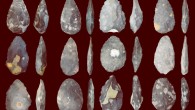
An upper jawbone complete with teeth found at a site called Misliya Cave, part of a complex of prehistoric caves along the western slopes of Mount Carmel...

Jan 25, 2018 by News Staff

A new study, conducted before and after the 2004 closure of a coal-burning power plant in China, found children born before the closure had shorter telomeres...

Jan 23, 2018 by News Staff

Mining on the ocean floor could do irreversible damage to marine ecosystems, according to a new study from the University of Exeter and Greenpeace Research...

Jan 23, 2018 by News Staff

Tiny crystals of clinopyroxenes that form deep in volcanoes may be the key for advance warnings before volcanic eruptions, according to a team of vulcanologists...

Jan 22, 2018 by News Staff

A team of researchers led by the University of California, Berkeley’s Helen Wills Neuroscience Institute has tracked the progress of a thought through...

Jan 17, 2018 by News Staff

According to a new study published in the journal Nature Neuroscience, a high-salt diet reduces resting blood flow to the brain and causes dementia in...

Jan 8, 2018 by News Staff

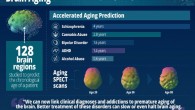
A simple technique for mapping the wiring of the brain — called morphometric similarity mapping — has shown a correlation between how well...

Jan 8, 2018 by News Staff

An analysis of so-called pukao — colossal stone hats of monumental statues (moai) on Easter Island — provides evidence contrary to the widely...

Jan 5, 2018 by News Staff

According to a duo of researchers from State University of New York and Binghamton University, sleeping less than 8 hours a night is associated with repetitive...

Jan 4, 2018 by News Staff

Genetic analysis of DNA from a female infant found at the Upward Sun River archaeological site in Alaska has revealed a previously unknown Native American...

Jan 3, 2018 by News Staff

According to a study by University of New South Wales (UNSW) researchers, a mammal’s brain changes how it stores information about innocuous events depending...

Jan 2, 2018 by News Staff

How the brain is able to store memories over long periods of time has been a persistent mystery to scientists. In a new study in rats, a research team...