Other Sciences News

Mar 22, 2018 by News Staff

An international team of scientists has sequenced the genomes of five Neanderthals who lived around 47,000 to 39,000 years ago (that is, late Neanderthals), and found that these individuals are all more closely related to the Neanderthals who contributed DNA to early modern humans than an approximately 120,000-year-old Neanderthal from Siberia (Altai Neanderthal). Neanderthals in a cave. Image credit: Tyler B. Tretsven. Scientists’ ability to retrieve...

Mar 22, 2018 by News Staff

A mutation in the leucine rich repeat kinase 2 (LRRK2) gene — the most common cause of inherited Parkinson’s disease — alters cells circulating...

Mar 21, 2018 by News Staff

A team of researchers from Georgia Institute of Technology and the Singapore University of Technology and Design has developed a powerful new 4D printer...

Mar 21, 2018 by News Staff

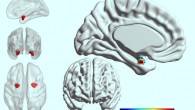
How empathic we are is partly a result of our genes, according to the results of the largest genome-wide association study of its kind. Empathy is the...

Mar 20, 2018 by News Staff

A new study from the National Institute of Environmental Health Sciences lends new evidence to a suspected link between regular exposure to lavender oil...

Mar 19, 2018 by Enrico de Lazaro

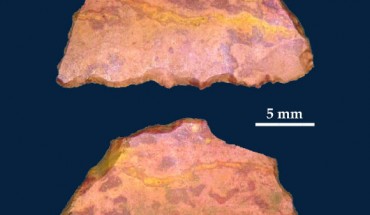
An international team of researchers led by Université de Montréal’s Dr. Luc Doyon has found seven bone soft hammers at the early hominin Lingjing...

Mar 16, 2018 by News Staff

An international team of anthropologists has discovered that early humans in East Africa had — by about 320,000 years ago — begun trading with...

Mar 16, 2018 by News Staff

A team of researchers from the University of Washington and Princeton University has found that the genomes of two groups of modern humans with Denisovan...

Mar 13, 2018 by News Staff

Our ancient cousins, Neanderthals have an unwarranted image as brutish and uncaring, but new research has revealed just how knowledgeable and effective...

Mar 12, 2018 by News Staff

An international team of scientists from the United States and Canada has discovered the first direct evidence that aqueous pockets may exist as far as...

Mar 9, 2018 by News Staff

An international team of researchers, led by Arizona State University chemist C. Austen Angell and University of Amsterdam’s Dr. Sander Woutersen, has...

Mar 9, 2018 by News Staff

Recently acquired information is thought to be ‘reactivated’ in the sleeping brain. Sleep spindles — the short bursts of activity in the brain...

Mar 8, 2018 by News Staff

An international team of neuroscientists has shown that in the hippocampus — a brain region important for learning and memory and one of the key...

Feb 23, 2018 by News Staff

A groundbreaking new technique for studying lake sediments can tell scientists more about the frequency and intensity of past and future insect epidemics,...

Feb 23, 2018 by News Staff

A new study shows that paintings in three cave sites on the Iberian Peninsula — a red linear motif in Cave of La Pasiega, a hand stencil in Maltravieso...

Feb 23, 2018 by Zvi Cramer

Researchers have designed silicon nanowires that allow modulation neuronal activity using light, allowing manipulation of specific neural circuits without...

Feb 21, 2018 by News Staff

A team of researchers at Florida State University has unlocked a new strategy for synthesizing of olympicene (a molecule consisting of five rings that...

Feb 20, 2018 by News Staff

Cheddar Man — a hunter-gatherer who lived 10,000 years ago — had blue eyes, dark colored curly hair and ‘dark to black’ skin pigmentation,...

Feb 20, 2018 by News Staff

How will humans react to the discovery of alien life? Speculation on this topic abounds, but empirical research is practically non-existent. In a paper...

Feb 14, 2018 by News Staff

A team of researchers from Lancaster University and the Universities of Edinburgh and Leeds, UK, forecasts a 15% drop in the average number of lightning...