Paleontology News

Jun 27, 2017 by News Staff

A previously unknown mass extinction may have killed up to a third of large marine animals 2-3 million years ago, according to an international team of paleontologists. Carcharocles megalodon pursuing two prehistoric whales. Image credit: Karen Carr / CC BY 3.0. The team, led by Dr. Catalina Pimiento of the Leibniz Institute for Evolution and Biodiversity Science and the Paleontological Institute and Museum at the University of Zurich, analyzed fossilized...

Jun 15, 2017 by News Staff

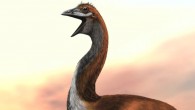
Progura gallinacea, a species of extinct giant brush turkey that lived in Australia during the Late Pliocene and Early Pleistocene (1-3 million years ago),...

Jun 9, 2017 by Natali Anderson

Gondwanagaricites magnificus represents the oldest fossil mushroom to date and the first fossil mushroom from the ancient supercontinent Gondwana. The...

Jun 8, 2017 by News Staff

According to new research published in the journal eLife, the straight-tusked elephant (Palaeoloxodon antiquus), a species of giant elephant that lived...

Jun 7, 2017 by News Staff

A state-of-the-art CT scanning technology has shed fresh light on Megalosaurus bucklandii, the first dinosaur ever named and described scientifically —...

Jun 6, 2017 by News Staff

In a stunning fossil discovery in Japan, paleontologists unearthed a nearly complete skeleton of a duck-billed dinosaur that lived approximately 72 million...

May 31, 2017 by News Staff

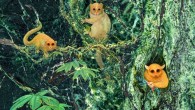
Earth’s earliest primates were tree dwellers, according to a team of paleontologists led by Dr. Stephen Chester, an assistant professor at Brooklyn College,...

May 25, 2017 by Enrico de Lazaro

A new species of marine reptile from the Cretaceous period has been identified from fossils found on the eroded banks of the Volga River. Artist’s reconstruction...

May 18, 2017 by Enrico de Lazaro

Geologists from Tohoku University, Japan, Amherst College and Washington University in Saint Louis, the United States, say they may have found the cause...

May 15, 2017 by News Staff

Giant sloths, massive animals that lived in the Americas during the Ice Age, subsisted on an exclusively plant-based diet, according to an isotopic analysis...

May 10, 2017 by News Staff

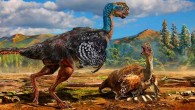
A team of paleontologists from Canada, China, the United States and Slovak Republic has identified a partial clutch of large dinosaur eggs with a closely...

May 10, 2017 by News Staff

Fossil evidence of early microbial life has been found in ancient hot spring deposits in the Dresser Formation in the Pilbara Craton, Western Australia,...

May 8, 2017 by News Staff

A new study published in the Botanical Journal of the Linnean Society documents evidence of an orchid fossil trapped in Baltic amber that dates back 45-55...

May 5, 2017 by Enrico de Lazaro

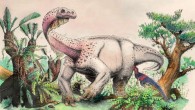
A new species of sauropod dinosaur that lived about 152 million years ago (Jurassic period) has been identified from fossils found in Wyoming. Galeamopus...

Apr 28, 2017 by News Staff

Paleontologists have uncovered a fossil species — named Tokummia katalepsis — that sheds light on the origin of Mandibulata (mandibulates),...

Apr 20, 2017 by News Staff

Eurypterids, better known as sea scorpions, used their serrated-spine-tipped tails to dispatch their prey, according to new research by University of Alberta...

Apr 13, 2017 by News Staff

Paleontologists have long wondered what the earliest dinosaur relatives looked like. Most assumed that they would look like dwarf dinosaurs and walk on...

Apr 4, 2017 by News Staff

A blood-engorged nymphal tick of the genus Amblyomma surrounded by fossilized mammalian erythrocytes (red blood cells) has been discovered in a piece of...

Apr 2, 2017 by News Staff

Paleontologists have unveiled a remarkable new species of tyrannosaurine dinosaur from the Late Cretaceous epoch — a cousin of the fearsome predator...

Mar 29, 2017 by Natali Anderson

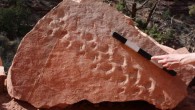
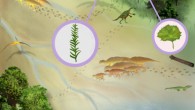
A group of paleontologists from the University of Queensland and James Cook University has documented the most diverse assemblage of dinosaur tracks in...