Paleontology News

Dec 3, 2013 by News Staff

By using CT scanning technology combined with computer simulations, paleontologists have revealed what role keratinous beaks of some dinosaurs played in their life. Erlikosaurus andrewsi. Image credit: Dinosaur-world.com. The study, published in the Proceedings of the National Academy of Sciences, is focused on the skull of Erlikosaurus andrewsi, a 4-m-long herbivorous dinosaur called a therizinosaur. Erlikosaurus lived in what is today Mongolia during...

Nov 22, 2013 by News Staff

Paleontologists announced today the discovery of a new predatory dinosaur that lived in what is modern-day Utah around 100 million years ago. An artist’s...

Nov 21, 2013 by Natali Anderson

Paleontologists led by Dr Jelle Zijlstra from Harvard’s Peabody Museum have discovered a new genus and species of tarsier that lived in what is modern-day...

Nov 14, 2013 by Natali Anderson

A well-preserved 6 to 4 million-year-old skull of a previously unknown species of prehistoric snow leopard from Tibet is the oldest big cat fossil ever...

Nov 12, 2013 by News Staff

Dr Nora Noffke from Old Dominion University in Norfolk and her colleagues have unearthed evidence of complex microbial ecosystems in 3.48 billion year...

Nov 11, 2013 by Enrico de Lazaro

Paleontologists have described a new species of giant, spineless hedgehog that lived in what is today the Gargano peninsula of Italy during the late Miocene,...

Nov 7, 2013 by News Staff

A team of scientists has found a well-preserved, 165-million-year-old fossil of copulating froghoppers, Anthoscytina perpetua, at the Daohugou village...

Nov 7, 2013 by News Staff

Paleontologists have unearthed a huge new predatory dinosaur in Grand Staircase-Escalante National Monument, southern Utah. Artist’s impression of...

Nov 5, 2013 by News Staff

An Australian-U.S. team of paleontologists has found a unique fossil of a huge, carnivorous platypus that lived in what is now Australia during the late...

Oct 31, 2013 by News Staff

Using an advanced computer modeling technique, researchers from UK and Argentina recreated walking and running movements of the 130-feet-long Argentinosaurus...

Oct 29, 2013 by News Staff

According to a new study published in the journal Palaeontology, two footprints found at Dinosaur Cove in southern Victoria are the oldest avian tracks...

Oct 28, 2013 by Sergio Prostak

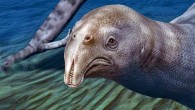
Paleontologist from Natural History Museum of Los Angeles County has described an odd new hippopotamus-like animal that lived in what is now California...

Oct 24, 2013 by Enrico de Lazaro

Researchers from Australia and the United States have documented a massive extinction among bee populations, concurrent with an event that wiped out dinosaurs...

Oct 22, 2013 by News Staff

Scientists have reported the discovery of what they say is the youngest, smallest and most complete fossil skeleton yet known for Parasaurolophus, a duck-billed...

Oct 17, 2013 by News Staff

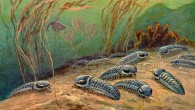
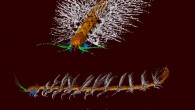
Paleontologists have found a well-preserved fossil of a megacheiran – distant relative of scorpions and spiders – that lived in Cambrian seas...

Oct 15, 2013 by Sergio Prostak

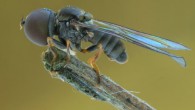
Scientists led by Dr Ralph Harbach of Natural History Museum in London have reported a stunning discovery: a well-preserved 46-million-year-old female...

Oct 9, 2013 by News Staff

Scientists led by Ines Melendez from Curtin University have identified 70 intact steroidal compounds in a 380-million-year-old crustacean fossil from the...

Oct 8, 2013 by Enrico de Lazaro

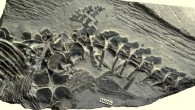
A newly discovered fossil of an early ray-finned fish, named Saurichthys curionii, from the Middle Triassic of Switzerland reveals a previously unknown...

Oct 3, 2013 by Enrico de Lazaro

Scientists from Australia and New Zealand have analyzed more than fifty fossilized feces of the South Island Giant Moa, Upland Moa, Heavy-footed Moa and...

Oct 2, 2013 by Sergio Prostak

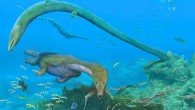
Paleontologists from Museum Victoria, Australia, and the Smithsonian Institution have rediscovered what they claim are the oldest sirenian fossils ever...