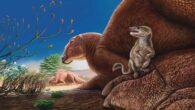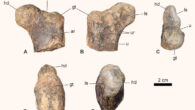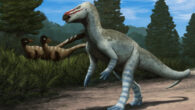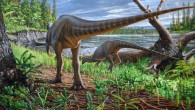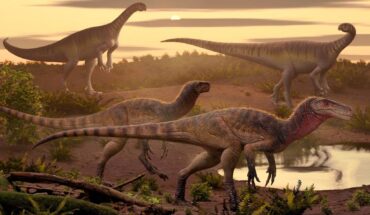
The newly-identified species fills a temporal gap between South American herrerasaurid dinosaurs and their younger relatives from North America. Life reconstruction of Maleriraptor kuttyi with the unaysaurid sauropodomorph Jaklapallisaurus asymmetricus, both from the lower Norian Upper Maleri Formation of south-central India. Image credit: Márcio L. Castro. Maleriraptor kuttyi lived in what is now India during the Norian age of the Triassic period,...
Paleontology News