Paleontology News

Mar 24, 2020 by News Staff

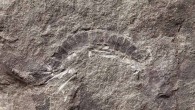
Ikaria wariootia, a wormlike creature that lived more than 555 million years ago (Ediacaran period) in what is now Australia, is the earliest bilaterian, according to new research led by University of California, Riverside researcher Scott Evans. Reconstruction of Ikaria wariootia in life position. Image credit: Sohail Wasif / University of California, Riverside. Bilaterians are animals with bilateral symmetry as an embryo, i.e. having a left and...

Mar 23, 2020 by News Staff

A new species of ancient bird has been identified from a nearly complete, three-dimensionally preserved skull and associated bones found in Belgium. A...

Mar 19, 2020 by News Staff

A 1.57-m (5.2-foot) long specimen of Elpistostege watsoni from the Devonian period of Canada has yielded the missing evolutionary link in the fish to tetrapod...

Mar 13, 2020 by News Staff

The footprints of stegosaurs, carnivorous theropods and huge herbivorous ornithopod dinosaurs that date back to 170 million years ago (Middle Jurassic...

Mar 12, 2020 by Enrico de Lazaro

Paleontologists have found an exceptionally well-preserved and diminutive skull of a previously unknown bird-like dinosaur species in a piece of Cretaceous-period...

Mar 10, 2020 by News Staff

Torreites sanchezi, an extinct species of rudist clam that lived during the Cretaceous period, some 70 million years ago, grew fast, laying down daily...

Mar 4, 2020 by News Staff

A new species of extinct quail-like bird has been identified from a fossil found in eastern Utah. Reconstruction of Uintan paraortygid. Image credit: Thomas...

Mar 3, 2020 by News Staff

In the 1980s, paleontologists found a dinosaur nesting ground with dozens of nestlings in northern Montana and identified them as Hypacrosaurus stebingeri,...

Feb 28, 2020 by News Staff

An enigmatic worm-like animal called Facivermis yunnanicus lost lower limbs for tube-dwelling lifestyle, according to new research published in the journal...

Feb 28, 2020 by Enrico de Lazaro

The left forelimb of an anole lizard (genus Anolis) has been found perfectly preserved in a piece of Miocene-period amber from the Dominican Republic. Light...

Feb 26, 2020 by Enrico de Lazaro

Paleontologists in Brazil have found thin bands of fossil gum — the first occurrence in the fossil record — inside 110-million-year-old (Cretaceous...

Feb 25, 2020 by News Staff

Paleontologists have discovered the microscopic fossilized remains of green seaweed near Dalian in the Liaoning province of northern China. The microfossils...

Feb 24, 2020 by Enrico de Lazaro

A new genus and species of hairy cicada that lived around 100 million years ago (Cretaceous period) has been identified from a fossilized wing found in...

Feb 21, 2020 by News Staff

In a new study published today in the journal Communications Biology, an international team of researchers radiocarbon-dated an exceptionally well-preserved...

Feb 18, 2020 by News Staff

Using a novel technique called clumped isotope paleothermometry, an international team of paleontologists analyzed eggshell fossils representing three...

Feb 17, 2020 by Enrico de Lazaro

An international team of paleontologists has unearthed several well-preserved shells and the first known jaw specimen of Stupendemys geographicus, a species...

Feb 17, 2020 by Enrico de Lazaro

A new genus and species of medium-sized abelisaurid dinosaur being named Tralkasaurus cuyi has been discovered by Dr. Mauricio Cerroni from the Argentine...

Feb 13, 2020 by Enrico de Lazaro

In a paper published online in the journal Palaeodiversity, Oregon State University’s Professor George Poinar Jr. described a new family, genus and species...

Feb 11, 2020 by News Staff

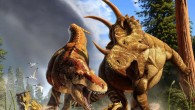
A new species of tyrannosaurine dinosaur that lived about 79.5 million years ago (Cretaceous period) has been identified from fossils found in Alberta,...

Feb 7, 2020 by News Staff

Woolly mammoths (Mammuthus primigenius) were among the most abundant cold adapted species during the Pleistocene. Their once large populations went extinct...