Paleontology News

Jun 18, 2014 by Natali Anderson

A new species of diminutive baleen whale that lived between 3.5 and 2.5 million years ago (Late Pliocene) has been described by U.S. paleontologists led by Dr Robert Boessenecker, from fossils found in California. Artistic reconstruction of Herpetocetus morrowi in the late Pliocene Pacific Ocean off southern California. The fish depicted in the upper left is a sheephead, Semicossyphus sp. Image credit: Robert Boessenecker. The newly discovered prehistoric...

Jun 13, 2014 by News Staff

A newly discovered fossil fish named Megamastax amblyodus is the largest vertebrate known in the Silurian fossil record, says a group of paleontologists...

Jun 13, 2014 by News Staff

Several fossil specimens of a Cambrian fish called Metaspriggina walcotti recently discovered in Canada shed new light on the development of the earliest...

Jun 13, 2014 by News Staff

Dinosaurs fit in between warm-blooded mammals and cold-blooded reptiles, according to a study reported in the journal Science. The study is the first to...

Jun 6, 2014 by News Staff

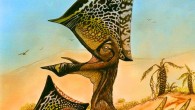
Paleontologists have discovered remains of about 40 male and female individuals of a new pterosaur species with five exceptionally well-preserved 3D eggs...

Jun 4, 2014 by News Staff

Paleontologists have discovered a new species of crocodile-like reptile that swam in the rivers of what is now Colombia during Paleocene, about 60 million...

Jun 3, 2014 by News Staff

A team of paleontologists led by Dr Patricio Zambrano Lobos from the Ruprecht-Karls-Universität Heidelberg in Germany has unearthed the well-preserved...

Jun 3, 2014 by News Staff

Dr Ernst Heiss from the Tiroler Landesmuseum in Innsbruck, Austria, has described a new extinct species of flat bug. Aradus macrosomus, a 9.2-mm-long female,...

Jun 2, 2014 by News Staff

Researchers from the University of Chicago and the Field Museum of Natural History have found a striking lack of diversity in the earliest known fossil...

May 30, 2014 by News Staff

Dominican amber, dating back 15 million years ago, provides the oldest evidence ever found of Borrelia – a kind of bacteria that causes Lyme disease...

May 30, 2014 by News Staff

Dr Mark Young from the University of Edinburgh and his colleagues have discovered a unique fossilized tooth belonging to Dakosaurus maximus, a prehistoric...

May 28, 2014 by Enrico de Lazaro

Fossilized pollen grains found in the stomach of a 47-miilion-year-old Pumiliornis tessellatus, a tiny bird that lived in what is now Germany during Eocene,...

May 18, 2014 by News Staff

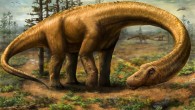
Paleontologists led by Dr Pablo Gallina of CONICET in Buenos Aires have discovered a new sauropod dinosaur that lived in what is now Argentina during the...

May 13, 2014 by News Staff

Paleontologists from the Case Western Reserve University have discovered a fossil of a kitten-sized predator that lived in what is now Bolivia during the...

May 7, 2014 by News Staff

Paleontologists led by Dr Phil Manning of the University of Manchester have used a highly sensitive synchrotron-imaging technique to reveal ancient injuries...

May 7, 2014 by News Staff

Paleontologists have discovered a new species of long-snouted tyrannosaur – scientifically named Qianzhousaurus sinensis and nicknamed Pinocchio...

Apr 24, 2014 by News Staff

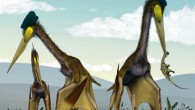
U.S. and Chinese paleontologists say they have unearthed the fossils of what is the oldest and most primitive pterodactyloid pterosaur. This creature lived...

Apr 23, 2014 by News Staff

Paleontologists have described a new species of assassin fly found preserved in two pieces of 100-million-year-old Burmese amber. Burmapogon bruckschi,...

Apr 17, 2014 by News Staff

Eocasea martini, a carnivorous animal that lived in what is today Kansas during Carboniferous period, about 300 million years ago, is the oldest known...

Apr 17, 2014 by News Staff

Paleontologists from the American Museum of Natural History have described a shark species that lived during Carboniferous period, about 325 million years...