Paleontology News

Oct 15, 2013 by Sergio Prostak

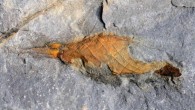
Scientists led by Dr Ralph Harbach of Natural History Museum in London have reported a stunning discovery: a well-preserved 46-million-year-old female mosquito full of blood. This image shows a 46-million-year-old blood-engorged female mosquito from northwestern Montana. Image credit: Dale E. Greenwalt et al. The unique fossil was found in the Middle Eocene Kishenehn Formation in northwestern Montana. “The preservation of fossil female mosquito...

Oct 9, 2013 by News Staff

Scientists led by Ines Melendez from Curtin University have identified 70 intact steroidal compounds in a 380-million-year-old crustacean fossil from the...

Oct 8, 2013 by Enrico de Lazaro

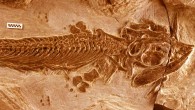
A newly discovered fossil of an early ray-finned fish, named Saurichthys curionii, from the Middle Triassic of Switzerland reveals a previously unknown...

Oct 3, 2013 by Enrico de Lazaro

Scientists from Australia and New Zealand have analyzed more than fifty fossilized feces of the South Island Giant Moa, Upland Moa, Heavy-footed Moa and...

Oct 2, 2013 by Sergio Prostak

Paleontologists from Museum Victoria, Australia, and the Smithsonian Institution have rediscovered what they claim are the oldest sirenian fossils ever...

Oct 2, 2013 by Natali Anderson

Well-preserved fossilized pollen grains found in northern Switzerland provide evidence that flowering plants may have originated in the early Triassic...

Sep 30, 2013 by News Staff

Olenellids – an early group of trilobites – were able to roll themselves up defensively, according to Dr Javier Ortega-Hernández from the...

Sep 26, 2013 by Sergio Prostak

A team of paleontologists from China, the United States and Sweden has found a well-preserved fossil of ancient fish that lived in what is now China about...

Sep 25, 2013 by Enrico de Lazaro

Two skull fossils unearthed in Germany provide the first direct evidence that lepidosaurs – reptiles closely related to lizards, snakes and tuatara...

Sep 17, 2013 by News Staff

According to Dr David Penney and his colleagues at the University of Manchester, UK, the existence of ancient DNA in amber fossils is highly unlikely. The...

Sep 13, 2013 by Enrico de Lazaro

The modern-day tulip tree (Liriodendron tulipifera) traces its lineage back to the Lower Cretaceous period – a time when dinosaurs roamed the Earth,...

Sep 9, 2013 by News Staff

An international team of scientists has announced the discovery of a 6.1-million-year-old relatively complete and largely undistorted juvenile cranium...

Sep 3, 2013 by Enrico de Lazaro

Dr Robert Gess from the University of the Witwatersrand in Johannesburg has discovered what he says is the oldest known land-living animal from Gondwana,...

Aug 28, 2013 by News Staff

Recently discovered fossils of Leedsichthys – the biggest fish that ever swam in oceans – show that the prehistoric creature could grow to 26 –...

Aug 14, 2013 by News Staff

A new study, published in the Proceedings of the Royal Society B, shows how anomodonts – ancient relatives of modern mammals – recovered in...

Aug 8, 2013 by News Staff

An international team of paleontologists has discovered a well-preserved fossil of a proto-mammal, named Megaconus mammaliaformis, that lived in what is...

Aug 1, 2013 by Natali Anderson

Italian paleontologists have reported the discovery of enigmatic fossils in Pleistocene shallow-marine clay deposits in central Italy. 1.75-million-year-old...

Aug 1, 2013 by News Staff

A team of researchers reporting in the journal Nature has revealed that some non-avian dinosaurs had brains that were as large or larger than that of Archaeopteryx...

Jul 30, 2013 by News Staff

Prof Trevor Lamb of the Australian National University has published a major scientific review of the origin of the vertebrate eye and vision, summarizing...

Jul 26, 2013 by Enrico de Lazaro

A new study published online in the Journal of Human Evolution refutes a long body of evidence, suggesting that a 9-million-year-old ape called Oreopithecus...