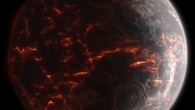
Around 66 million years ago, the Chicxulub asteroid impact triggered mass extinction, mega-tsunamis and a spell of global warming that lasted for around...
Breakup of an asteroid passing within Earth’s Roche limit likely formed the debris ring during the middle Ordovician period, according to new research...
The end-Permian mass extinction, which occurred about 252 million years ago, was the most severe extinction event in the past 540 million years, eliminating...
In a paper published in the journal Nature Geoscience, scientists offer a new explanation for a string of severe environmental crises, called oceanic anoxic...
Around a fifth of U.K. citizens believe Earth has been visited by extraterrestrials, and an estimated 7% believe that they have seen a UFO. The figures...
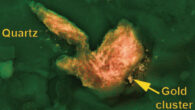
Gold nuggets occur predominantly in quartz veins, and the current paradigm posits that gold precipitates from hot water and carbon dioxide-rich fluids...
First hypothesized more than 60 years ago, the ambipolar electric field is a key driver of the polar wind, a steady outflow of charged particles into space...
Scientists from James Madison University have performed a multi-variable investigation of thunderstorm environments in two distinct geographic regions:...
Two-dimensional (2D) aurora images with full spectrum have been captured by scientists in Japan using the newly-developed hyperspectral camera for auroral...
In the new study, Dr. David Hernández Uribe from the University of Illinois Chicago used computer models to study the formation of magmas thought to hold...
The last universal common ancestor (LUCA) is the hypothesized common ancestor from which all modern cellular life, from single celled organisms like bacteria...
In a new study, planetary scientists found strong similarities between soils found in Gale Crater on Mars and those of Canada’s Newfoundland, a cold...
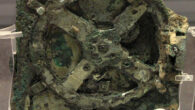
The Antikythera mechanism is a multi-component device recovered from a shipwreck close to the Greek island of Antikythera in 1901. It is believed to be...
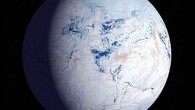
Fossil and molecular evidence suggests that complex multicellular organisms originated and proliferated during the Neoproterozoic Era (1,000-541 million...
Ocean worlds are planetary bodies that have a liquid ocean, often under an icy shell or within the rocky interior. In our own Solar System, several moons...
Physicists at the University of Vienna have experimentally measured the rotation rate of our planet using maximally path-entangled quantum states of light...
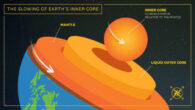
Movement of the inner core of our planet has been debated by the scientific community for two decades, with some research indicating that the inner core...
About 2.5 billion years ago, free oxygen first started to accumulate to meaningful levels in Earth’s atmosphere, setting the stage for the rise of complex...