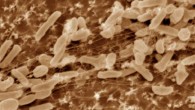
An international team of researchers from Spain and the UK has found that the protein TLR2 (Toll-like receptor 2) — a critical detector of the microbiota...
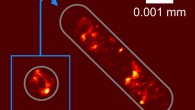
Physicists in Germany have developed a novel technique for trapping biological cells with a laser beam. Using this technique, the researchers obtained...
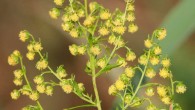
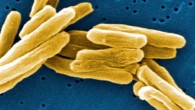
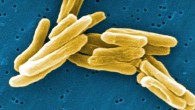
Artemisinin, a natural compound from the sweet wormwood (Artemisia annua), has been found to potentially aid in the treatment of tuberculosis. The study...
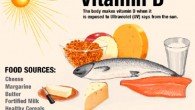
According to a study published in the journal Frontiers in Physiology, extra vitamin D can restore good bacteria in the gut, giving hope in the fight against...
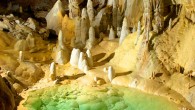
According to a team of researchers led by Gerald Wright, a professor of biochemistry and biomedical sciences at McMaster University, Lechuguilla Cave —...
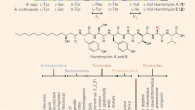
Using a novel approach called syn-BNP (synthetic-bioinformatic natural product) approach, scientists from the Rockefeller and Rutgers Universities have...
A team of scientists from the University of Chicago and the University of California, San Diego, has found that migraine sufferers harbor significantly...
Biologists at Vanderbilt University have discovered DNA of the black widow spider toxin in the genome of a virus that attacks Wolbachia, a type of symbiotic...
An international team of scientists has found a new link between the diversity of bacteria in the human fecal microbiome and levels of visceral fat (body...
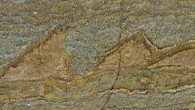
An international team of scientists from Australia and the UK has uncovered the world’s oldest fossils in a remote area of Greenland, revealing that...
A team of researchers at Imperial College London (ICL), UK, has found a ‘salty way’ to attack Staphylococcus aureus, an important opportunistic human...
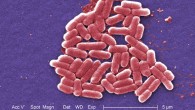
For the second time, a clinical strain of Escherichia coli with the colistin resistance gene mcr-1 has been detected in humans in the United States, according...
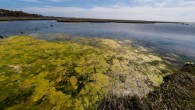
Harmful algal bloom caused by nutrient pollution, Assateague island National Seashore, MD. Image credit: Eric Vance / U.S. EPA.
Beneath fields of corn...
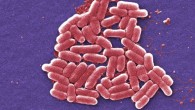
This false-color image shows Escherichia coli. Image credit: Geralt.
‘Superbug’ bacteria affect two million people and kill at least 23,000 Americans...
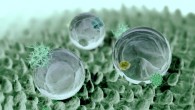
A group of scientists from Europe has harnessed new photonics technology to develop superhydrophobic, antibacterial metal surfaces, taking us a step closer...
Atmospherically transported dust from the Sahara Desert, the largest desert in the world, is bringing iron and other nutrients to underwater plants in...
Our planet could contain roughly 1 trillion microbial species, with only 0.001% now identified, says a duo of scientists at Indiana University.
This colorized...
A new study published in the Journal of Drug Design, Development and Therapy demonstrates the potential of Zolav® as a new treatment for acne vulgaris.
Propionibacterium...
Scientists from the United States and Australia claim they have found a new way to inhibit the growth of Mycobacterium tuberculosis, a bacterium that is...