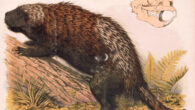
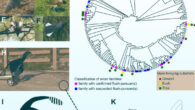
New World porcupines originated in South America and dispersed into North America between 4 and 3 million years ago. Prehensile-tailed porcupines today...
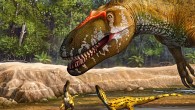
A new genus and species of furileusaurian abelisaurid that lived during the Cretaceous period has been identified from fossilized skeletal remains found...
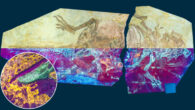
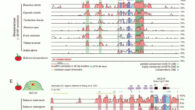
The evolution of feathers is associated with novel skin ultrastructures, but the fossil record of these changes is poor and thus the critical transition...
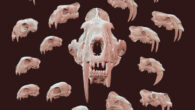
Paleontologists from the University of Liège and elsewhere have investigated the evolutionary patterns behind the development of saber teeth in two groups...
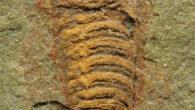
Euchelicerata is a large group of arthropods comprising horseshoe crabs, scorpions, spiders, mites and ticks, as well as the extinct sea scorpions and...
The northern population of the giant hummingbird (Patagona gigas) stays in the high Andes year-round while the southern population migrates from sea level...
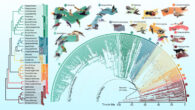
An international team of scientists has created the tree of life for almost 8,000 (about 60%) genera of flowering plants (angiosperms). This achievement...
Conventionally, climate is held responsible for the emergence and extinction of hominin species. In most vertebrates, however, interspecies competition...
Bergmann’s rule is a scientific principle stating that animals in high-latitude, cooler climates tend to be larger than close relatives living in warmer...
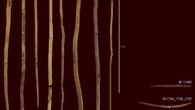
Wooden tools rarely survive in the Paleolithic record limiting our understanding of Pleistocene hunter-gather lifeways. With 187 wooden artifacts, the...
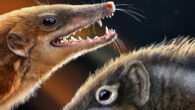
In new research, a team of paleontologists examined the tooth structure of Feredocodon chowi, a new species of shuotheriid mammaliaform that lived in what...
The updated family tree, detailed in two complementary papers published today in the journal Nature and the Proceedings of the National Academy of Sciences,...
Researchers at Cold Spring Harbor Laboratory have discovered that two distantly related model plants, Arabidopsis thaliana and the tomato (Solanum lycopersicum),...
This stability exists despite the incredible diversity seen today in wing patterns, sizes, and caterpillar forms across over 160,000 species globally,...
Biologists from Altos Labs-Cambridge Institute of Science, the University of Cambridge and elsewhere have found that a retrovirus-derived genetic element...
The early dinosaurs were faster and more dynamic than their competitors, according to a study led by University of Bristol researcher Amy Shipley.
By adopting...
Numerous non-avian dinosaurs possessed pennaceous feathers on their proto-wings and tail. Their functions remain unclear. Seoul National University researcher...
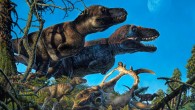
Pseudosuchia is a group of archosaurian reptiles, defined as all species more closely related to crocodylians than to birds. Living representatives of...
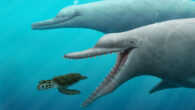
In a new paper published this month in the journal Diversity, paleontologists described the fossilized skeletons of the dolphin genus Xenorophus from the...