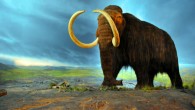
While the famous Minoan culture was just beginning, woolly mammoths (Mammuthus primigenius) were disappearing from Saint Paul Island, according to a group...
Neanderthals lived mainly on mammoth and rhino meat, as well as some plant food, says a team of researchers led by Prof. Hervé Bocherens from the University...
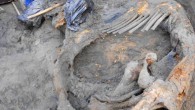
A partial carcass of a woolly mammoth (Mammuthus primigenius) with signs of weapon-inflicted injuries suggests people lived in the Eurasian Arctic 10,000...
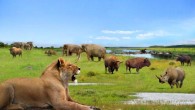
For several decades, scientists have wondered how Pleistocene ecosystems (2.5 million to 11,700 years ago) survived despite the presence of huge herbivores,...
Prof Ralf-Dietrich Kahlke from the Senckenberg Research Station for Quaternary Paleontology in Weimar, Germany, has recorded the maximum geographic distribution...
Short, rapid warming events, known as interstadials, coincided with major extinction events, according to a team of scientists from Australia and the United...
A new study led by Dr Vincent Lynch from the University of Chicago has identified extensive genetic changes responsible for what makes a woolly mammoth...
A group of scientists from the United States, Sweden, Canada, and the UK, has sequenced and analyzed the complete high-quality genomes of two woolly mammoths...
A new study, conducted by a large consortium involving more than 30 groups from the United States, Canada, Australia and European countries, provides a...
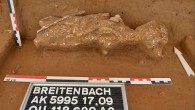
Archaeologists excavating the mammoth hunting site of Breitenbach in Saxony-Anhalt, Germany, have discovered what they say is the oldest ivory workshop...
Researchers from the Natural History Museum in UK have identified the world’s smallest species of mammoth known to date.
The Cretan dwarf mammoth may...
Russian palaeozoologists have discovered 40,000-year-old remains of a young woolly mammoth in Yakutia.
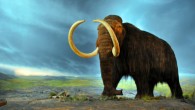
Woolly Mammoth at the Royal BC Museum (Tracy O)
The...