Scientists using the Ultraviolet Spectrograph (UVS) instrument aboard NASA’s Europa Clipper spacecraft have observed 3I/ATLAS, only the third confirmed interstellar object ever detected entering the Solar System from beyond. While most Mars- and Earth-based telescopes were poorly positioned to see the interstellar visitor due to its proximity to the Sun, Europa Clipper was able to collect data from a unique vantage point as the space probe traveled toward Jupiter.
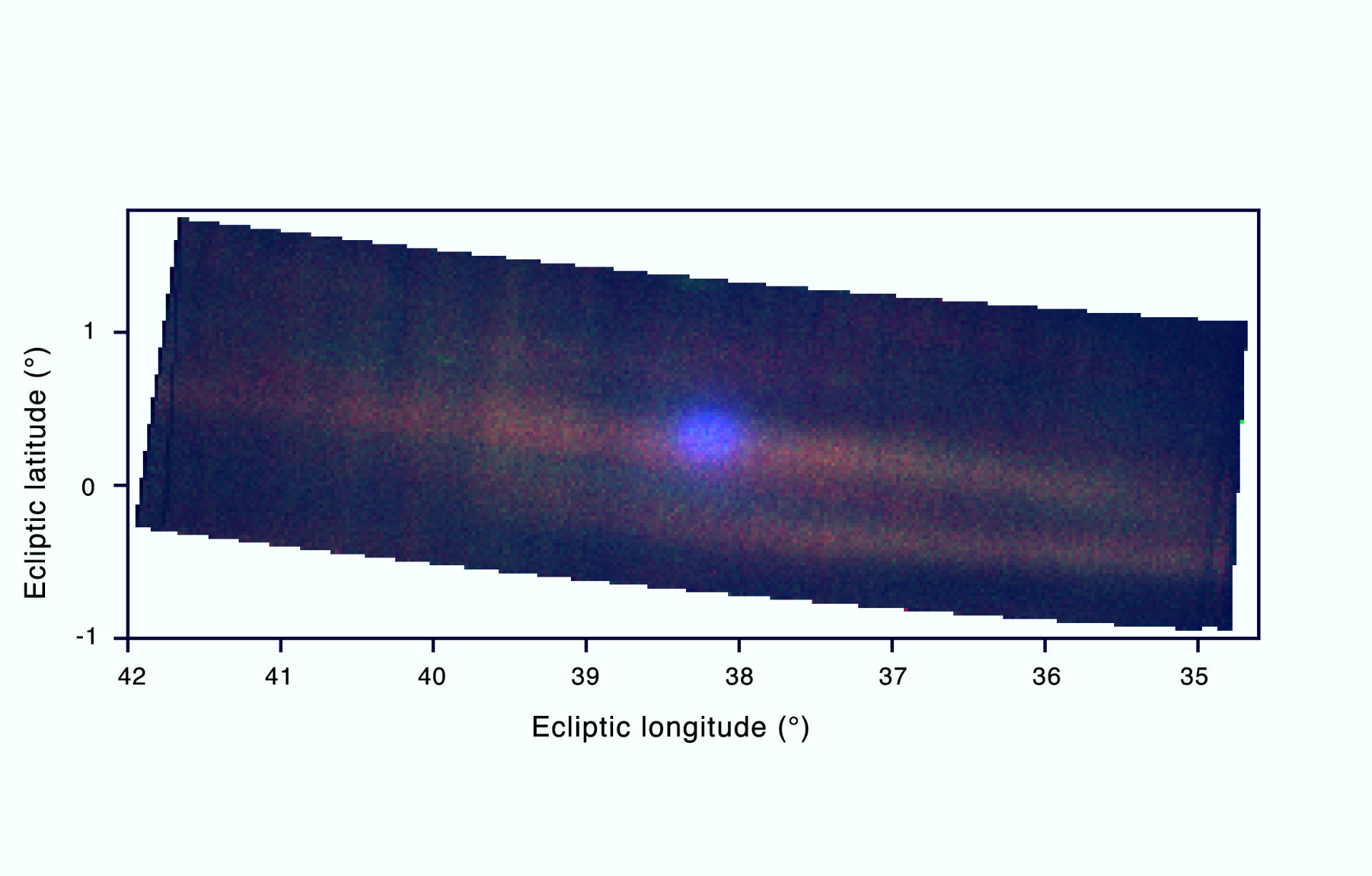
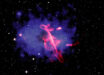
This composite image of the interstellar comet 3I/ATLAS was captured on November 6, 2025 by the UVS instrument on board NASA’s Europa Clipper spacecraft from a distance of around 164 million km (103 million miles). Image credit: NASA / JPL-Caltech / SwRI.
Europa Clipper launched in 2024 and is scheduled to arrive in the Jovian system in 2030, where it will orbit Jupiter and perform 49 close flybys of its icy moon Europa.
The UVS instrument collects ultraviolet light to assess the composition of Europa’s atmospheric gases and icy surface materials.
“We’re excited that this opportunity to view another target on the way to Jupiter was completely unexpected,” said Europa-UVS principal investigator Dr. Kurt Retherford, a researcher at the Southwest Research Institute.
“Our observations have allowed for a unique and nuanced view of the comet.”
3I/ATLAS was discovered by the NASA-funded ATLAS survey telescope in Rio Hurtado, Chile, on July 1, 2025.
At the time, the interstellar comet was at a heliocentric distance of 4.51 astronomical units (AU), with an eccentricity of 6.13.
Within a week of the discovery, analysts at NASA’s Jet Propulsion Laboratory identified its trajectory through the Solar System.
The Europa Clipper team quickly realized their spacecraft could observe 3I/ATLAS during November 2025, when Earth-based observations were largely blocked by the Sun’s position and after Mars-based views were optimal.
During this time, the spacecraft bridged the gap between Mars-based views from September and later Earth-based observations.
With the comet’s trajectory passing between Europa Clipper and the Sun, its vantage point enabled the UVS team to view the comet from a unique perspective.
Comets have both dust tails in the trailing direction and plasma tails in the direction away from the Sun.
Europa-UVS’s unusual sunward viewpoint obtained a unique downstream view of the comet’s two tails, viewing largely from ‘behind’ the tails and looking back towards the comet nucleus and coma.
“We’re hopeful that this new view, along with observations from Earth-based assets and other spacecraft, will help us to piece together a more complete understanding of the tails’ geometries,” said Europa-UVS co-deputy principal investigator Dr. Thomas Greathouse, also from the Southwest Research Institute.
The UVS instrument detected oxygen, hydrogen and dust-related features, supporting the preponderance of data indicating that 3I/ATLAS underwent a period of high outgassing activity during the period just after its closest approach to the Sun.
“Europa-UVS is particularly adept at measuring fundamental transitions from atoms and molecules,” Dr. Retherford said.
“We can see gases come off the comet, and water molecules break apart into hydrogen and oxygen atoms.”
This capability enables Europa Clipper to closely measure and analyze these atomic species, providing a deeper view into the comet’s processes and composition.
“Understanding the composition of the comet and how readily these gases are emitted can give us a clearer view of the comet’s origin and how it may have evolved during transit from elsewhere in the Galaxy to our Solar System,” said Europa-UVS co-deputy principal investigator Dr. Tracy Becker, also from the Southwest Research Institute.
“What are the chemical processes at play, and how can we unravel the comet’s origin in its own Solar System?”
“Were those processes similar to how we believe our Solar System formed? Those are big questions.”