A fresh analysis of Type Ia supernovae overturns a controversial 2025 claim that cosmic expansion is slowing.

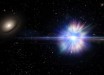
Type Ia supernovae are a cornerstone of modern cosmology, providing first evidence for cosmic acceleration and new tests of dark energy. Image credit: Alex Parker / NASA / SDSS.
In 2025, Yonsei University’s Professor Young-Wook Lee and colleagues shocked the space community with claims that the evidence of dark energy was weakening such that the expansion is no longer accelerating.
They suggested the methods used to measure the Universe’s expansion using supernovae were fundamentally flawed.
“The debate that followed last year’s revelations was the result of a scientific misunderstanding rather than a flaw in the Universe itself,” said University of Southampton’s Dr. Phil Wiseman, first author of the new study.
“The previous and well accepted measurements were, in fact, fine and our current understanding of the fate of the Universe remains robust.”
“Thankfully we have averted this crisis, but the mystery about why the Universe is still accelerating in size remains.”
“By proving our measurements are correct, we can get back to trying to understand what dark energy actually is, rather than wondering if it exists at all.”
The original discovery of the accelerating expansion of the Universe won the Nobel Prize in Physics in 2011.
If the 2025 claims had been true, it would have dismantled nearly three decades of astronomical progress.
“Extraordinary claims require especially careful testing,” said Nobel laureate Professor Adam Riess, co-author of the new study.
“What we find is that when we calibrate these supernovae, accounting for different host environments and populations, the evidence for cosmic acceleration remains remarkably consistent.”
To measure the Universe, the authors looked closely at Type Ia supernovae to calculate vast cosmic distances.
The 2025 study had claimed that, as the Universe aged, these supernovae had different maximum brightnesses, tricking astronomers into thinking the cosmos was accelerating when it was slowing.
However, the new study found the error lay in how the age of these stars was estimated.
They proved that the previous findings incorrectly assumed the age of a galaxy was the same as the age of the star that exploded.
They also said the 2025 paper failed to account for the mass of host galaxies, a standard correction used in modern cosmology to prove accuracy.
“Challenging accepted theories and observations is fundamental to science,” said University of Southampton’s Professor Mark Sullivan, co-author of the study.
“This is how progress is made. Although this idea did not turn out correct, it has opened up new ways of thinking about how supernovae explode and how we can measure dark energy more accurately.”
“We’ve recently been really focused on astrophysics of the explosions and how they impact cosmology,” said study co-author Dr. Brodie Popovic, an astronomer at the University of Southampton.
“This was a good opportunity to go back and go over all of our assumptions — it turns out, yes, we do understand this stuff and we’re accounting for it in our cosmology measurement.”
The new study appears in the Monthly Notices of the Royal Astronomical Society.
_____
Phil Wiseman et al. 2026. Still accelerating: Type Ia supernova cosmology is robust to host galaxy age evolution. MNRAS 549 (3): stag797; doi: 10.1093/mnras/stag797