Featured News

May 22, 2025 by News Staff

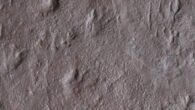
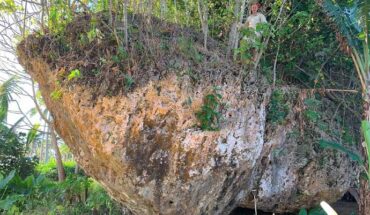
Locally known as Maka Lahi, meaning ‘Big Rock,’ this boulder was moved more than 200 m inland by a tsunami around 7,000 years ago. The limestone boulder Maka Lahi. Image credit: Köhler et al., doi: 10.1016/j.margeo.2025.107567. The Maka Lahi boulder measures 14 x 12 x 6.7 m and weighs almost 1,200 tons, making it the largest known cliff-top boulder and one of the largest known wave-transported boulders worldwide. The limestone boulder is located...

May 21, 2025 by News Staff

Recognizable from the starring role in the film ‘Finding Nemo,’ the clown anemonefish (Amphiprion percula) also shrink in order to avoid social conflict,...

May 16, 2025 by Simon Braddy

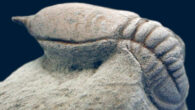
Trilobites were a diverse group of ancient marine arthropods. Many trilobites lived on the seafloor but some occupied open water. New research has resolved...

May 15, 2025 by News Staff

Paleontologists have discovered fossilized tracks of a reptile-like animal — securely dated to the early Tournaisian age of the Carboniferous period,...

May 14, 2025 by News Staff

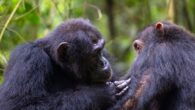
Primatologists have documented and analyzed both previously reported and newly observed instances of self-directed and other-directed wound care, snare...

May 14, 2025 by News Staff

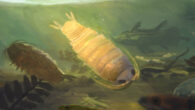
Mosura fentoni lived in what is now Canada during the Cambrian period, approximately 506 million years ago. Life reconstruction of Mosura fentoni. Image...

May 13, 2025 by News Staff

New research led by the University of California, Berkeley and the Georgia Institute of Technology reveals that flamingos, far from being passive filter-feeders,...

May 12, 2025 by Enrico de Lazaro

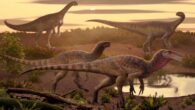
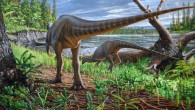
The newly-identified species fills a temporal gap between South American herrerasaurid dinosaurs and their younger relatives from North America. Life reconstruction...

May 9, 2025 by Enrico de Lazaro

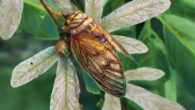
Cicadidae is one of the most species-rich insect families today. However, compared to the number of living species, fossil records of Cicadidae are extremely...

May 7, 2025 by News Staff

The genus Tyrannosaurus most likely arose in North America, although its direct ancestors migrated over from Asia more than 70 million years ago, according...

May 6, 2025 by Enrico de Lazaro

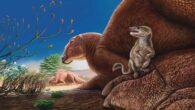
A new genus and species of zhelestid mammal has been identified from the fossilized remains found in the Bayanshiree Formation in Mongolia’s Gobi Desert. Life...

May 6, 2025 by News Staff

Sub-Neptunes are high-occurrence exoplanets that have no solar system analog. Much smaller than gas giants and typically cooler than hot-Jupiter exoplanets,...

May 2, 2025 by Enrico de Lazaro

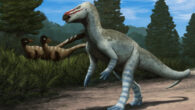
Named Obelignathus septimanicus, the new species inhabited the European Archipelago around 72 million years ago (Cretaceous period) and belonged to a family...

May 2, 2025 by News Staff

New research from the Institute of Marine Sciences at the University of California Santa Cruz suggests the ability to keep time is not unique to our species. Ronan...

Apr 28, 2025 by Enrico de Lazaro

The specimen is the first and most complete partial dinosaur skeleton currently known from Scotland, according to a team of paleontologists led by National...

Apr 28, 2025 by News Staff

Long invisible to astronomers, the newly-discovered molecular cloud is one of the largest single structures in the sky and among the closest to the Sun...

Apr 24, 2025 by News Staff

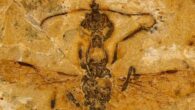
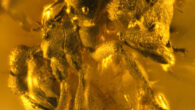
Paleontologists have described the oldest known member of Haidomyrmecinae — an extinct subfamily of ants that only lived during the Cretaceous period...

Apr 21, 2025 by Enrico de Lazaro

A new genus and species of cymothoidan isopod that lived during the Early Cretaceous epoch has been identified from two well-preserved specimens found...

Apr 17, 2025 by News Staff

Astronomers using the NASA/ESA/CSA James Webb Space Telescope have detected the chemical fingerprints of dimethyl sulfide (DMS) and/or dimethyl disulfide...

Apr 16, 2025 by News Staff

Dirt ants (genus Basiceros) are widely distributed yet rarely encountered members of Neotropical ecosystems. Their rarity is attributed to a cryptobiotic...