Paleontology News

Feb 10, 2014 by News Staff

An international team of paleontologists suggests dimetrodon – a 4-m-long prehistoric reptile that lived during the early Permian period, between 295 million and 272 million years ago, and went extinct about 40 million years before the appearance of first dinosaurs – was the first terrestrial vertebrate to develop serrated ziphodont teeth. Dimetrodon. Image credit: Dmitry Bogdanov / CC BY 3.0. Dimetrodon was the top of the terrestrial...

Feb 7, 2014 by News Staff

Robert Boessenecker, a PhD student with the University of Otago, has discovered an extinct species of whale that lived during Pliocene, 3.35 – 2.5...

Feb 5, 2014 by News Staff

Paleontologists have described a new extinct genus and two fossil species of the bat family Myzopodidae from several fossilized jawbones and teeth discovered...

Jan 31, 2014 by News Staff

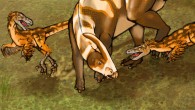
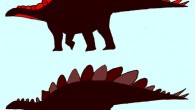
Paleontologists from the United States and China have described a new large plant-eating dinosaur that lived in what is now northwestern China during the...

Jan 27, 2014 by News Staff

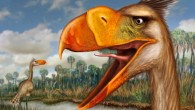
An international group of paleontologists reported the discovery of a fossil seabird species that lived in what is modern New Zealand during the early...

Jan 27, 2014 by News Staff

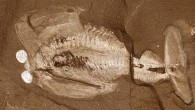
Scientists from the United States and the United Kingdom have described a fossil species of marine arthropod that lived during the Silurian period. This...

Jan 24, 2014 by News Staff

Scientists led by Dr Bruce Archibald of Simon Fraser University have discovered three extinct species of big-headed flies that lived in what is modern...

Jan 23, 2014 by News Staff

A new species of prehistoric hoatzin from the late Eocene of France is the earliest fossil record of hoatzins and the first one from Europe, according...

Jan 16, 2014 by Sergio Prostak

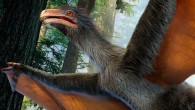
Paleontologists from the National Museums Scotland, the Field Museum of Natural History in Chicago and the Institute of Vertebrate Palaeontology and Palaeoanthropology...

Jan 14, 2014 by News Staff

Paleontologists led by Prof Neil Shubin from the University of Chicago have discovered unique fossils of Tiktaalik roseae – the most compelling example...

Jan 10, 2014 by News Staff

According to paleontologists from the University of Chicago and the University of Michigan, long-extinct Bandringa sharks migrated downstream from freshwater...

Jan 9, 2014 by News Staff

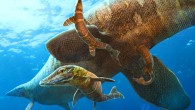
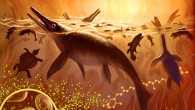
Fossilized skin pigments from an 85 million-year-old mosasaur, a 193 million-year-old ichthyosaur and a 55 million-year-old leatherback turtle have revealed...

Jan 9, 2014 by News Staff

A newly discovered genus and species of primitive carnivorous animal that lived in what is now Europe roughly 55 million years ago sheds light on the origins...

Jan 8, 2014 by News Staff

An international team of paleontologists has reported the important discovery of a new fossil species in the cockroach genus Ectobius. The Dusky cockroach...

Jan 3, 2014 by News Staff

A 100-million-year-old piece of amber from mines in the Hukawng Valley of Myanmar (formerly Burma) has revealed the oldest known evidence of sexual reproduction...

Dec 31, 2013 by Natali Anderson

Every year, hundreds of new dinosaurs, prehistoric marine reptiles and fishes are discovered, and among them are always a few really weird or beautiful...

Dec 31, 2013 by Sergio Prostak

Every year, hundreds of new dinosaurs, prehistoric marine reptiles and fishes are discovered, and among them are always a few really weird or beautiful...

Dec 28, 2013 by Sergio Prostak

Paleontologists have discovered fossils of a previously unknown species of cursorial hyena that lived in what is now Tibetan Plateau during the middle...

Dec 26, 2013 by Sergio Prostak

A 19 to 16-million-year-old fossil of a kiwi-like bird unearthed at St Bathans, New Zealand, suggests that the kiwi is not a dwarf version of a distant...

Dec 20, 2013 by News Staff

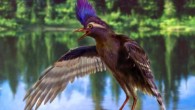
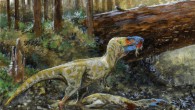
Canadian paleontologists have described a new genus and species of raptor dinosaur that lived in western North America about 66 million years ago, at the...