An international team of paleontologists from Romania, Hungary and Italy has identified a new genus and species of herbivorous, duck-billed dinosaur from an incomplete skeleton unearthed in the Hațeg Basin, a bowl-shaped depression in the Carpathians of present-day Romania.
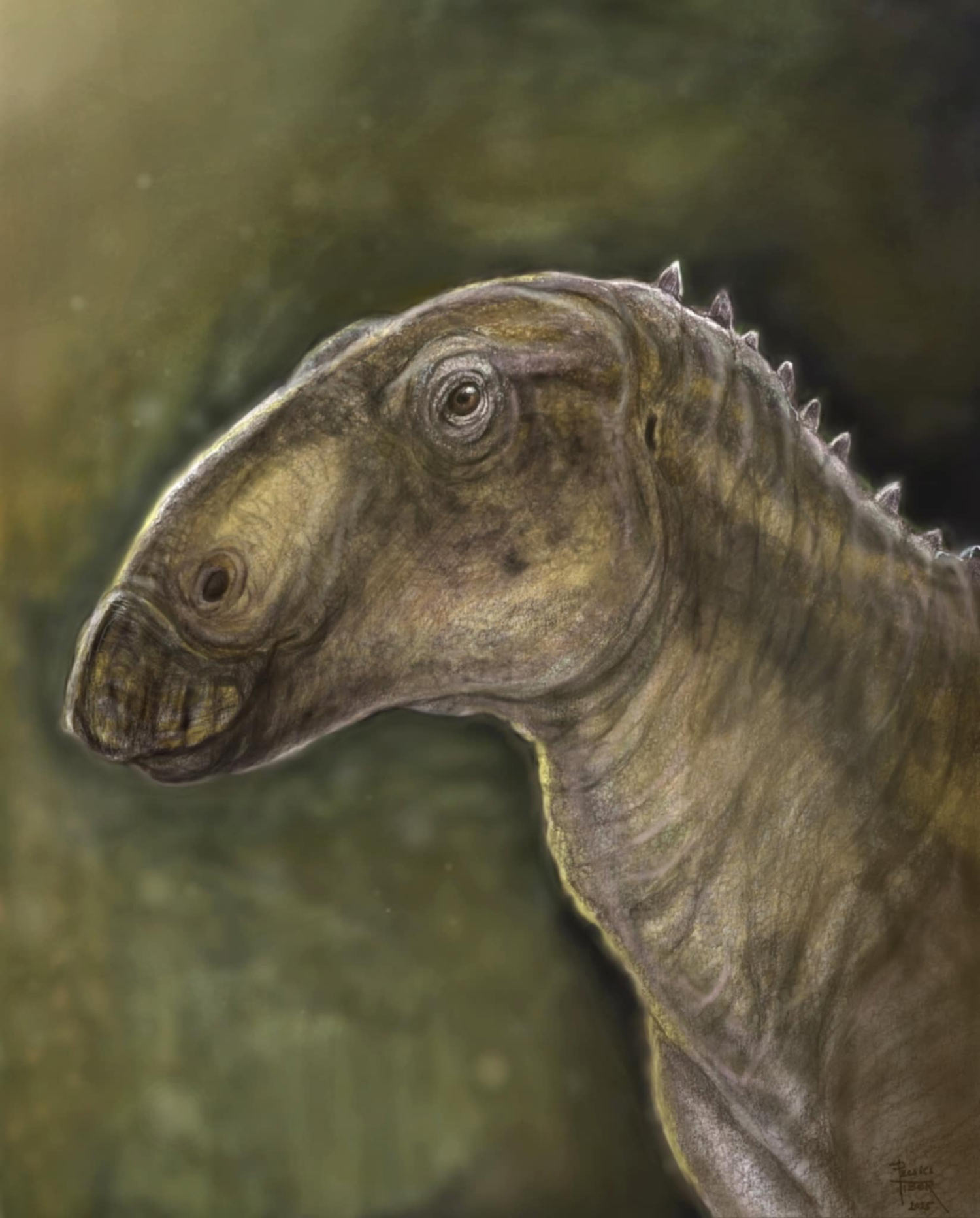
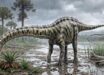
Kryptohadros kallaiae. Image credit: Tibor Pecsics.
Kryptohadros kallaiae roamed our planet during the Maastrichtian age of the Cretaceous period, about 70 million years.
This dinosaur was a type of hadrosauroid, which is a group of herbivorous ornithischians that included the famous duck-billed dinosaurs and their close relatives.
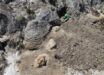
The species’ holotype specimen was found at the vertebrate site of Fântânele-3 near Vălioara village in the Hațeg Basin, Romania, in continental deposits of the Densuș-Ciula Formation.
This area is renowned among paleontologists for its unusual island-dwelling dinosaurs.
“Complete skeletons that include cranial elements, vertebrae and limb bones are very rare in the Hațeg Basin, and this is especially true for hadrosauroid remains,” said Dr. Attila Ősi, a paleontologist at the ELTE Eötvös Loránd University.
“Most sites usually only contain isolated bone elements from this dinosaur group, which, although often lacking defining features, was generally thought to belong to the previously known Telmatosaurus.”
The skeleton of Kryptohadros kallaiae is partial, comprising a skull, rib fragments, tail vertebrae and a partial hindlimb.
Yet even this fragmentary material was enough to distinguish the new species from every other known dinosaurs, most importantly from Telmatosaurus transsylvanicus, the duck-billed dinosaur with which it had been confused for over a century.
The discovery shows that at least two closely related duck-billed dinosaurs inhabited the region during the Late Cretaceous.
“The similarity between the new species and Telmatosaurus, is quite high, because they are close relatives,” said János Magyar, a doctoral student at the ELTE Eötvös Loránd University and the Hungarian Natural History Museum.
“The differences are mostly visible only in the morphology of the skull elements.”
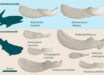
According to the researchers, Kryptohadros kallaiae, Telmatosaurus transsylvanicus, and Tethyshadros insularis from Italy form a newly recognized evolutionary group called Telmatosauridae, an endemic lineage that evolved in the island environments of southeastern Europe.
“Our phylogenetic analyses reveal particularly close relationships between all currently known Late Cretaceous south-eastern European hadrosauroids (Telmatosaurus, Tethyshadros and Kryptohadros) that belong to a newly recognized small endemic clade, Telmatosauridae,” they said.
“In addition, these analyses identify several different hadrosauroid evolutionary lineages present within the Late Cretaceous European Archipelago, and suggest that at least six other dispersal events took place between the Albian (113 to 100 million years ago) and the Maastrichtian (72 to 66 million years ago) from Asia towards North America and/or Europe, besides the arrival of the ancestors of Telmatosauridae before the Campanian (84 to 72 million years ago).”
“The absence of certain later-arriving European hadrosauroid lineages from the faunas of the south-eastern European islands supports earlier hypotheses that propose a direct migration route during the latest Cretaceous between Asia and the south-western European islands, circumventing south-eastern Europe.”
The discovery of Kryptohadros kallaiae is described in a paper in the Journal of Systematic Palaeontology.
_____
János Magyar et al. 2026. New early Maastrichtian ‘duck-billed’ dinosaur from Hațeg Basin (Densuș-Ciula Formation, Romania) documents an endemic clade of non-hadrosaurid hadrosauroids in the south-eastern Late Cretaceous European Archipelago. Journal of Systematic Palaeontology 24 (1); doi: 10.1080/14772019.2025.2607800