Researchers have detected an unexpectedly high abundance of presolar grains — dust from stellar explosions predating our Solar System — in the samples of the near-Earth asteroid (101955) Bennu collected by NASA’s OSIRIS-Rex spacecraft.
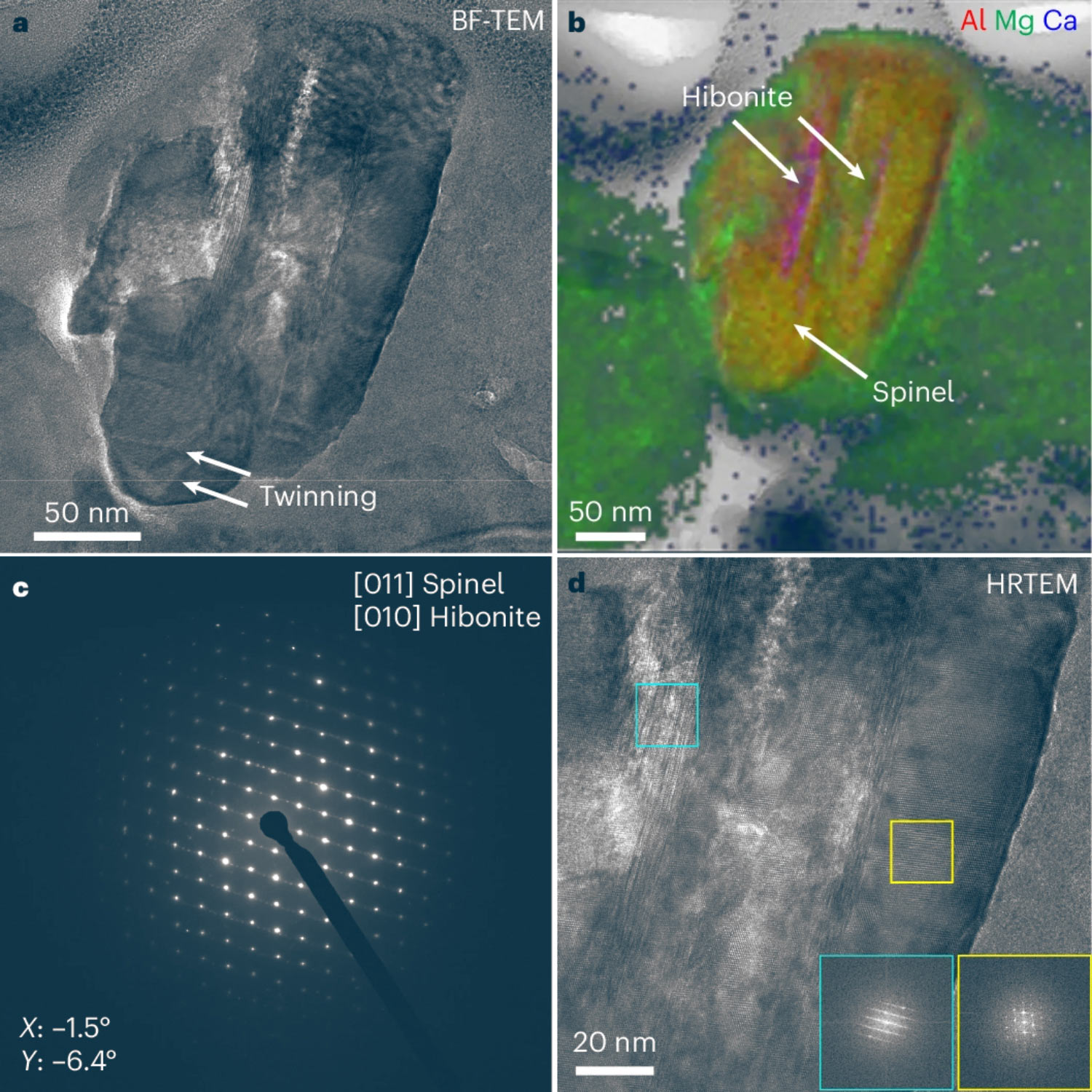
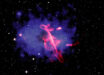
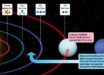
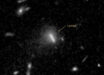
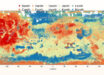
Characterization of a presolar spinel-hibonite grain from the asteroid Bennu. Image credit: Nguyen et al., doi: 10.1038/s41550-025-02688-3.
“Presolar stardust grains are found at trace levels in meteorites, interplanetary dust particles, Antarctic meteorites, the samples from the comet 81 P/Wild2 returned by NASA’s Stardust mission, and the carbonaceous asteroid Ryugu samples returned by JAXA’s Hayabusa-2 mission,” said Dr. Ann Nguyen from NASA’s Johnson Space Center and colleagues.
“Their highly anomalous isotopic compositions result from nucleosynthetic reactions in evolved red giant stars, supernovae and novae.”
“The mineralogy and chemistry of presolar grains can be used to constrain condensation conditions and to probe the effects of secondary alteration, as these grains are susceptible to alteration or destruction in space, in the Solar Nebula and within planetesimals.”
In the study, the scientists analyzed presolar grains found in two different rock types in the Bennu samples.
The samples had six-times the amount of the grains than any other studied astromaterial, suggesting the asteroid’s parent body formed in a region of the protoplanetary disk enriched in the dust of dying stars.
The study also reveals that, while Bennu’s parent asteroid experienced extensive alteration by fluids, there are still pockets of less-altered materials within the samples that offer insights into its origin.
“These fragments retain a higher abundance of organic matter and presolar silicate grains, which are known to be easily destroyed by aqueous alteration in asteroids,” Dr. Nguyen said.
“Their preservation in the Bennu samples was a surprise and illustrates that some material escaped alteration in the parent body.”
“Our study reveals the diversity of presolar materials that the parent accreted as it was forming.”
A paper on the findings was published December 2 in the journal Nature Astronomy.
_____
A.N. Nguyen et al. Abundant supernova dust and heterogeneous aqueous alteration revealed by stardust in two lithologies of asteroid Bennu. Nat Astron, published online December 2, 2025; doi: 10.1038/s41550-025-02688-3