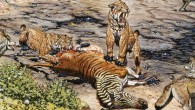
Researchers from the University of Adelaide and elsewhere have sequenced and analyzed mitochondrial DNA from fossils of cave lions (Panthera spp.) and...
A research team led by Max Planck Institute for Evolutionary Anthropology and Flinders University scientists has successfully extracted ancient DNA from...
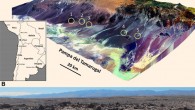
According to a study published in the journal Geology, samples of glassy slabs found in the Atacama Desert, northern Chile, contain tiny fragments with...
A team of researchers has reconstructed and analyzed the external and internal bone morphology of a deformed hip bone from Smilodon fatalis, one of the...
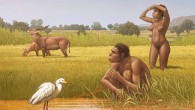
Homo bodoensis lived in Africa during the early Middle Pleistocene, around 500,000 years ago, and was the direct ancestor of the Homo sapiens lineage;...
Human brain size nearly quadrupled in 6 million years since Homo last shared a common ancestor with chimpanzees, but human brains are thought to have decreased...
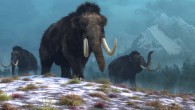
In a large-scale environmental DNA metagenomic study of ancient plant and mammal communities, an international team of researchers have analyzed 535 permafrost...
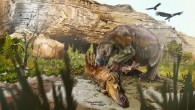
New research published in the journal Scientific Reports provides the first direct evidence of omnivory in an ancient sloth species.
Reconstruction of...
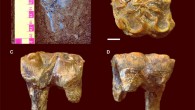
Paleontologists have found a million-year-old hippo tooth at the site of Westbury Cave in Somerset, England. This fossil constitutes the earliest bona...
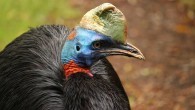
As early as 18,000 years ago, early foragers in the montane rainforests of New Guinea preferentially collected eggs of cassowaries (Casuarius sp.) in late...
Paleontologists have discovered tracks and trackways of newborns, calves and juveniles attributed to straight-tusked elephants (Palaeoloxodon antiquus)...
A series of previously unreported hand and foot impressions from the Tibetan Plateau dates to between 169,000 and 226,000 years ago (middle Pleistocene...
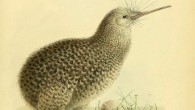
Paleontologists have described a new species of kiwi that lived during the mid-Pleistocene period on the North Island of New Zealand.
The little spotted...
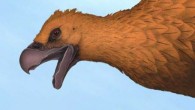
Paleontologists have unearthed the fossilized remains of large teratornithid birds at four localities in central Argentina.
Teratornis sitting on the extinct...
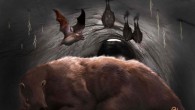
Paleontologists in Argentina have found a fossilized jaw of the extinct bat species Desmodus draculae inside an ancient burrow of a giant sloth.
Desmodus...
A new study, published in the journal Nature Ecology & Evolution, challenges claims that early humans slaughtered mammoths, mastodonts and prehistoric...
Homo longi is phylogenetically closer to Homo sapiens than to Neanderthals or other archaic humans, according to new research described in The Innovation.
A...