A team of researchers led by the University of Wisconsin-Madison has reverse-engineered a primordial nitrogen-fixing enzyme, illuminating how life thrived before oxygen reshaped the planet and establishing a reliable chemical marker for detecting life beyond Earth.
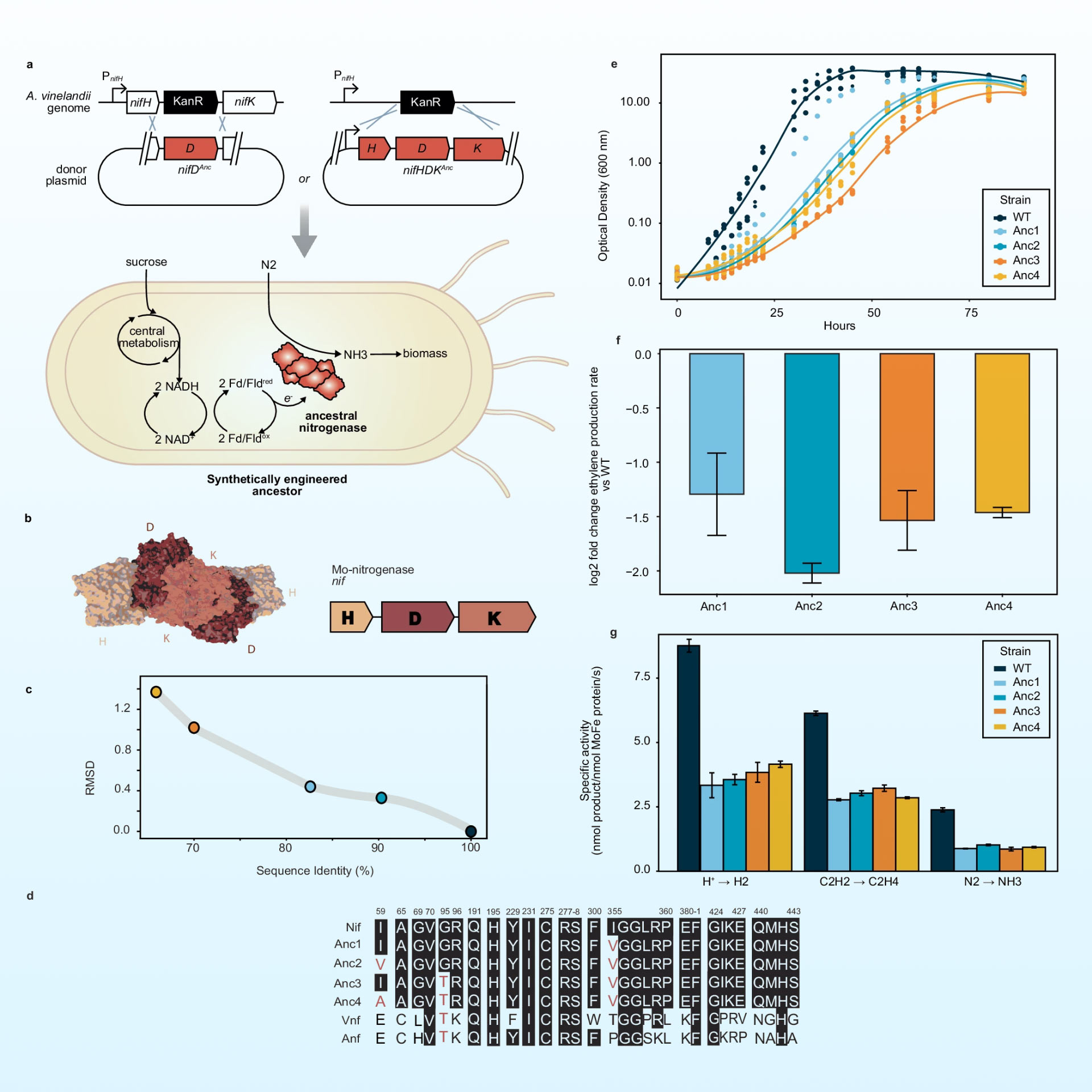
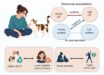
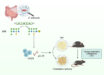
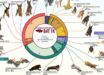
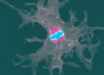
Resurrection and characterization of ancestral nitrogenases. Image credit: Rucker et al., doi: 10.1038/s41467-025-67423-y.
University of Wisconsin-Madison’s Professor Betül Kaçar and colleagues focused on an enzyme called nitrogenase, which is critical to the process that converts atmospheric nitrogen into a form usable by living organisms.
“We picked an enzyme that really set the tone of life on this planet and then interrogated its history,” Professor Kaçar said.
“Without nitrogenase, there would be no life as we know it.”
Historically scientists have relied on evidence found in the geological record to build our understanding of past life on Earth.
Such significant fossil and rock samples are rare and often require a bit of luck to find.
Professor Kaçar and colleagues see synthetic biology as a way to augment this important work, filling in the gaps by creating tangible reconstructions of ancient enzymes, putting them into microbes, and studying them in a modern lab.
“Three billion years ago is a vastly different Earth than what we see today,” said University of Wisconsin-Madison Ph.D. candidate Holly Rucker.
“Back before the Great Oxidation Event, the atmosphere contained more carbon dioxide and methane, and life primarily consisted of anaerobic microbes.”
“Being able to understand how these microbes accessed a nutrient as vital as nitrogen offers a sharper picture of how life persisted and evolved in the window of time before oxygen-dependent organisms began reshaping the planet.”
“While there are not fossilized enzymes we can study, these enzymes can leave behind recognizable signatures in the form of isotopes, which we can measure in rock samples.”
“But much of that work relied on the assumption that ancient enzymes produce the same isotopic signatures as modern versions.”
“It turns out, yes, at least for nitrogenase. The signatures that we see in the ancient past are the same that we see today, which then also tells us more about the enzyme itself.”
The authors found that even though ancient nitrogenase enzymes have different DNA sequences than modern versions, the mechanism that controls the isotopic signature preserved in the rock record has stayed the same.
“As astrobiologists, we rely on understanding our planet to understand life in the Universe,” Professor Kaçar said.
“The search for life starts here at home, and our home is 4 billion years old.”
“So, we need to understand our own past. We need to understand life before us, if we want to understand life ahead of us and life elsewhere.”
The results were published online today in the journal Nature Communications.
_____
H.R. Rucker et al. 2026. Resurrected nitrogenases recapitulate canonical N-isotope biosignatures over two billion years. Nat Commun 17, 616; doi: 10.1038/s41467-025-67423-y