Genetics News

Mar 23, 2021 by News Staff

The hominin fossil record of Island Southeast Asia (ISEA) indicates that at least two super-archaic species, Homo luzonensis and Homo floresiensis, were present around the time anatomically modern humans arrived in the region 50,000-60,000 years ago. In new research, an international team of scientists examined more than 400 modern human genomes to investigate ancient interbreeding events between super-archaic and modern human species. Their results...

Mar 15, 2021 by News Staff

The largest genome-wide association study for eye color to date, involving up to 192,986 European participants from 10 populations, has identified 124...

Mar 9, 2021 by News Staff

Millions of migratory birds occupy seasonally favorable breeding grounds in the Arctic, but scientists know little about the formation, maintenance and...

Feb 25, 2021 by News Staff

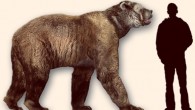
An international team of researchers has extracted and sequenced DNA from a 360,000-year-old petrous bone of the extinct cave bear Ursus kudarensis found...

Feb 24, 2021 by News Staff

Scientists have extracted and sequenced mitochondrial DNA from a partial femur of an ancient dog that lived in Alaska 10,150 years ago. Their results,...

Feb 17, 2021 by News Staff

An international team of scientists has sequenced and analyzed DNA from three mammoth specimens, two of which are more than one million years old. The...

Feb 15, 2021 by News Staff

A team of researchers from the United Kingdom and Canada has sequenced the genome of the white-faced capuchin (Cebus imitator), a medium-sized New World...

Feb 10, 2021 by News Staff

The primitive-looking coelacanth has long been regarded as a ‘living fossil,’ with extant specimens looking very similar to fossils dating back to...

Feb 8, 2021 by News Staff

In a genome-wide association study of 6,169 Latin American individuals, an international team of scientists identified 32 gene regions (loci) that influenced...

Feb 4, 2021 by News Staff

An international team of researchers has generated and analyzed draft reference genomes of Wolffia australiana, which has the smallest genome size in its...

Jan 25, 2021 by News Staff

An international team of researchers has sequenced and analyzed the genome of Sapria himalayana, a rare holoparasitic flowering plant in the family Rafflesiaceae....

Jan 21, 2021 by Natali Anderson

The Australian lungfish (Neoceratodus forsteri), a species of lungfish native to the Mary and Burnett River systems in south-eastern Queensland, has a...

Jan 15, 2021 by News Staff

Dire wolves (Canis dirus) are considered to be one of the most common and widespread large carnivores in Pleistocene America, yet relatively little is...

Jan 14, 2021 by News Staff

People of Ukraine carry many previously known and several novel genetic variants with clinical and functional importance that in many cases show allele...

Jan 7, 2021 by News Staff

Monotremes (egg-laying mammals) are the only extant mammalian outgroup to therians (marsupial and eutherian animals) and provide key insights into mammalian...

Dec 27, 2020 by News Staff

In a new study of the genetic history of the pre-contact Caribbean, researchers analyzed genome-wide DNA data from 174 ancient individuals who lived in...

Dec 23, 2020 by News Staff

In new research, researchers from the Max Planck Institute for Evolutionary Anthropology, Australian National University and the University of Guam analyzed...

Dec 23, 2020 by Enrico de Lazaro

Fleas are not a separate insect order, as previously thought, and are a lineage of scorpionflies, which evolved when they started feeding on the blood...

Dec 22, 2020 by Enrico de Lazaro

An ancient wolf pup, named Zhùr (means ‘wolf’ in the Hän language of the local Tr’ondëk Hwëch’in people), lived approximately 57,000 years...

Dec 15, 2020 by News Staff

The domestication of corn (Zea mays ssp. mays), a global food staple with great economic and cultural importance, began in southwestern Mexico 9,000 years...