Anthropology News

Sep 18, 2019 by News Staff

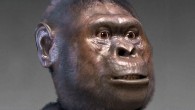
Researchers have analyzed a pelvis of the 10 million-year-old fossil ape Rudapithecus hungaricus and found that human bipedalism might possibly have deeper ancestral origins than previously thought. Rudapithecus hungaricus was pretty ape-like and probably moved among branches like apes do now. However, it would have differed from modern great apes by having a more flexible lower back, which would mean when Rudapithecus hungaricus came down to the...

Sep 9, 2019 by News Staff

A multinational team of scientists has sequenced the first genome of an individual from the Harappan Civilization. The genome, which belongs to a woman...

Sep 5, 2019 by Enrico de Lazaro

An international team of scientists from Canada and Europe has identified the missing part of a fifth finger bone from the Denisova Cave, revealing that...

Aug 29, 2019 by News Staff

Australopithecus anamensis is the earliest-known species in the genus Australopithecus. The species is widely accepted as the ancestor of Lucy’s species,...

Aug 19, 2019 by News Staff

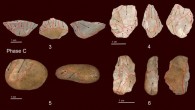
A collection of stone artifacts unearthed at the archaeological site of Tolbor-16 in the northern Khangai Mountains of Mongolia indicates that anatomically...

Aug 15, 2019 by News Staff

Exostoses of the ear canal — more commonly called swimmer’s ear — were surprisingly common in Neanderthals, according to new research by...

Jul 29, 2019 by News Staff

As anatomically modern Homo sapiens migrated out of Africa and around the rest of the world, they met and interbred with at least four different hominin...

Jul 19, 2019 by Enrico de Lazaro

Archaeologists digging at an early hominin site in China have discovered two engraved bone fragments that date back nearly 115,000 years. Photographs of...

Jul 17, 2019 by News Staff

A high-resolution trace-element analysis of 2.6-2.1-million-year-old teeth from an extinct hominin called Australopithecus africanus has revealed that...

Jul 11, 2019 by Enrico de Lazaro

A 210,000-year-old partial skull found in southern Greece about four decades ago has been identified as the earliest example of anatomically modern Homo...

Jul 10, 2019 by News Staff

A 3-rooted lower molar, a rare trait primarily found in modern Asian lineages, was previously thought to have evolved after Homo sapiens dispersed from...

Jun 27, 2019 by News Staff

An international team of scientists has sequenced the nuclear genomes of two Neanderthals who lived in Europe around 120,000 years ago. They found that...

Jun 27, 2019 by News Staff

The hafting of stone tools was an important advance in the technological evolution of Paleolithic humans. Joining a handle to a knife or scraper and attaching...

Jun 18, 2019 by News Staff

An international team of researchers has found that the inhabitants of the Neolithic settlement Çatalhöyük (7100-5950 BCE) experienced overcrowding,...

Jun 7, 2019 by News Staff

Northeastern Siberia has been inhabited by humans for more than 40,000 years but its deep population history remains poorly understood. In a new study,...

Jun 5, 2019 by News Staff

An international team of scientists has unearthed a collection of 2.6-million-year-old systematically flaked stone tools at the site of Bokol Dora 1 (BD1)...

May 30, 2019 by News Staff

How food production entered sub-Saharan Africa some 5,000 years ago and the ways in which herding and farming spread through the continent in ancient times...

May 30, 2019 by News Staff

Between 8 and 2 million years ago, cosmic-ray energy from one or more nearby supernovae reached Earth and pummeled the planet’s atmosphere, initiating...

May 29, 2019 by News Staff

New research demonstrates that Asian regions such as the Gobi Desert and the Altai Mountains could have periodically acted as corridors and routes for...

May 23, 2019 by News Staff

An international team of researchers has found numerous fragments of charred starch plant tissues in 120,000-year-old hearths at the archaeological site...