Paleontologists have described a new genus and three new species of small, insect-eating marsupials from the Early Miocene deposits of the Riversleigh World Heritage Area in northwestern Queensland, one of Australia’s richest fossil sites. Their comparative and evolutionary analyses indicate that these new species belong to a newly recognized branch of the marsupial family tree. Dubbed the Keeunamorphia, this lineage may represent some of Australia’s earliest marsupials, with possible origins in Gondwana.
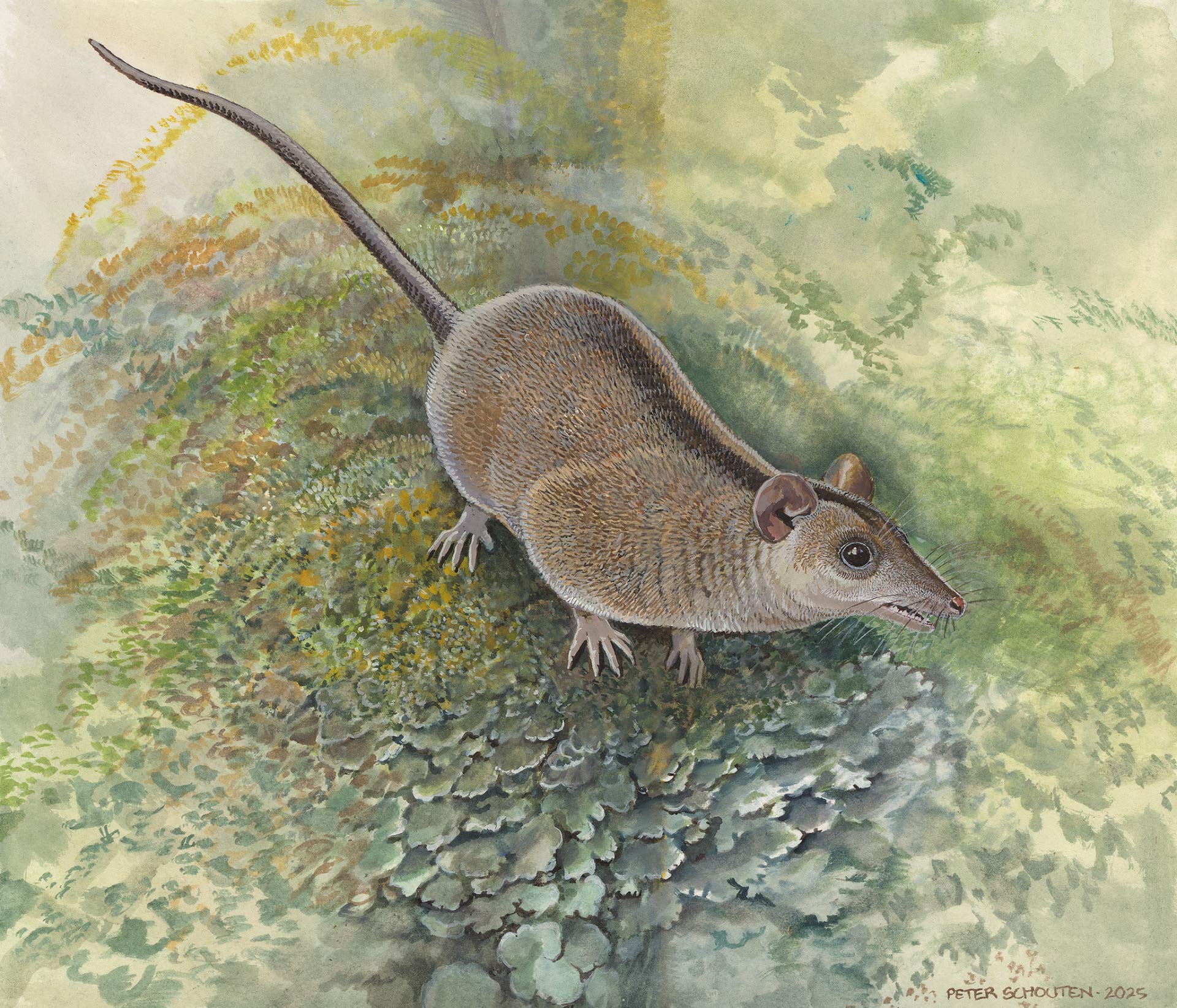
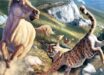
Reconstruction of Phantasmodon travouilloni in the Early Miocene rainforests of northwestern Queensland. Image credit: Peter Schouten.
The three new marsupial species, named Phantasmodon travouilloni, Phantasmodon minuferox, and Keeunidae sp., lived roughly 18 million years ago and ranged in size from a shrew to a mouse (25-200 grams).
Their distinctive teeth share features with two older Australian species, Keeuna woodburnei and Ankotarinja tirarensis, and with Djarthia murgonensis — the continent’s oldest known marsupial — recovered from 55-million-year-old deposits in southern Queensland.
Taken together, these six species form a lineage that fits none of the previously recognized Australian marsupial orders.
Dubbed the Keeunamorphia, the new order is one of the earliest offshoots of Australidelphia, a group that includes all living Australian marsupials.
“Not only is it a new order, but it could also be one of the most ancient lineages of Australian marsupials,” said lead author Dr. Tim Churchill, a paleontologist at the University of New South Wales.
Keeunamorphians may have had Gondwanan origins, potentially linking Australia’s earliest marsupials to ancient relatives in South America, when the two continents were still connected.
The lineage appears to have gone extinct sometime during the Miocene, leaving no known descendants.
“Evolutionary history is a lot more complex than just one group leading to all of Australia’s marsupials,” Dr. Churchill said.
“It’s more likely that when Australia was part of Gondwana it was home to a range of primitive marsupial lineages, and that several of them may have contributed to the animals we see today.”
“Much of that history remains hidden in gaps in the fossil record, meaning the earliest chapters of marsupial evolution are still being written.”
The results were published this month in the Journal of Paleontology.
_____
Timothy James Churchill et al. A new metatherian order from Australia (Keeunamorphia, Metatheria), and new Early Miocene species from the Riversleigh World Heritage Area, northwestern Queensland. Journal of Paleontology, published online June 14, 2026; doi: 10.1017/jpa.2026.10238