An international team of scientists headed by Prof Steve Rose from Imperial College in London, UK, has discovered how to create matter from light.

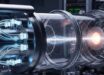
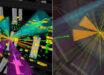
European physicists say they have discovered how to create matter from light. Image credit: SLAC Information Management and Portal Solutions.
In 1934, American theoretical physicists Dr Gregory Breit and Dr John A. Wheeler suggested that it should be possible to turn light into matter by smashing together only two particles of light – photons, to create an electron and a positron.
“Despite all physicists accepting the theory to be true, when Dr Breit and Dr Wheeler first proposed the theory, they said that they never expected it be shown in the laboratory,” Prof Rose explained.
But a new experiment conducted by his team shows for the first time how the Breit and Wheeler’s theory could be proven in practice.
“Today, nearly 80 years later, we prove them wrong. What was so surprising to us was the discovery of how we can create matter directly from light using the technology that we have today in the UK. As we are theorists we are now talking to others who can use our ideas to undertake this landmark experiment,” said Prof Rose, the senior author of a paper published in the journal Nature Photonics.
The photon-photon collider experiment that the physicists have proposed involves two steps.
First, they would use a powerful high-intensity laser to speed up electrons to just below the speed of light.
They would then fire these electrons into a slab of gold to create a beam of photons a billion times more energetic than visible light.
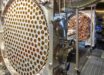
The next stage of the experiment involves a tiny gold can called a hohlraum. The scientists would fire a high-energy laser at the inner surface of this gold can, to create a thermal radiation field, generating light similar to the light emitted by stars.
They would then direct the photon beam from the first stage of the experiment through the center of the can, causing the photons from the two sources to collide and form electrons and positrons. It would then be possible to detect the formation of the electrons and positrons when they exited the can.
“Although the theory is conceptually simple, it has been very difficult to verify experimentally,” said Oliver Pike, a PhD student at Imperial College and the first author on the study.
“We were able to develop the idea for the collider very quickly, but the experimental design we propose can be carried out with relative ease and with existing technology.”
“Within a few hours of looking for applications of hohlraums outside their traditional role in fusion energy research, we were astonished to find they provided the perfect conditions for creating a photon collider. The race to carry out and complete the experiment is on!”
Demonstrating the Breit-Wheeler theory would provide the final jigsaw piece of a physics puzzle which describes the simplest ways in which light and matter interact.
______
Pike OJ et al. A photon–photon collider in a vacuum hohlraum. Nature Photonics, published online May 18, 2014; doi: 10.1038/nphoton.2014.95