A new analysis of stress, tides and interior forces suggests Jupiter’s icy moon Europa lacks the active seafloor faulting needed for robust hydrothermal circulation — with implications for chemical energy and habitability.

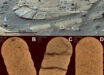
The surface of Europa looms large in this newly-reprocessed color view; image scale is 1.6 km per pixel; north on Europa is at right. Image credit: NASA / JPL-Caltech / SETI Institute.
On Earth, tectonic activity is known to have a role in supporting life-sustaining habitats.
This occurs through water-rock interactions at and beneath the sea floor, which can provide chemical energy for potential life.
Thus, the presence of tectonic activity on a planet may be one of numerous signs to indicate an environment that could be equipped to support life.
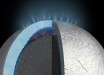
One of Jupiter’s moons, Europa, is thought to host a subsurface ocean under its icy surface.
Previous research has suggested that there could be volcanic activity at the seafloor of Europa, whether tectonic activity is possible has not been studied previously.
“If we could explore that ocean with a remote-control submarine, we predict we wouldn’t see any new fractures, active volcanoes, or plumes of hot water on the seafloor,” said Dr. Paul Byrne, a researcher at Washington University in St. Louis.
“Geologically, there’s not a lot happening down there. Everything would be quiet.”
“And on an icy world like Europa, a quiet seafloor might well mean a lifeless ocean.”
Dr. Byrne and colleagues conducted extensive modeling to assess potential tectonic activity in Europa’s theorized subsurface ocean.
These predictions were benchmarked against known or proposed behavior on Earth’s seafloor and Enceladus.
The researchers considered stresses from tides, global contraction, mantle convection, and serpentinization — a geological process that occurs when rocks interact with water.
However, they found that none of these processes are likely to be driving tectonic activity, even along pre-existing fractures on Europa’s seafloor at this time.
This finding would suggest that ocean water-rock interactions are likely contained to the topmost few hundred meters of the seafloor, limiting possibilities for habitable conditions on the seafloor.
Future research will look to collect direct evidence of Europa’s geology and tectonics.
“Europa likely has some tidal heating, which is why it’s not completely frozen,” Dr. Byrne said.
“And it may have had a lot more heating in the distant past.”
“But we don’t see any volcanoes shooting out of the ice today like we see on Io, and our calculations suggest that the tides aren’t strong enough to drive any sort of significant geologic activity at the seafloor.”
The results were published this week in the journal Nature Communications.
_____
P.K. Byrne et al. 2026. Little to no active faulting likely at Europa’s seafloor today. Nat Commun 17, 4; doi: 10.1038/s41467-025-67151-3