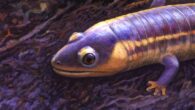
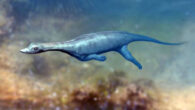
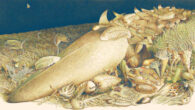
Funcusvermis gilmorei lived in the tropical forests of what is now Arizona, the United States, during the Triassic period, approximately 220 million years...
Paleontologists have described a previously unrecognized genus and species of hadrosaurid dinosaur from a partial bone found in Texas, the United States.
Life...
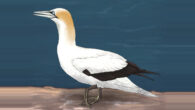
Paleontologists have unearthed the fossilized remains of an extinct gannet species that lived in what is now Portugal during the Miocene epoch, some 15...
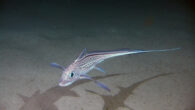
Suction is an especially effective way of feeding underwater, and adaptations to enhance it have evolved numerous times in jawed vertebrates. The only...
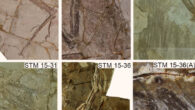
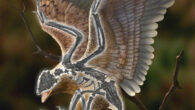
Paleontologists have examined five specimens with differently preserved feathers from Sapeornis chaoyangensis, an early bird species that lived during...
Paleontologists have described a new genus and species of long-tailed pachypleurosaur from a complete skeleton found in China.
An artist’s impression...
In new research, paleontologists analyzed abundances of sunscreen-like chemicals in 800 fossil pollen grains from 250-million-year-old rocks in Tibet.
The...
Cratonavis zhui, a new species of pygostylian bird from the Early Cretaceous Jehol Biota of China, had a unique combination of a dinosaurian skull with...
A new genus and species of fossil lizard has been described from two fossilized specimens found in eastern Inner Mongolia, China.
Close-up of the holotype...
Most birds today can lift the upper beak independently of the brain case, enabled by a series of mobile joints and bending zones in the skull. The computed...
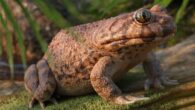
Paleontologists have identified a new species of the extinct frog genus Baurubatrachus from fossils found in the state of São Paulo, Brazil.
Life reconstruction...
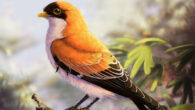
A new genus and species of enantiornithine bird has been described from a partial right humerus found in southern Patagonia, Argentina.
An artist’s impression...
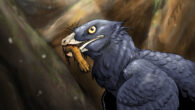
Paleontologists have found the fossilized remains of a small mammal foot preserved inside the body cavity of the holotype specimen of Microraptor zhaoianus,...
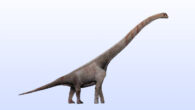
A new genus and species of titanosauriform sauropod dinosaur with an unusual tail has been identified from a partial skeleton found in northeastern China.
An...
Australian Museum’s Professor Tim Flannery and colleagues argue that the ancestors of Theria (placental and marsupial mammals) evolved in the supercontinent...
The renowned Berlin-Ichthyosaur State Park, part of Humboldt-Toiyabe National Forest in the Shoshone Mountains of west-central Nevada, the United States,...
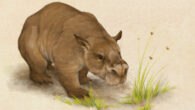
Paleontologists have discovered and examined the fossilized craniodental remains of Ramsayia magna, an extinct large-bodied wombat species that lived in...
Paleontologists have identified a new genus and species of titanosaurian dinosaur from the fossilized remains found in the Brazilian state of Minas Gerais.
Life...