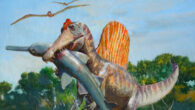
Spinosaurus aegyptiacus, a sail-backed theropod dinosaur that lived in what is now North Africa during the Cretaceous period, about 95 million years ago,...
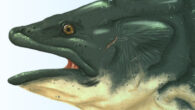
Fossilized remains of an enigmatic mawsoniid coelacanth that grew over 1 m long have been discovered by an international team of paleontologists from the...
Paleontologists in Australia have unearthed the country’s first head and associated body of a long-necked marine reptile called Eromangasaurus australis.
The...
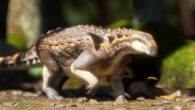
A new genus and species of nodosaurid ankylosaur has been identified from fossils found in Patagonia, Argentina.
Life reconstruction of Patagopelta cristata....
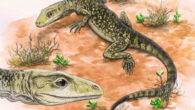
Cryptovaranoides microlanius is an extinct relative of living lizards such as monitor lizards, gila monsters and slow worms.
An artist’s impression of...
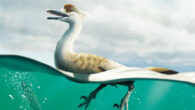
A new genus and species of theropod dinosaur with a streamlined body as in diving birds has been identified from a well-preserved skeleton found in Mongolia.
Life...
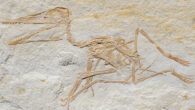
This Pterodactylus individual lived in what is now Germany during the Kimmeridgian age of the Late Jurassic epoch, between 155 and 152 million years ago.
Pterodactylus...
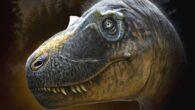
Daspletosaurus wilsoni, a tyrannosaurid dinosaur that lived 76.5 million years ago in what is now Montana, the United States, displays a unique combination...
A new genus and species of rhabdodontid ornithopod dinosaur has been identified from the fossilized skull bones found in the Haţeg Basin in western Romania.
Inhabitants...
The oldest animals appear in the fossil record among Ediacaran biota communities. In new research, paleontologists from the Australian National University...
Temnospondyli is a diverse group of extinct amphibians that flourished worldwide during the Carboniferous, Permian, and Triassic periods. The body mass...
More than 120 million years ago in what is now China, a hungry dromaeosaurid dinosaur ate a small frog.
Daurlong wangi holotype: (a) whole specimen, (b)...
Aside from being the largest marine turtle species ever discovered in Europe, and one of the largest worldwide, the discovery of Leviathanochelys aenigmatica...
Many accounts of the early history of ray-finned fishes (actinopterygians) posit that the end-Devonian mass extinction event 359 million years ago had...
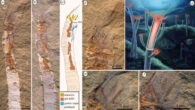
Paleontologists have examined the 514-million-year-old specimens of Gangtoucunia aspera, a tube-building marine animal from the Guanshan Lagerstätte of...
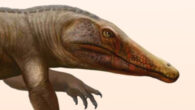
Paleontologists have discovered a new fossil reptile that lived during the Late Triassic epoch in southern Brazil.
Life reconstruction of Stenoscelida...
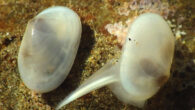
Cymatioa cooki, a species of small bivalve mollusk previously only known from the Pleistocene period, has been found living intertidally near Santa Barbara,...
Stromatolites are solid, laminar structures reflecting complex interplays between microbial communities and their environment.
Hand sample of Dresser Formation...
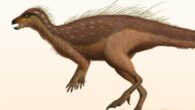
Paleontologists from the Nevada Science Center, Idaho State University and Montana State University have described a new genus and species of thescelosaurine...